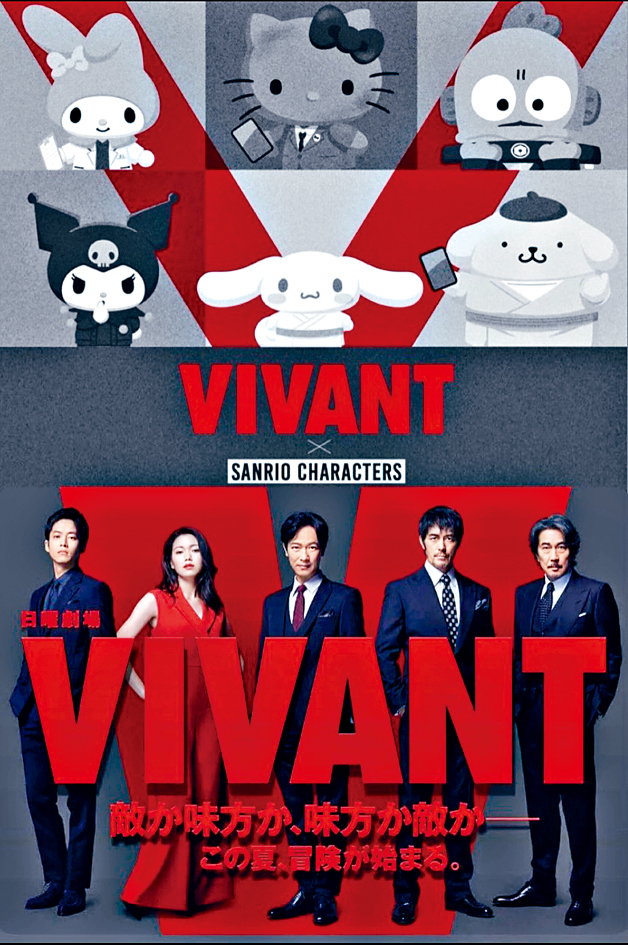
Sanrio, the well-known Japanese character brand, recently announced that it would end its collaboration with the Japanese television drama VIVANT (Bieban) and halt related follow-up projects and promotional activities. The company had released co-branded merchandise featuring Hello Kitty and other characters dressed in outfits worn by characters in the drama, drawing attention in China.
The controversy centres on parts of the plot in VIVANT’s second season. Scenes involving organisations connected with China torturing Japanese intelligence personnel have drawn criticism from Chinese media. Chinese state media argue that these portrayals distort history and disparage China. The drama’s producers, meanwhile, say VIVANT is a work of fiction and was not intended to denigrate any particular country or hurt national feelings.
Sanrio (Shanghai) issued a statement on the evening of October 28, apologising for concerns caused by the collaboration. It said the related content contained expressions inconsistent with the group’s philosophy and announced an end to the partnership. On October 29, Sanrio’s Japanese headquarters also published a notice on its website, confirming the termination of the collaboration and related promotional plans and saying it would strengthen the review of future collaborations.
Sanrio’s statement did not directly use the phrase “insulting China”. The incident highlights that, when undertaking collaborations with film and television productions, multinational brands need to examine the content, historical background and cultural sensitivities of different markets, alongside assessing commercial value.