
On November 6, 2026, a Cambodian historical film shot over more than four years failed to reach cinemas as scheduled.
It is called The Tragedy of the Ghost Mountain.
The film was originally scheduled for a nationwide release in Cambodia, but its postponement was suddenly announced before the premiere. The producers said technical adjustments were needed, and a new release date has still not been announced.
But before that, the film had already crossed beyond cinemas and entered the public debate in Cambodia and Thailand.
The Thai military questioned the film's portrayal of historical events, arguing that some scenes may involve artistic embellishment and could even affect relations between the two countries. Cambodian director 列李达 insisted that the work was based on historical research and survivors' testimony, and that its purpose was not to stir up ethnic hatred but to help younger generations understand a history that is being forgotten.
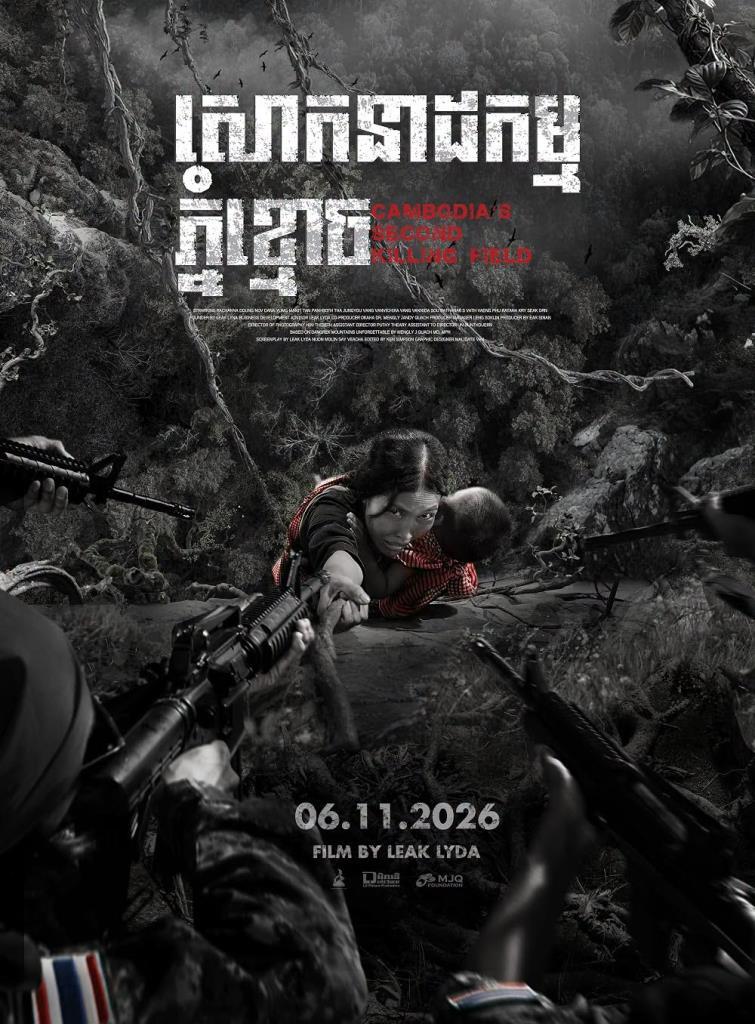
The debate centers on what appears to be a distant question:
What did tens of thousands of Cambodian refugees fleeing war in 1979 actually experience at the Thai border?
This is not a story that exists only in cinema.
Its traces can be found in historical reports from the UN refugee agency, diplomatic archives later released by the US government, and contemporaneous reports by international journalists.
Nearly half a century later, when Cambodia and Thailand again experienced a military conflict along their border, this history was brought back before the two countries.
I. They believed that crossing the border would allow them to survive
War in Cambodia in 1979 did not end when the Khmer Rouge lost Phnom Penh.
Nearly four years of Khmer Rouge rule had already exacted a heavy price on the country. In January 1979, Vietnamese forces entered Phnom Penh and the Khmer Rouge regime collapsed, but a new military confrontation followed.
Fighting continued in western and northwestern areas, while food shortages, disease, and displacement remained severe.
For many ordinary families, who controlled Phnom Penh or won the war no longer carried much practical meaning.
What everyone urgently needed was food to survive and a place where they could sleep safely.
Thailand lay just across the border.
Some carried their children; others supported elderly relatives. People who had endured forced labor, hunger, and flight once again gathered their remaining possessions and headed along the roads to Thailand.
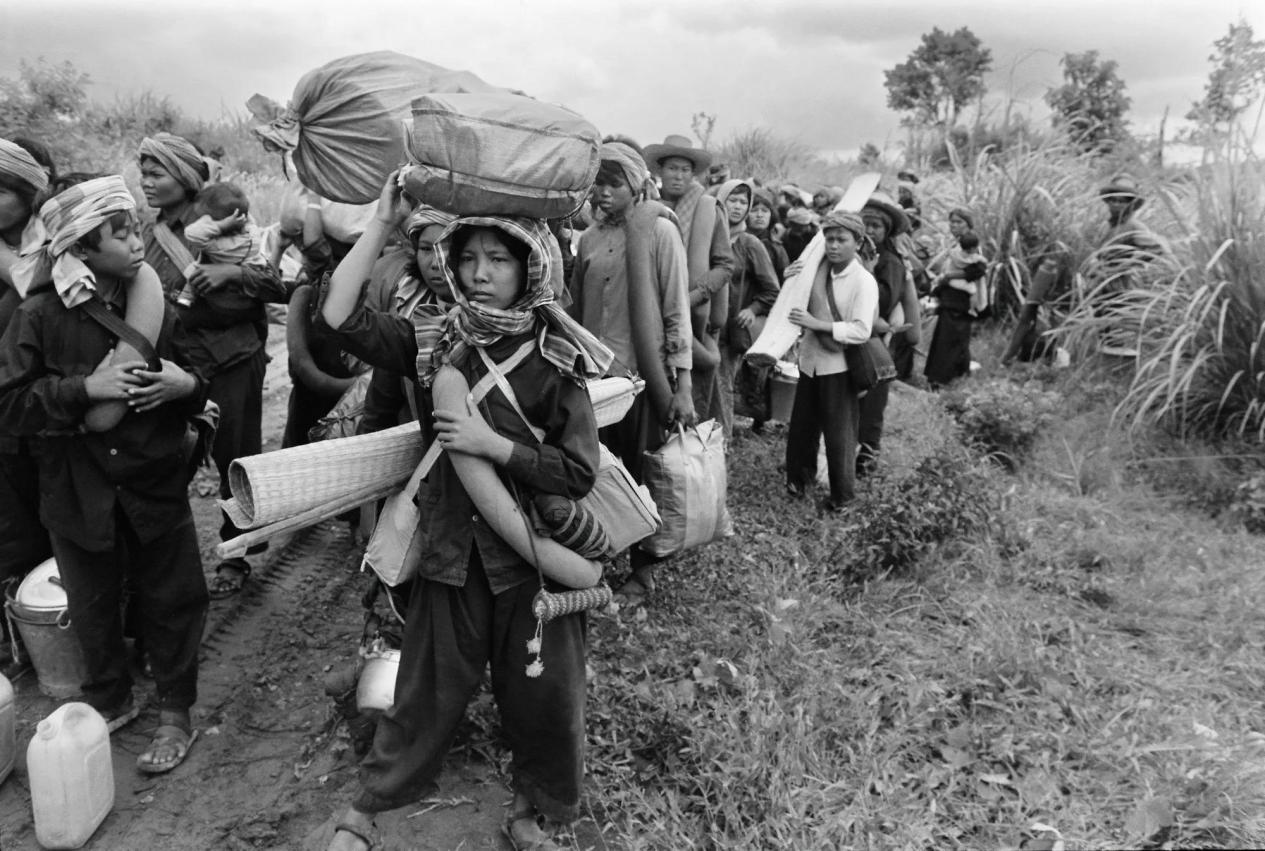
郭明利, who later became a Cambodian American doctor, educator, and businessman, was among those who fled.
In his 2018 memoir, The Dangrek Mountains: A Place Never Forgotten, he recorded his family's experience.
As the book recounts, 郭明利's family temporarily lived in a refugee camp near Sa Kaeo province in Thailand. After only a week, however, Thai soldiers took his family and other refugees to the Dangrek Mountains, forcing them to return to Cambodia.
The road ahead was not a safe homecoming but a dangerous expanse of steep slopes and landmines.
More than four decades later, this family memory became an important creative source for The Tragedy of the Ghost Mountain.
A family that had survived the war and escaped to the border of a neighboring country found that this was only the beginning of the next tragedy.
They did not know that the mountain would become a nightmare for tens of thousands of people.
II. More than 40,000 were sent to that "mountain of death"
In June 1979, Thailand began the mass repatriation of Cambodian refugees.
In The State of the World's Refugees 2000, the UN refugee agency recorded that more than 42,000 Cambodian refugees were assembled by Thai soldiers from border camps. Some were transported by bus roughly 300 kilometers to the Dangrek Mountains, then forced across the steep mountains back to Cambodia.
They faced treacherous mountain routes and a dangerous area strewn with landmines. Women, children, and elderly people were not spared.
The UN refugee agency estimated that at least several hundred people, and possibly several thousand, died during the repatriation.
The most shocking aspect of this repatriation was not merely the death toll.
It was that civilians who had finally escaped the war and reached a neighboring country were then sent back by state power to the edge of death.
How much did the Thai government know about the risks at the time?
The US Congressional Record of June 15, 1979, shows that Thai military figures had already acknowledged that mines and explosive devices were present in the repatriation area and could cause casualties.
The event was later called a "second killing field" by some Cambodians and became a historical wound that has been difficult to heal in Cambodia-Thailand relations.
III. Was Thailand responsible for rescuing Cambodian refugees?
Looking only at the tragedy of June 1979, it is easy to view Thailand as a simple perpetrator. But the real history is far more complicated.
Beginning in the mid-to-late 1970s, as Vietnam, Cambodia, and Laos successively experienced war and political turmoil, large numbers of refugees poured into Thailand. Over the following years, vast refugee camps were established along the Thai border, and international organizations conducted relief and resettlement work there.
For many Cambodians, Thailand truly was an important refuge where they could escape war and obtain food and medical assistance.
For Bangkok's government at the time, however, the refugee influx also meant another crisis.
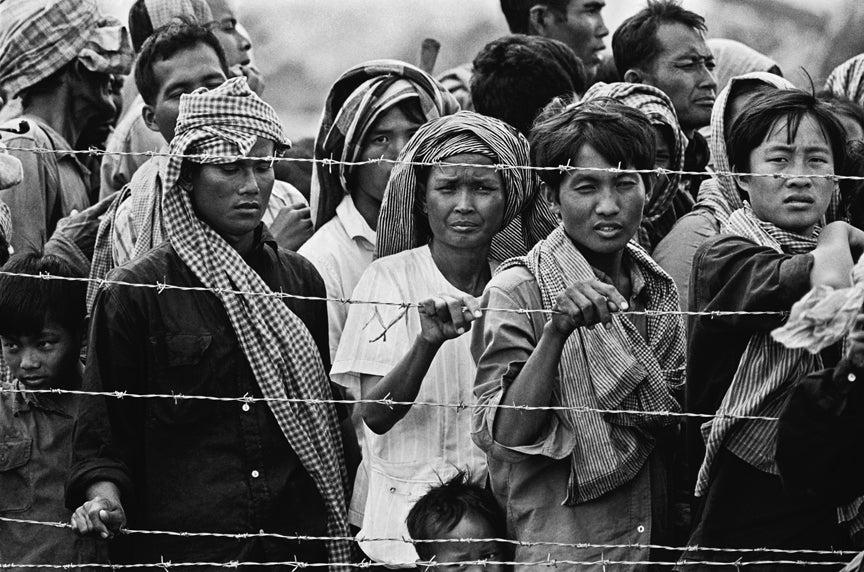
Southeast Asia in 1979 was caught in the Cold War. Vietnam had close ties with the Soviet Union, while Thailand maintained security cooperation with the United States.
After Vietnamese forces entered Cambodia, Thailand feared the border situation would spiral out of control and was more concerned that Vietnam's military influence would continue expanding westward.
At the same time, the number of refugees kept rising, increasing pressure on border management, food supplies, and social resettlement. With ordinary refugees also mixed in with armed personnel from different political factions, the Thai government faced a complex security dilemma.
A humanitarian crisis that should originally have centered on protecting civilians was gradually drawn into calculations of national security and great-power politics.
Whatever the security pressures Thailand faced, they could not justify sending refugees back to dangerous areas. Nor did the international community at the time fully perform its protective role.
The UN refugee agency later acknowledged in a report that representatives of the International Committee of the Red Cross had publicly issued an urgent appeal to halt the repatriations and were subsequently ordered to leave Thailand. The UN refugee agency, fearing it would anger the Thai government, did not make a formal public protest.
This was not only a tragedy of refugee repatriation; it also exposed the practical dilemmas facing the international relief system when confronted with sovereign states.
It raised a question that still troubles the international community today:
When a neighboring country itself bears immense security and economic pressures, who should bear the responsibility of protecting war refugees?
The non-refoulement principle in international refugee protection expressly requires that refugees not be forcibly returned to places where their lives or freedom face a serious threat.
Although Thailand was not a party to the 1951 Refugee Convention, the UN refugee agency considers non-refoulement to be customary international law and believes it binds states beyond those that have signed the convention.
This does not mean that neighboring countries must bear unlimited responsibility for hosting refugees indefinitely. International financial assistance, resettlement in third countries, and voluntary return to countries of origin under safe conditions can all be part of solutions.
These options, however, are fundamentally different from forcibly sending civilians back to areas where they may die.
In July 1979, the international community convened in Geneva and promoted expanded relief and third-country resettlement for Southeast Asian refugees. Thailand subsequently adjusted its policies step by step, while border refugee camps and international relief systems continued to expand.
The country that had carried out large-scale forced repatriations later became an important place where hundreds of thousands of Cambodian refugees received temporary shelter.
This history is therefore difficult to summarize in simple terms of good and evil.
States have the right to maintain border security, but those who have fled also possess the fundamental right not to be sent to deadly danger.
How to draw the line between the two remains a challenge the international community must confront.
IV. At the border 47 years later, two peoples replay the cycle of history
To understand the controversy surrounding The Tragedy of the Ghost Mountain, one must return to the longer, tangled history between Cambodia and Thailand.
The two countries have deep ties in religion, culture, and art, but dynastic wars, territorial changes, and colonial-era border divisions have also left historical disagreements that remain difficult to resolve.
Preah Vihear Temple in the Dangrek Mountains is one of the most symbolic locations.
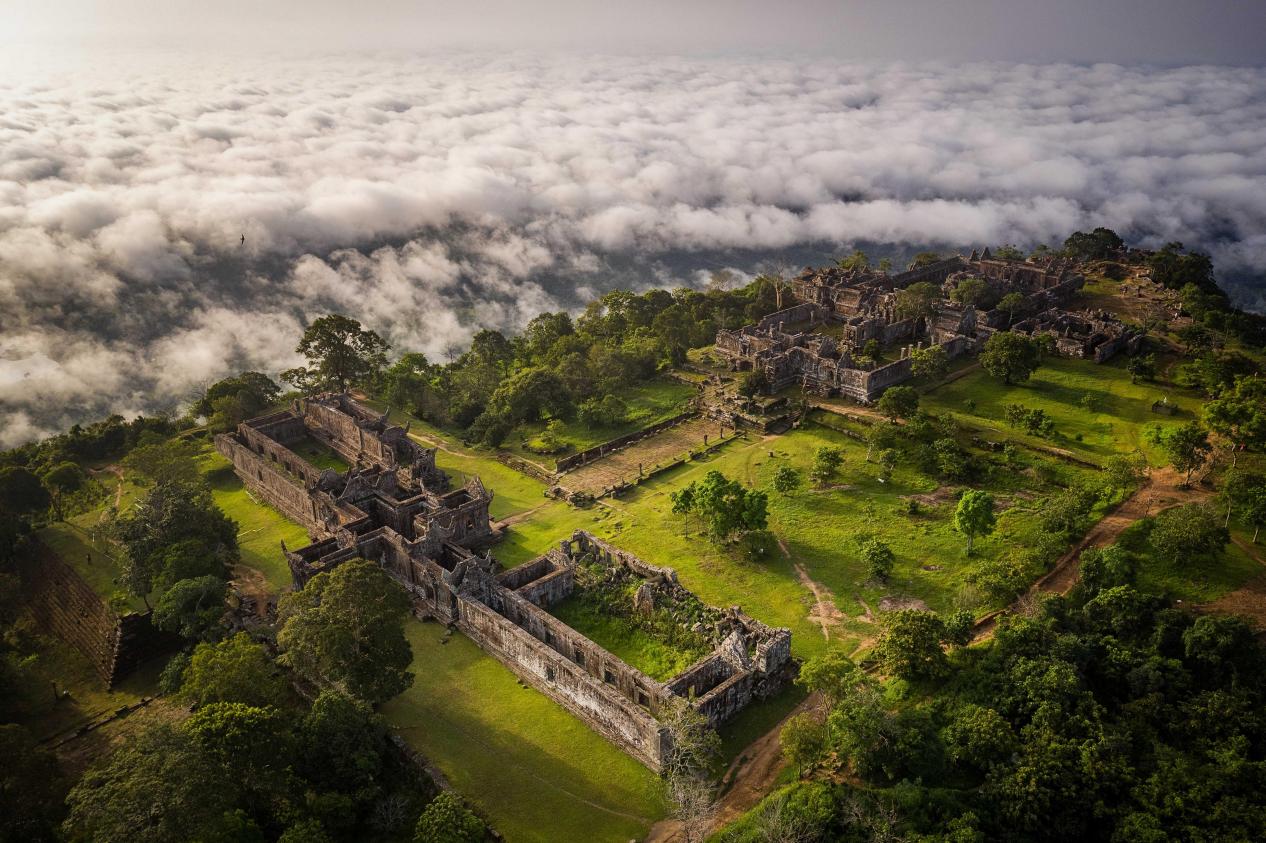
In 1962, the International Court of Justice ruled that Preah Vihear Temple belonged to Cambodia. In 2013, the court again interpreted the relevant ruling. Disputes over surrounding boundaries, however, were not completely resolved. After Preah Vihear Temple was inscribed on the World Heritage List in 2008, the two countries experienced armed clashes on several occasions.
This mountainous region has witnessed the refugee tragedy of 1979 and repeatedly become a focal point of the two countries' territorial disputes.
War flared again along the Cambodia-Thailand border in 2025. Deadly clashes occurred in May, a major military conflict erupted in July, and heavy fighting resumed in December.
According to an October 2026 research report by the International Crisis Group, two rounds of conflict in 2025 killed at least 150 people and displaced nearly one million people in total.
Although the two sides reached ceasefire agreements in succession, differences over border demarcation, military deployments, and territorial claims remain unresolved. To this day, some border residents still cannot return home.
History here has entered a disturbing cycle.
In 1979, Cambodian refugees fled to Thailand to escape war; in 2025, border residents once again left their villages, schools, and farmland because of artillery fire.
The backgrounds of the two conflicts are entirely different, but ordinary people's fates have much in common: they are homeless!
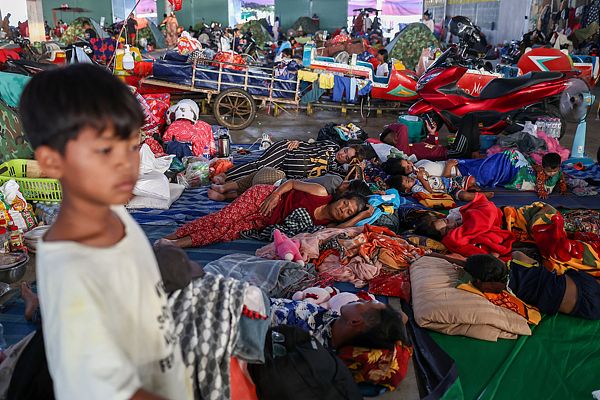
As The Tragedy of the Ghost Mountain retells the story of the flight from 47 years ago, Cambodian civilians beyond the screen are living the tragedy of flight in reality.
It is precisely for this reason that the film touches not only on history but also on the unresolved present-day disputes between Cambodia and Thailand.
V. Is the film recording history or recreating division?
This may be the heart of the controversy surrounding The Tragedy of the Ghost Mountain.
For Cambodian director 列李达, cinema is a way of preserving historical memory and is intended to help younger generations understand the tragedy of 1979.
The Thai military, however, questioned scenes depicting violence by Thai soldiers and worried that artistic embellishment could intensify national sentiment and affect relations between the two countries.
This disagreement precisely reveals the difficult situation confronting historical films.
Written records can cite their sources and academic research can examine disputed accounts, but film turns history into concrete people and images, giving it greater emotional impact and making it more likely to touch unhealed historical wounds.
Especially against the backdrop of a Cambodian-Thai border that has just experienced war, a film about a tragedy 47 years ago inevitably acquires contemporary political significance.
Acknowledging the tragedy caused by the forced repatriations of 1979, however, does not mean denying Thailand's subsequent assistance to large numbers of Cambodian refugees; pursuing historical responsibility should not turn into condemning an entire nation.
As of now, The Tragedy of the Ghost Mountain still has no new release date. The producers stressed that the postponement resulted from technical adjustments, and there is no evidence that it was directly related to the preceding controversy.
Yet a film can be postponed; history cannot disappear because of it.
The refugee tragedy of 1979 exposed the conflict between national security and international humanitarianism; the border conflict of 2025 again reminded people that the costs of interstate disputes are ultimately often borne by ordinary families.
Forty-seven years later, the Dangrek Mountains still stand along the Cambodia-Thailand border.
For those who once sought safety at the border,
what has always mattered is not which country prevailed in the historical debate, but whether, when the next war comes,
they can truly find a path to survive.