
The 20th Francophonie Summit closed in Phnom Penh with Cambodia taking over its presidency. The summit and related events brought members together on key decisions, saw Cambodia and France sign 29 cooperation documents, and gave Cambodia a chance to present itself as a peaceful, open country willing to take on responsibility.
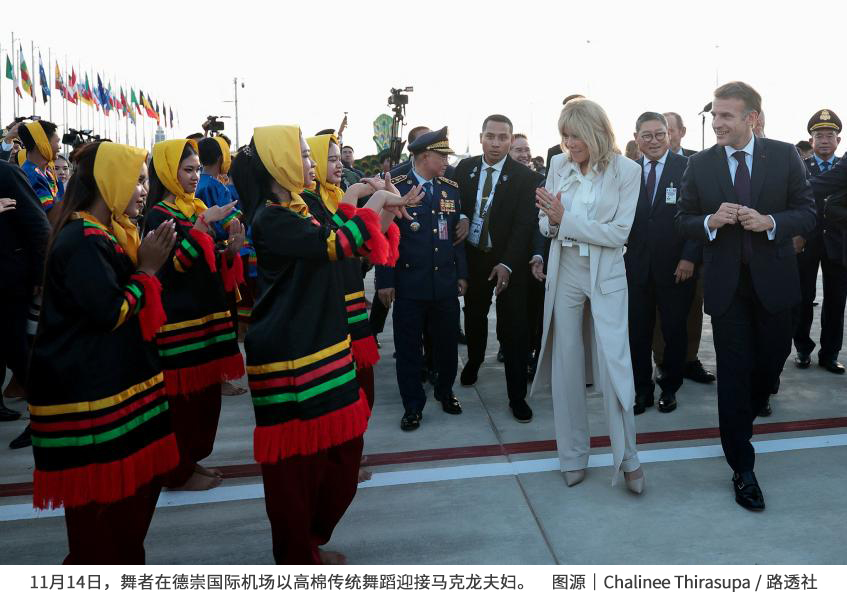
On November 14, Apsara dancers performed a traditional blessing dance for French President Emmanuel Macron and his wife on their arrival at Techo International Airport near Phnom Penh. It was the first state visit to Cambodia by a French president since 1993 and came ahead of the 20th Francophonie Summit.
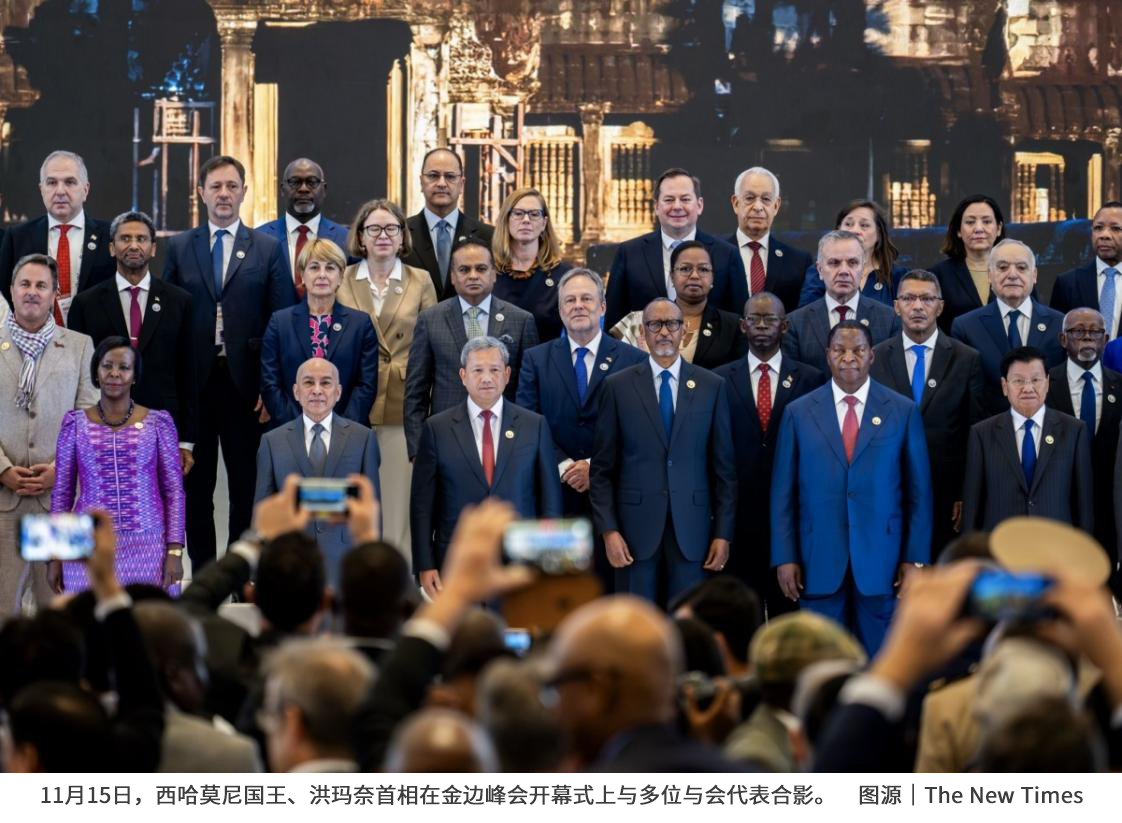
Delegations from across the Francophonie arrived over the following days. For the first time, Phnom Penh was at the centre of the Francophonie’s diplomacy as its host.
1. A first as host: Phnom Penh takes centre stage
Before the summit, the International Organisation of La Francophonie (OIF) brought together 90 states and governments across Europe, Africa, the Americas and Asia: 53 full members, five associate members and 32 observers. Cambodia joined as an observer in 1991 and became a full member in 1993. More than three decades later, it hosted for the first time, the second Francophonie summit in Southeast Asia after Hanoi in 1997. Two new observers were admitted at the close, bringing the total to 92.
The theme was “Reinvesting in peace for shared prosperity and lasting stability.” Coming from a country that endured conflict and moved towards peace and development through the Paris Peace Agreements, Cambodia’s case for peace carried particular weight.
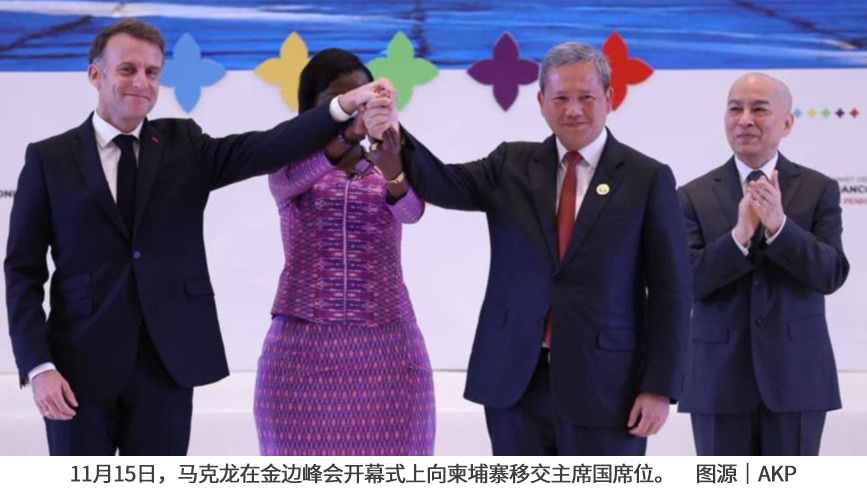
On November 14, Deputy Prime Minister and Foreign Minister Prak Sokhonn chaired the 48th Ministerial Conference of the Francophonie, which prepared the summit’s outcome documents. Cambodia took over the summit presidency from France at the opening on November 15. Macron said the meeting was an opportunity to reassert the organisation’s political role and translate solidarity into specific commitments.
2. Cambodia’s presidency helps members find common ground
Hosting a major international meeting calls for both organisational skill and diplomatic judgment.
One of the main items on the agenda was choosing a secretary-general for 2027–2030. Members differed over the candidates. After several rounds of consultations, the Cambodian presidency proposed a 12-month extension for incumbent Louise Mushikiwabo so that election rules could be clarified before a vote in 2027. Members accepted the compromise. The French president’s office said it would help bridge differences and preserve consensus across the Francophonie.
The Phnom Penh compromise kept an organisation spanning five continents together on a difficult issue. Reaching agreement at its first summit as host demonstrated Cambodia’s ability to mediate and laid the groundwork for its two years in the chair.
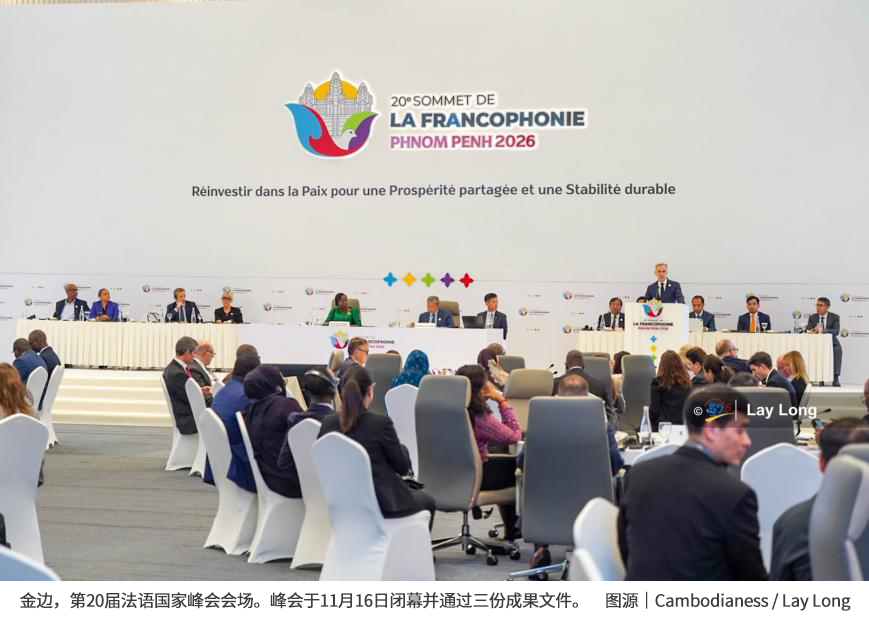
At the close, leaders adopted the Phnom Penh Declaration, a resolution on crises and peacebuilding, and the Phnom Penh Appeal to protect cultural heritage and promote cultural diversity. Two of the texts took the name of Cambodia’s capital, giving Phnom Penh a place in the organisation’s formal record.
3. Twenty-nine documents deepen practical ties with France
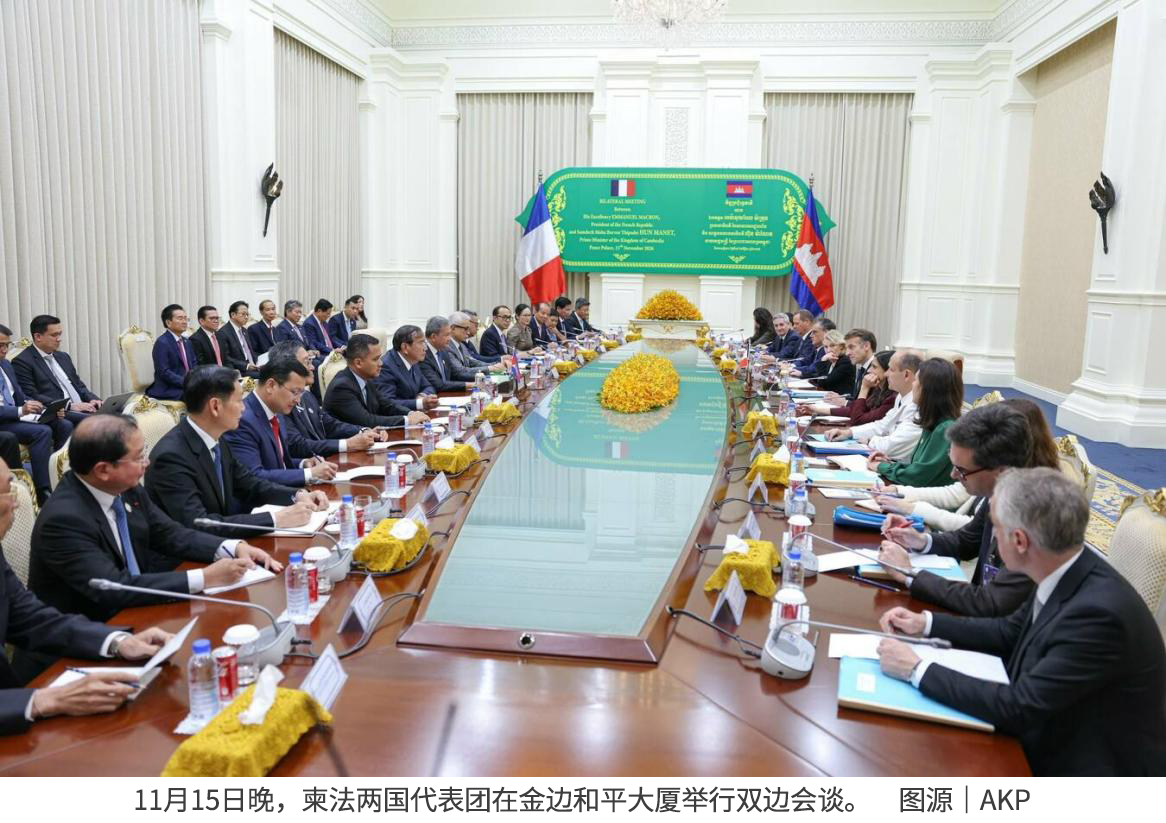
The summit also brought concrete developments in bilateral relations. On the evening of November 15 at the Peace Palace in Phnom Penh, Prime Minister Hun Manet and President Macron witnessed the signing of 29 cooperation documents. Hun Manet said it was the largest number of agreements his government had signed with a single partner on one occasion. Macron said ties between France and Cambodia had never been closer.
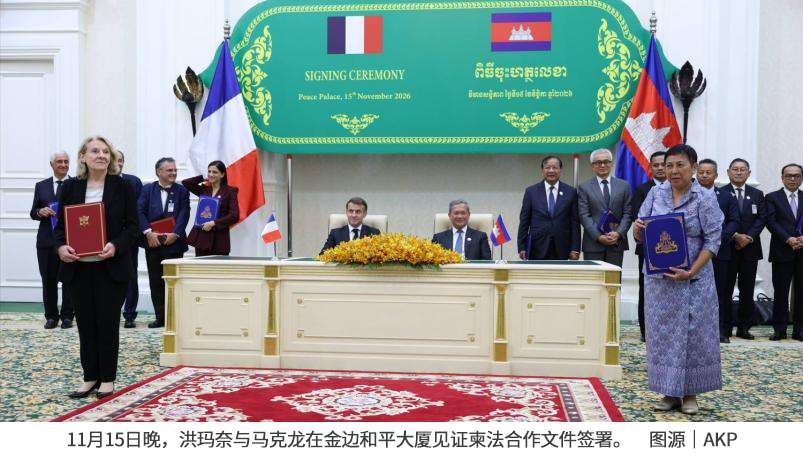
The agreements span energy, health, transport, infrastructure and agriculture, much of it directly relevant to everyday life. The two countries are advancing a hydropower project for electricity storage, which Macron said would help Cambodia strengthen its energy independence. In agriculture and distribution, they will work on a Phnom Penh wholesale market modelled on Rungis, near Paris. Rungis is one of the world’s largest wholesale markets for fresh food. The project could improve the distribution of Cambodian produce and benefit farmers.
Cooperation also covers research, training and governance in artificial intelligence, a joint health research platform, the cultural and creative industries, legal cooperation and efforts against drug and human trafficking. In defence, the two countries will continue training cooperation and expand cooperation on UN peacekeeping. The year marks 80 years of military cooperation between them. The leaders also agreed to strengthen action against transnational crime and online scams, in line with Cambodia’s continuing anti-fraud efforts.
4. Support for a peaceful settlement of the border dispute
On the Cambodia–Thailand border dispute, Hun Manet reaffirmed that Cambodia sought a peaceful settlement under international law and existing agreements. He thanked France for its efforts. Macron likewise reiterated France’s support for a peaceful resolution under international law.
Macron also recalled two historical moments. In 1966, Charles de Gaulle spoke in Phnom Penh in support of Cambodia’s freedom and territorial integrity. In 1991, the Paris Peace Agreements opened a path back to peace and development.
Cambodia bases its border position on colonial-era treaties and delimitation maps. In the view of this analysis, the French president’s remarks in Phnom Penh on territorial integrity and international law reinforced Cambodia’s call for a peaceful settlement through legal means.
5. Cultural ties, from Angkor to French-language classrooms
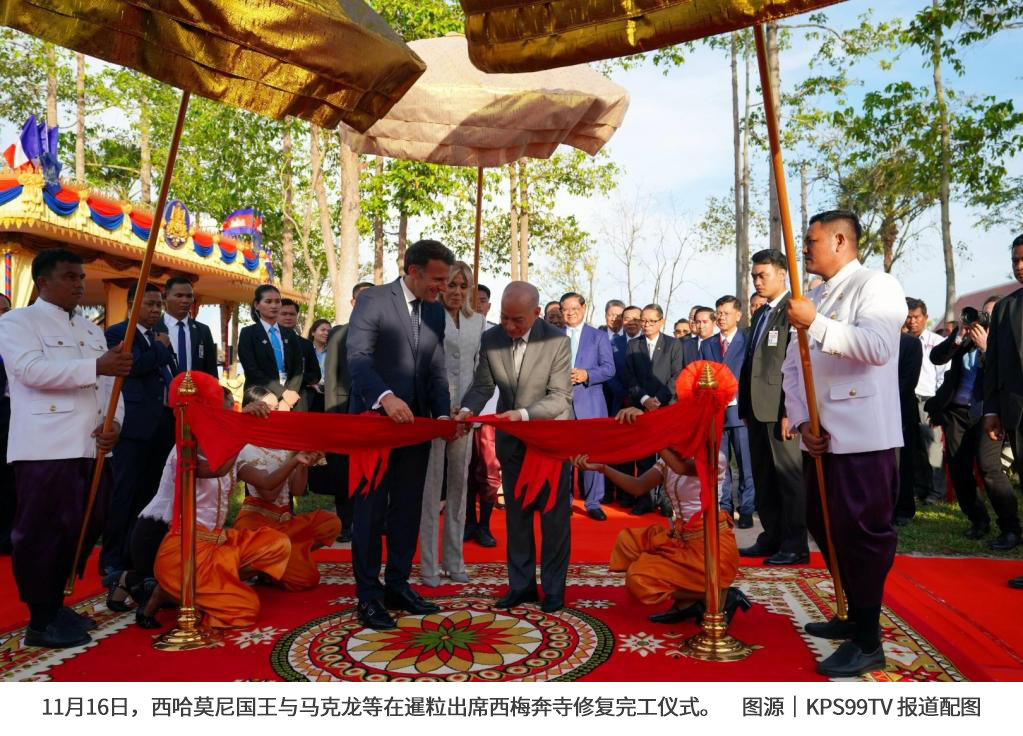
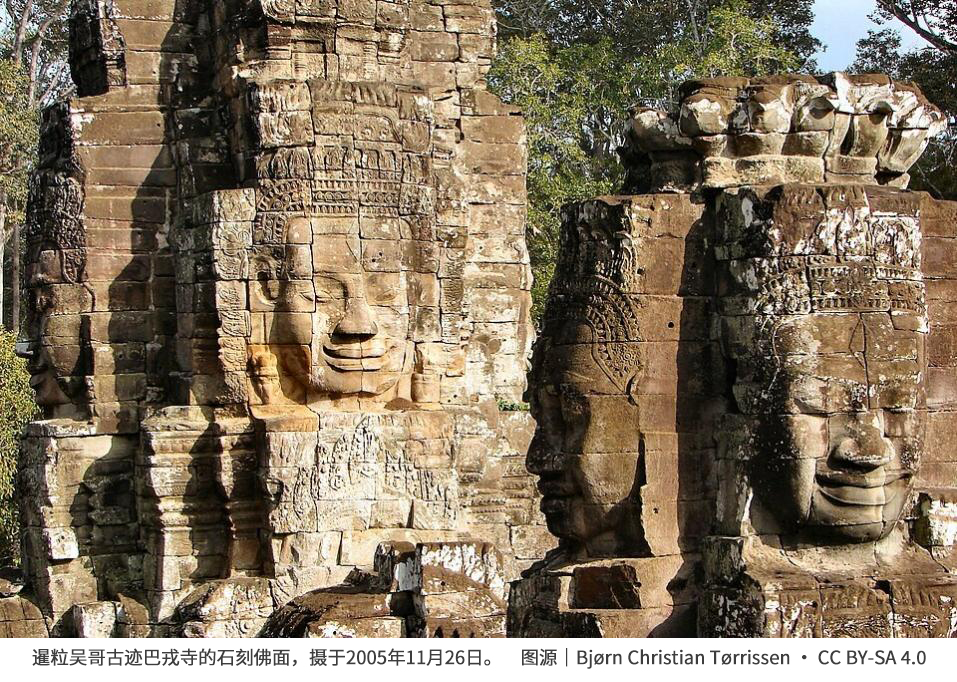
Culture was a central theme of the summit. The Phnom Penh Appeal put the protection of cultural heritage and promotion of cultural diversity into the Francophonie’s formal record. That priority fits Cambodia, home to the World Heritage site of Angkor. On November 16, King Norodom Sihamoni and Macron attended a ceremony in Siem Reap marking the completion of the French-supported restoration of the West Mebon temple.
The two sides also signed an agreement to extend the teaching of French from primary and secondary schools to universities, offering young Cambodians more opportunities to engage with the French-speaking world. Macron noted that the late King Father Norodom Sihanouk was a founding figure of the Francophonie. More than half a century later, holding the summit in his country carried particular significance.
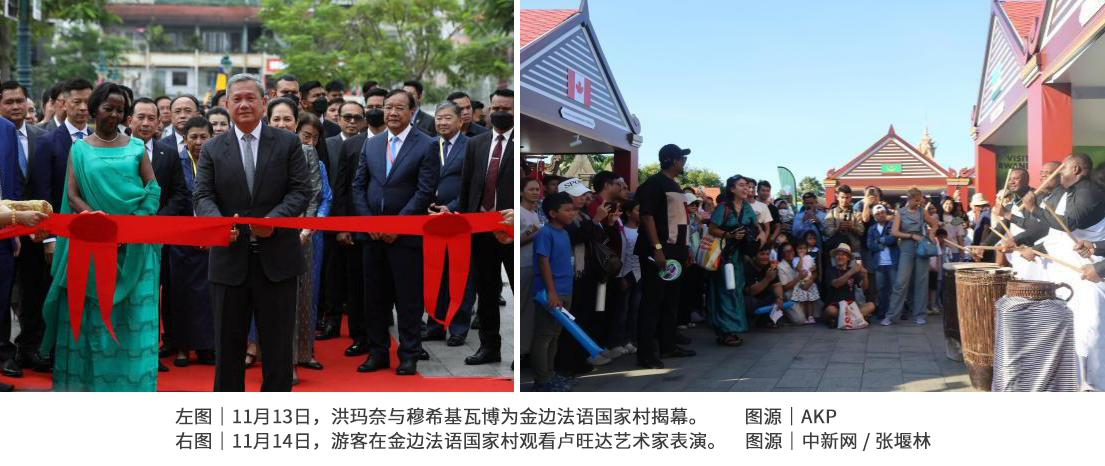
Away from the main summit venue, the Francophonie Village at the Wat Botum gardens and the FrancoTech exhibition opened to the public, giving Cambodians a chance to take part in the wider event.
6. Preah Sihanouk province showcases its coast
Alongside exhibits from Francophonie members, Phnom Penh and Cambodian provinces set up stands at the village. Preah Sihanouk displayed local products such as coconut, palm oil and fried quail, showcasing the province’s produce and coastal life. Provincial Governor Mang Sineth introduced local products to visitors at the stand.
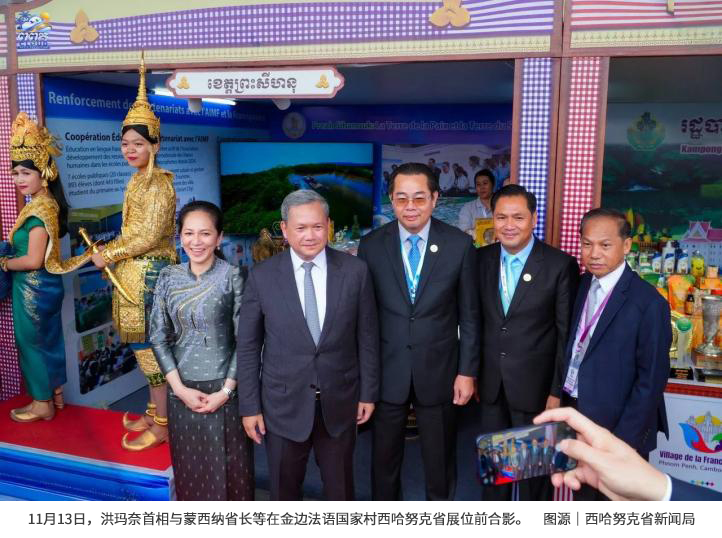
Mang Sineth said in an interview that hosting the summit meant a great deal to Cambodia. He said the country hoped the event would show that it was peaceful, capable of hosting large international events, and able to offer a safe environment for investment and tourism.
The history behind the name Preah Sihanouk province is named for King Father Norodom Sihanouk. He is recognised as one of the founders of the Francophonie, alongside former presidents Léopold Sédar Senghor of Senegal, Habib Bourguiba of Tunisia and Hamani Diori of Niger. On March 20, 1970, representatives of 21 states and governments signed a convention in Niamey, Niger, establishing the Agency for Cultural and Technical Cooperation, the precursor to the OIF. More than half a century later, the summit in Sihanouk’s homeland, with the province bearing his name represented at the village, gave the display a distinctive connection to the institution’s history.
A port city with a long connection to France Previously known as Kampong Som, the port took shape after independence when Cambodia began building its first deep-water port in Kampong Som Bay in the mid-1950s with French assistance. The city grew around the harbour. More than half a century later, the 29 documents signed in Phnom Penh again put energy, transport and infrastructure on the cooperation agenda, all central to the port city’s future.
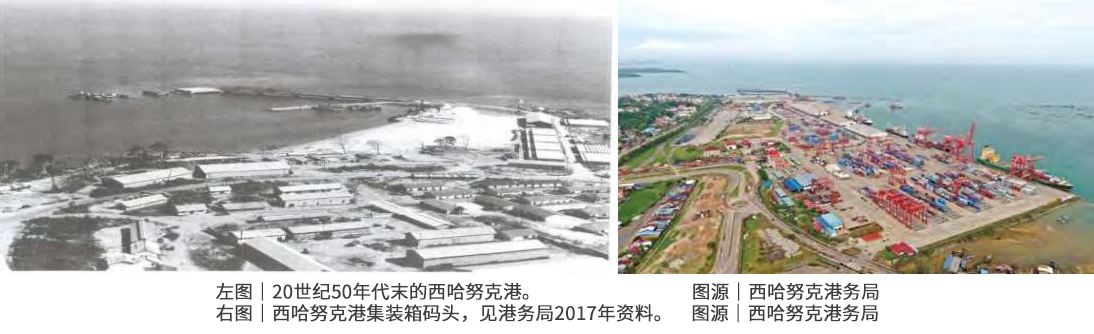
What the summit could mean for Sihanoukville The first opportunity is tourism. Reaching audiences across the Francophonie could draw more visitors from Europe and other French-speaking areas to Sihanoukville’s beaches and islands. The second is local produce. Coastal products such as coconuts and palm oil have been showcased, while cooperation with France on agriculture and distribution could connect local products with bigger markets. The third is the port and industry. As Cambodia’s only deep-water port, Sihanoukville is well placed to benefit from the energy, transport and infrastructure areas identified in the agreements. Turning those openings into projects will depend on how local stakeholders follow up.
7. Four ways Cambodia could benefit
Viewed over a longer period and in a wider context, the summit brought gains for Cambodia on at least four fronts.
History can strengthen diplomacy King Father Sihanouk helped establish the Francophonie’s system of cooperation, giving Cambodia a distinctive place in its history. By hosting for the first time and assuming the presidency, his country turned that legacy into diplomatic influence. Macron’s decision to mention Sihanouk in Phnom Penh showed that the legacy still carries weight across the Francophonie.
A platform for a smaller country Multilateral organisations give countries such as Cambodia a platform to make their voices heard. The presidency comes with a role in setting the agenda and coordinating members over the next two years. The Phnom Penh compromise showed how Cambodia could use that role. Vietnam, Laos and Cambodia are all members of both ASEAN and the OIF, giving Cambodia a chance to connect the two communities. Hun Manet’s decision to deliver his entire speech at the village opening in French also signalled Cambodia’s commitment to taking part in the Francophonie.
A route into European and French-speaking markets In addition to the 29 documents, the summit period included FrancoTech and the sixth Francophone Entrepreneurs Forum. The forum was expected to attract about 1,200 entrepreneurs from 72 countries. For Cambodia as it seeks to diversify its markets, these events offered an opportunity to meet French-speaking businesses from Europe, Africa and North America.
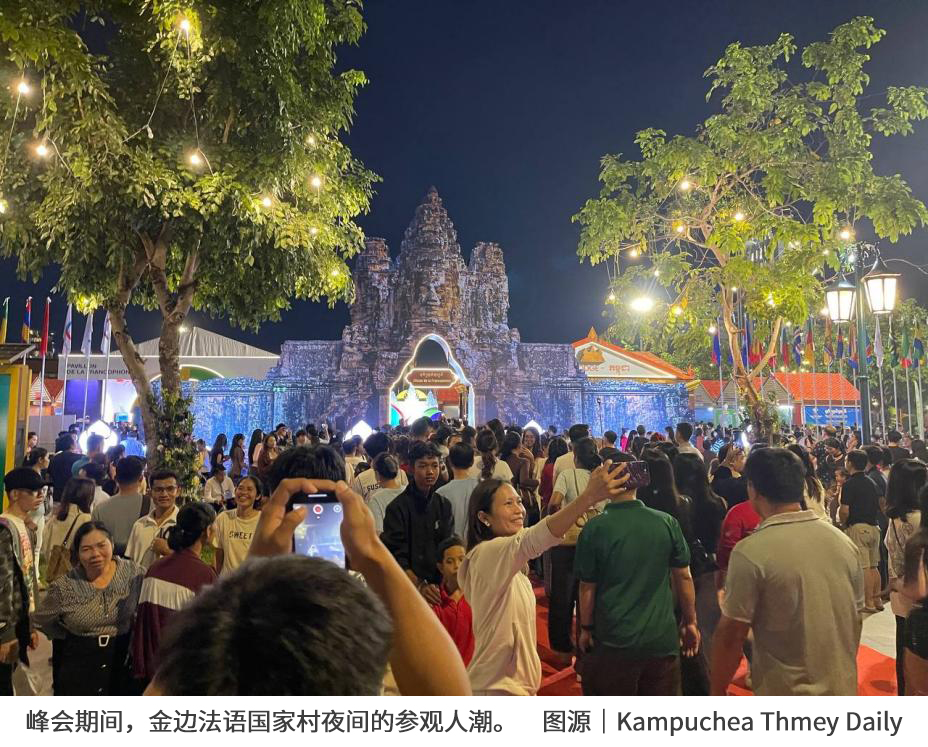
The world sees the Khmer smile Under a theme linking the Khmer smile with the Francophonie, the village included 73 national and institutional pavilions, 130 stands and about 30 food stalls. Cambodia’s Ministry of Women’s Affairs reported about 660,000 visits over five days, well above an initial projection of 100,000. A well-run international event and enthusiastic public participation helped show visitors an open, welcoming Cambodia at peace.
8. The presidency is a new starting point
The summit has closed, but Cambodia’s work as chair is just beginning. It faces three key tasks before the next summit in Ottawa, Canada, in 2028.
Help the 2027 election run smoothly As the country that proposed the Phnom Penh compromise, Cambodia will continue to coordinate discussions so members can clarify the rules and build consensus.
Put cooperation agreements with France into practice The work now is to turn the 29 documents into projects, including hydropower, the wholesale market and French-language education, so Cambodians can see practical benefits.
Build the Francophonie’s role in the Asia-Pacific Hun Manet has said Cambodia wants to strengthen the organisation’s influence in the Asia-Pacific and promote cooperation on youth, innovation and the economy. The presidency is an opportunity to put that vision into practice.
From Hanoi in 1997 to Phnom Penh in 2026, the Francophonie Summit returned to Southeast Asia after nearly 30 years. Cambodia was both a welcoming host and a chair that helped bring members together. The summit and related events showed how a country that has lived through conflict and prizes peace is participating in international affairs with confidence and offering solutions of its own.
The Khmer smile travelled from Angkor to the French-speaking world, and Cambodia strengthened its links abroad. The summit has ended, but it marks the beginning of a more outward-looking, active chapter for Cambodia.
Sources
• Cambodia, France sign 29 agreements during Macron state visit— The Star / Phnom Penh Post
• France et Cambodge scellent leur « partenariat renouvelé » avec 29 accords— AFP
• Francophonie summit gives Mushikiwabo one more year— Daily News Egypt
• Francophonie Summit Extends Mushikiwabo’s Mandate— Cambodianess
• Macron leaves Francophonie summit with leadership dispute on hold— AP
• French-speaking nations hold a summit in Cambodia— AP
• Francophone summit opens with DR Congo, Rwandan clash— AFP
• Macron calls for peace, dialogue, as Cambodia assumes presidency— The Star
• Cambodia hosts the 20th Francophonie Summit— Seasia
• Francophonie : Village inauguré à Phnom Penh— APA News
• Preparations for 20th Francophonie Summit Progressing Well— AKP
• Experiencing cultural diversity at the Francophonie Village in Phnom Penh, Cambodia— China News Service (Preah Sihanouk stand and Governor Mang Sineth’s remarks)
• Francophonie Village records around 660,000 visits in five days— Kampuchea Thmey Daily
• Francophonie Village closes after five days— Khmer Times
• Francophonie Village opens in Phnom Penh and Hun Manet delivers remarks in French— Cambodia China Daily
• Phnom Penh to host the Francophone Entrepreneurs Forum— Cambodia China Daily
• International Organisation of La Francophonie (founders)— Cambodia’s Ministry of Foreign Affairs and International Cooperation
• La Francophonie, an area of multilateral cooperation— French Ministry for Europe and Foreign Affairs
• Sihanoukville Autonomous Port (history of port construction)— Wikipedia
• Preah Sihanouk province (origin of the name)— Wikipedia
• Closing of the 20th Francophonie Summit and its three outcome documents— International Organisation of La Francophonie (OIF)