If Cambodia is viewed as an industrial jigsaw puzzle under construction, Chinese capital has been one of the key pieces continuously filling it in over recent years.
In 2024, for every two U.S. dollars of foreign direct investment flowing into Cambodia, more than one came from China.
In 2025, Cambodia approved 630 investment projects nationwide, with planned investment of nearly 10 billion U.S. dollars, expected to create about 438,000 jobs. Chinese investment accounted for more than half of this.
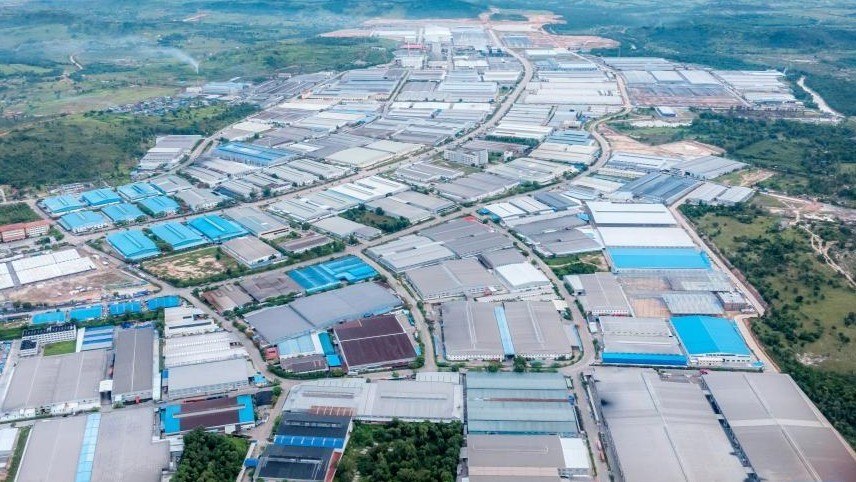
Behind these numbers are new factories continually springing up from Sihanoukville to Phnom Penh, Kampong Speu Province and Svay Rieng Province — and the Chinese bosses behind them.
But investing is one thing, and making money is another.
Some have operated here for more than a decade and gradually built factories employing hundreds of people;
Others, having just shipped their equipment into Cambodia, lost more than 5 million yuan within half a year;
And some enterprises, facing shrinking orders and transport disruptions, have had to close their factories and leave.
All coming to Cambodia to do business — why do some gain a firm footing while others pay a heavy price for the lesson?
I. Why Are Chinese Bosses Still Coming to Cambodia?
The answer is not just cheap labor.
Behind the batches of Chinese enterprises heading south, there are at least five different business calculations.
First, the cost calculation. In 2026, the minimum monthly wage in Cambodia's garment, footwear and related industries is 210 U.S. dollars. For labor-intensive enterprises, the relatively low labor cost remains attractive.
Second, the orders calculation. As the international trade landscape shifts, some European and American clients are requiring suppliers to locate production capacity outside of China. To keep their orders, Chinese enterprises have had to go overseas.
Third, the market calculation. Cambodia's urban construction, consumption and industrial development have created new commercial demand. According to a report by Caijing, some Chinese businesspeople are expanding into local markets for building materials, HVAC, and electrical equipment.
Fourth, the policy calculation. Cambodia offers tax incentives for qualified investment projects, while the China–Cambodia Free Trade Agreement and RCEP have also facilitated regional trade.
Fifth, the supply chain calculation. As factories arrive, supporting enterprises in packaging, hardware, logistics and equipment maintenance also begin to follow. For some Chinese suppliers, wherever the customers go, that is where the business goes.
Some come to save money, some to secure orders, some to seek new markets, and some to follow the supply chain.
But opportunity does not equal profit. The calculations Chinese bosses do before going overseas may no longer add up once they arrive in Cambodia.
II. Losing 5 Million Yuan in Half a Year — Why Didn't Cheap Labor Save Money?
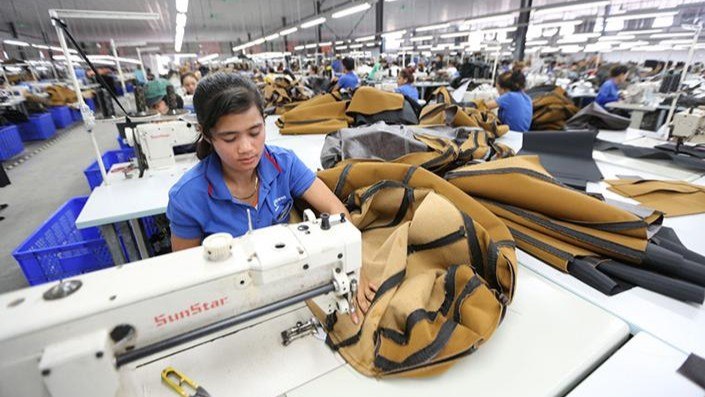
In 2025, a necktie enterprise from Shengzhou, Zhejiang Province, which had been in operation for 25 years, decided to set up a factory in Cambodia at the urging of its European and American clients. It originally intended to take advantage of the lower local labor costs, but unexpectedly suffered losses of more than 5 million yuan within half a year.
According to a feature interview released by the Zhejiang Council for the Promotion of International Trade in 2026, the interviewed foreign trade expert Shao Longhe said that after the factory went into production, problems came one after another.
Necktie production requires delicate handwork. Newly hired employees lacked experience, production efficiency was lower than that of skilled workers in China, and both material losses and the defect rate were higher than expected. Together with labor compliance, management, and production support issues, the actual costs kept climbing.
What the enterprise had not anticipated was that customers, citing Cambodia's cheap labor, demanded a 5% price reduction on the products.
The labor costs saved could not cover the increased production costs. In the end, the factory lost more than 5 million yuan in half a year and had to halt production and transfer ownership.
This case comes from an expert's retelling of an anonymous enterprise's experience. The specific financial losses cannot yet be independently verified, but it illustrates one of the challenges of manufacturing going overseas:
In China, skilled workers, raw materials, equipment maintenance, and upstream and downstream suppliers are often close at hand; in Cambodia, these conditions may not all be available at the same time.
Cheap wages do not mean low production costs.
Beyond costs and the supply chain, how to manage local employees is another test that Chinese enterprises must face.
III. Chinese Bosses and Cambodian Workers Are Adapting to Each Other
Machinery can be shipped in from China, but the management style of Chinese factories cannot necessarily be transplanted to Cambodia unchanged.
How wages are calculated, how overtime is arranged, what rights workers have — these seemingly trivial matters can directly affect a factory's production.
In 2025, the "Better Factories Cambodia" program carried out compliance assessments at 517 garment, bag and travel-goods factories, with wages, working hours, occupational safety and union rights all among the key areas of focus.
For Chinese bosses, they must achieve production efficiency while also handling labor relations well. This management ledger is sometimes harder to balance than the wage ledger.
Some enterprises have taken more than a decade to gradually gain experience.
According to a January 2026 report by the People's Daily, 3L Medical Products, which set up in the Sihanoukville Special Economic Zone in 2013, now has about 600 employees, more than 90 percent of whom are Cambodian. Through training and study trips to China, some ordinary workers have gradually grown into quality-inspection managers and workshop supervisors.
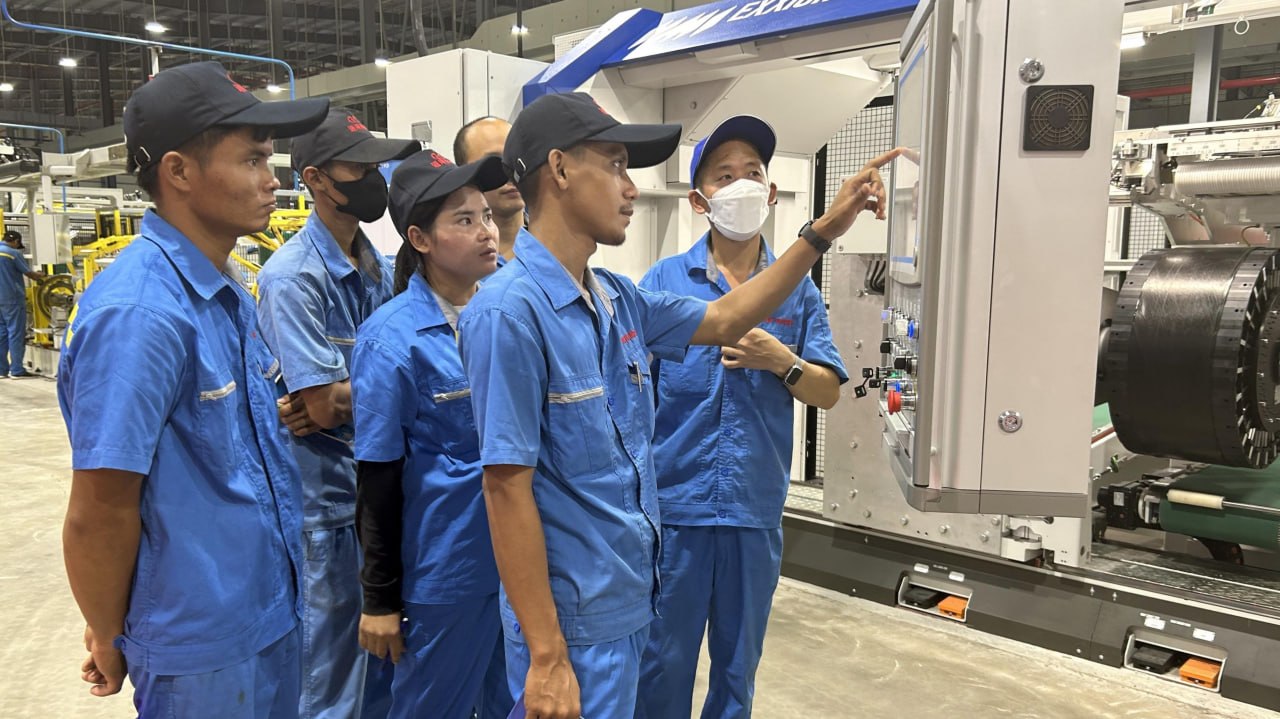
This cannot directly show how much the company has earned, but it does show that, beyond capital and equipment, long-term operations also require investing time in cultivating talent.
Factories can be relocated and equipment can be bought, but skilled workers and mutual trust cannot be built overnight.
Moving a factory abroad is easy; keeping people's hearts by your side is hard.
IV. Some Leave, Others Put Down Roots for More Than a Decade
The Sihanoukville Special Economic Zone is a window for observing this industrial migration.
Twenty years ago, the industrial base here was weak, and roads, electricity, factory buildings and supporting facilities all had to be built up step by step.
By 2025, the zone had attracted more than 200 enterprises, providing tens of thousands of jobs. Clothing, bags, medical supplies and other manufacturing industries have gradually clustered here.
Doing business in Sihanoukville, some are out to make quick money, while others have been running their businesses here for over a decade.
But on the other side of Cambodia, some factories have not managed to stay.
On April 27, 2026, in Poipet on the Cambodia-Thailand border, a Chinese-invested garment factory ceased operations.
According to Cambodian media reports, Meili Garment Company closed down under multiple pressures including reduced orders, financial difficulties and disrupted cross-border transportation, affecting about 700 workers.
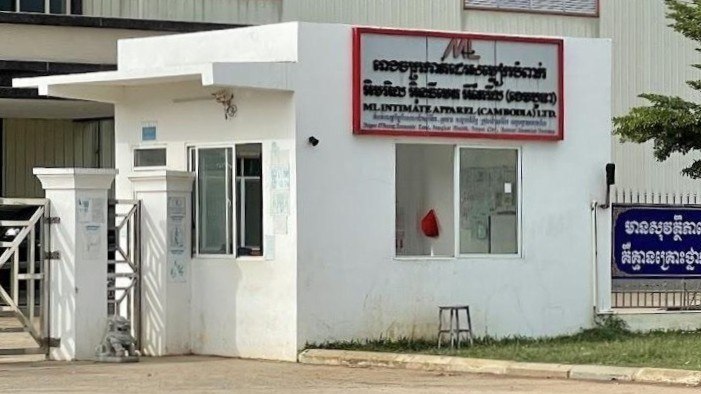
Unlike the Zhejiang necktie company mentioned earlier that lost 5 million yuan in six months, this factory had to cope not only with operational pressures but also with the impact of interrupted cross-border transport.
When the machines stop and the orders dry up, it is a disastrous blow for the boss and a matter of livelihood for the workers.
Some have found their footing here, while others have had to leave in disappointment.
What decides a factory's fate is not only how much money the boss initially invested, but also orders, costs, and those unpredictable external changes.
In the end, doing business overseas requires both skill and good timing.
V. Can the Next Wave of Chinese Bosses Still Make Money in Cambodia?
Some are leaving, while others continue to bet on Cambodia.
In April 2025, BYD began building a car assembly plant in Sihanoukville, with a planned annual capacity of 10,000 vehicles. In early 2026, the first batch of locally assembled BYD cars was delivered.
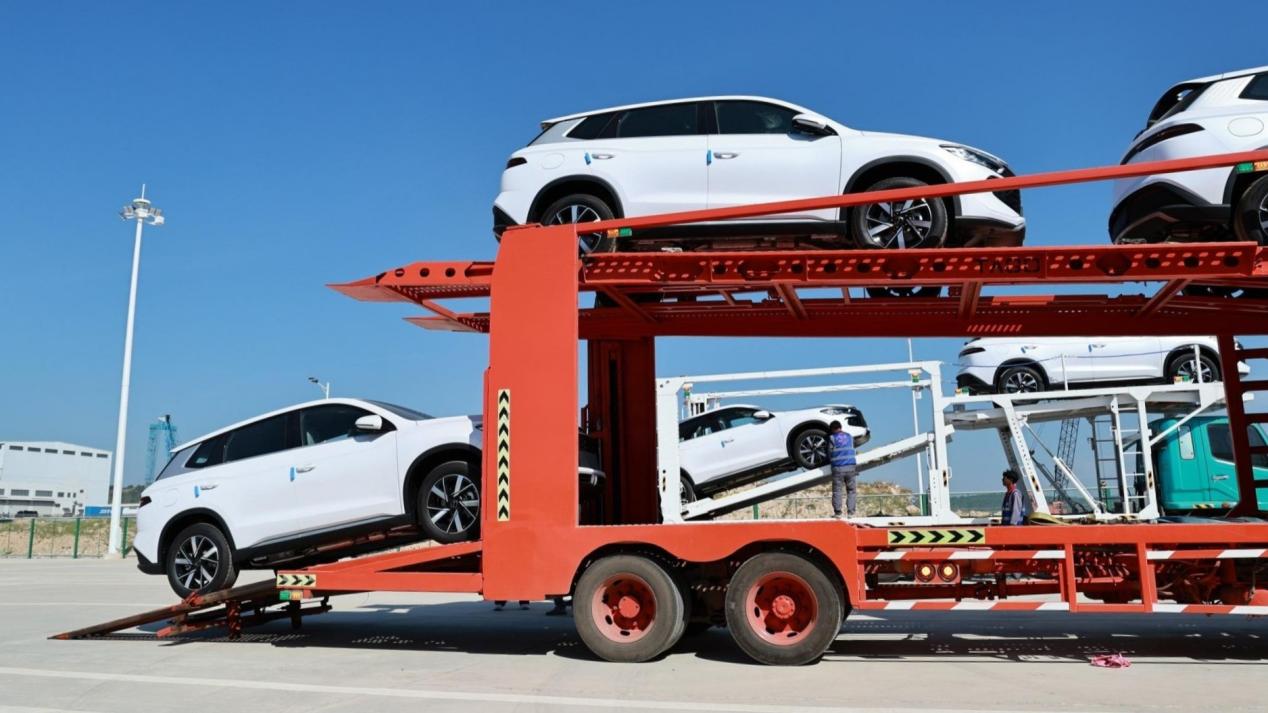
From sewing machines to automobile production lines, Chinese manufacturing has taken on a new face in Cambodia.
But assembling cars and building a car industry are two different things.
Where will the parts come from? Where can skilled workers be found? Can upstream and downstream enterprises keep up? These are cost questions that the new wave of investors cannot avoid, and lessons Cambodia must learn as it develops its industrial base.
Beyond the factories, the broader economic picture is not easy either.
The International Monetary Fund forecasts that Cambodia's economic growth will slow to 3% in 2026. A sluggish real estate sector, weak domestic demand, and uncertainty in international trade continue to make this investment destination full of variables.
New factories are still being built, but old problems have not all been resolved.
In February 2026, the Cambodian government held its first regular dialogue meeting with Chinese-invested enterprises. On the table before both sides lay several major challenges: taxation, customs, logistics, energy, and labor.
For Chinese bosses, Cambodia still offers opportunities, but cheap labor does not mean low cost, and investment incentives do not guarantee profit.
Back to the original question: Chinese bosses coming to Cambodia — are they winning or losing?
Some have left at a loss, some have put down roots for more than a decade, and others are arriving with fresh capital and equipment. No single answer can account for every Chinese boss.
Some have bet right on opportunity; others have lost to the variables. But capital can come and go, while industrial growth takes time.
What Chinese bosses need to calculate is how much money their businesses can earn. What Cambodia needs to answer is what these investments will ultimately leave behind.