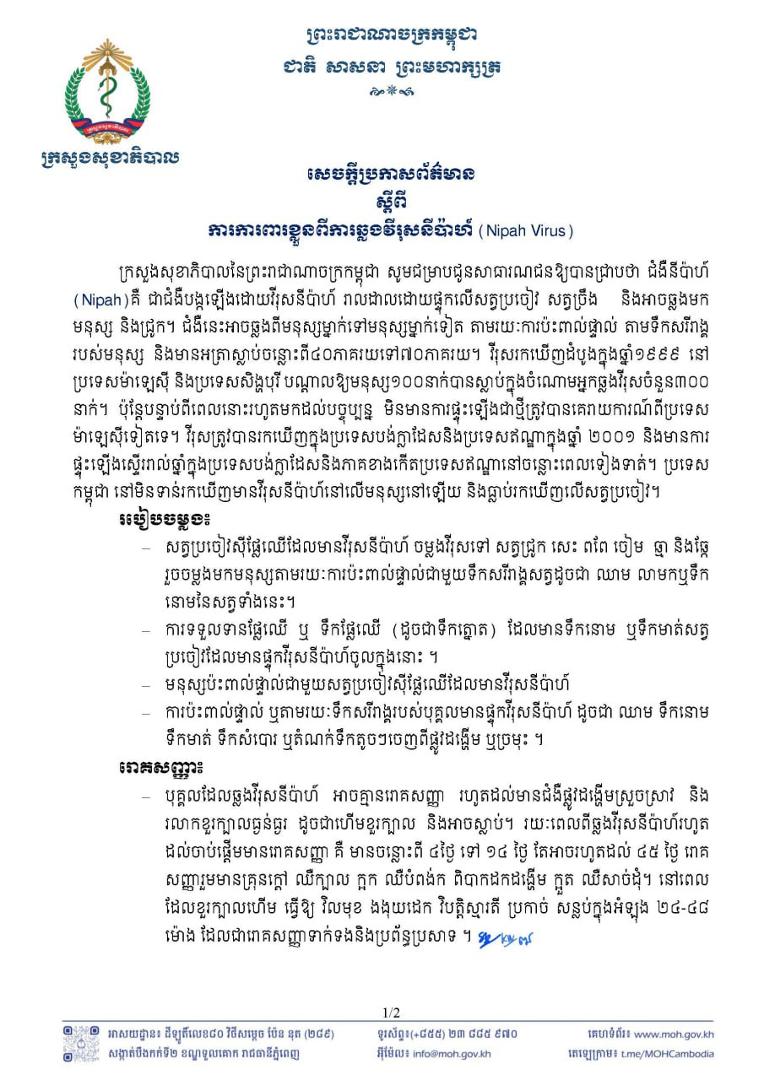
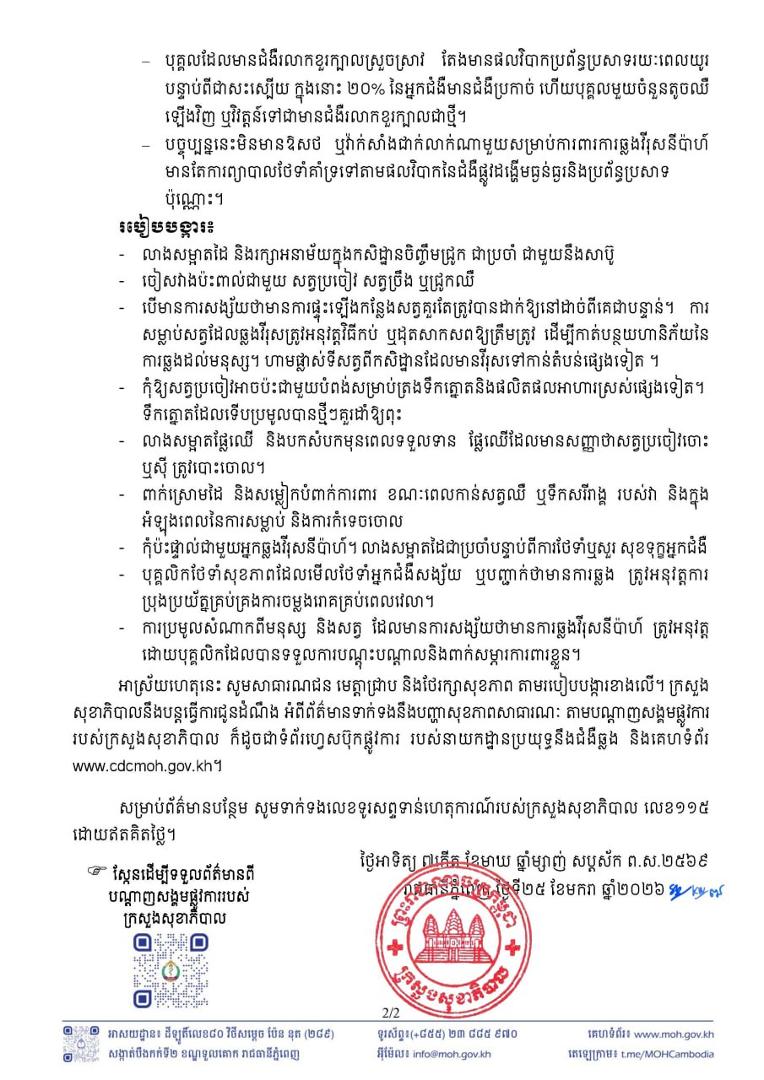
Cambodia's Health Ministry issued a January 25 press notice urging people to protect themselves against Nipah virus. Cambodia had not detected human infection, although the virus had previously been found in bats.
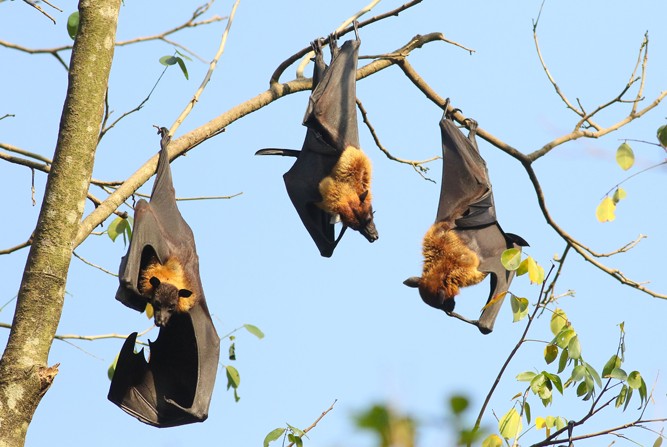
According to the ministry, Nipah is caused by a virus carried by bats, including flying foxes, that can infect humans and pigs. It can spread between people through direct contact with human bodily fluids and has reported case-fatality rates of 40–70 percent.
To prevent infection, the ministry advised regular handwashing and cleaning pig farms with soap, and avoiding contact with bats, flying foxes or sick pigs. Where an animal outbreak is suspected, the premises should be quarantined immediately. Culling infected animals should be accompanied by proper burial or incineration of carcasses to reduce human infection risks. Animals must not be moved from infected farms to other areas. Bats should be kept away from palm-sap collection tubes and other fresh food products, and freshly collected sap should be boiled.
Fruit should be washed and peeled before eating; fruit showing bat punctures or feeding marks should be discarded. Gloves and protective clothing should be worn when handling sick animals or their bodily fluids and during slaughter and disposal. Avoid direct contact with people infected with Nipah, and wash hands regularly after caring for or visiting patients. Healthcare workers caring for suspected or confirmed patients should always follow infection-control precautions. Samples from people and animals suspected of infection must be collected by trained personnel wearing protective equipment.
The report says Nipah was first identified in 1999 in Malaysia and Singapore, with 100 deaths among 300 infected people. It says no new Malaysian outbreak had been reported since then. The virus was subsequently identified in Bangladesh and India in 2001, with outbreaks almost annually in Bangladesh and at regular intervals in eastern India.
By: Nget Pisant.