The United States has formally lifted restrictions on arms sales to Cambodia, marking a clear warming of military relations between the two countries. The U.S. Department of Commerce recently updated the Federal Register to remove Cambodia from the “D:5 country group” subject to arms export restrictions, ending a major arms sales ban that had been in place for years. The U.S. side said the move was based on Cambodia’s performance in regional peace, security cooperation and the fight against transnational crime, and was consistent with the White House decision last October to lift the arms sales ban. From February 3, the relevant export approval process will be greatly simplified, and around 100 additional export licence applications for Cambodia are expected each year.
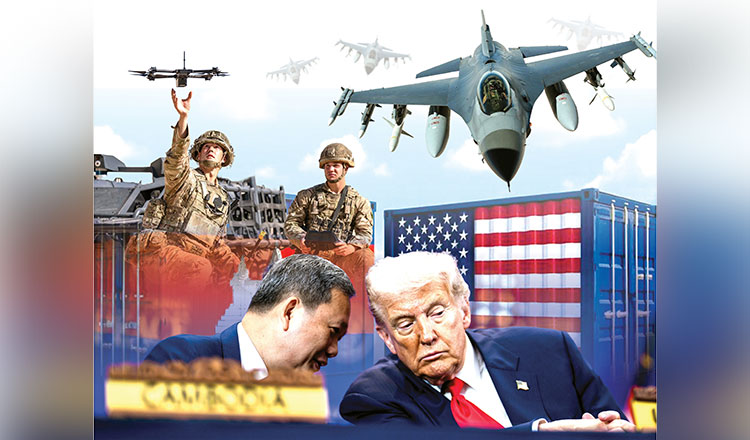
Although most restrictions have been lifted, Cambodia remains in the “D:1 country group” for national security reasons, and some military and defence technologies still require additional licences. Casey Barnett, president of the American Chamber of Commerce in Cambodia, said the move was an important symbol of U.S. trust in Cambodia and would open a new window for Cambodia to bring in advanced American technology. He said he was actively working to bring U.S. aviation and defence companies into the Cambodian market to support local security and economic development. Data show that Cambodia’s exports to the United States grew 28 percent year on year in 2025 to US$12.7 billion, and the United States remains one of Cambodia’s most important and most stable export markets.
The lifting of the ban is not only an adjustment in arms trade but also reflects a new stage in U.S.-Cambodia relations. Over the past year, the United States played a key role in mediating the Cambodia-Thailand border conflict, not only promoting ceasefire talks but also providing US$45 million for border stability and humanitarian assistance. Several scholars noted that the new context offers a “window of opportunity” for the two sides to deepen political, economic and security cooperation, and could help shift U.S.-Cambodia relations away from the old narrative of suspicion toward a pragmatic model of cooperation centred on transparency, mutual trust and practical interests.
Compiled by KPS99TV