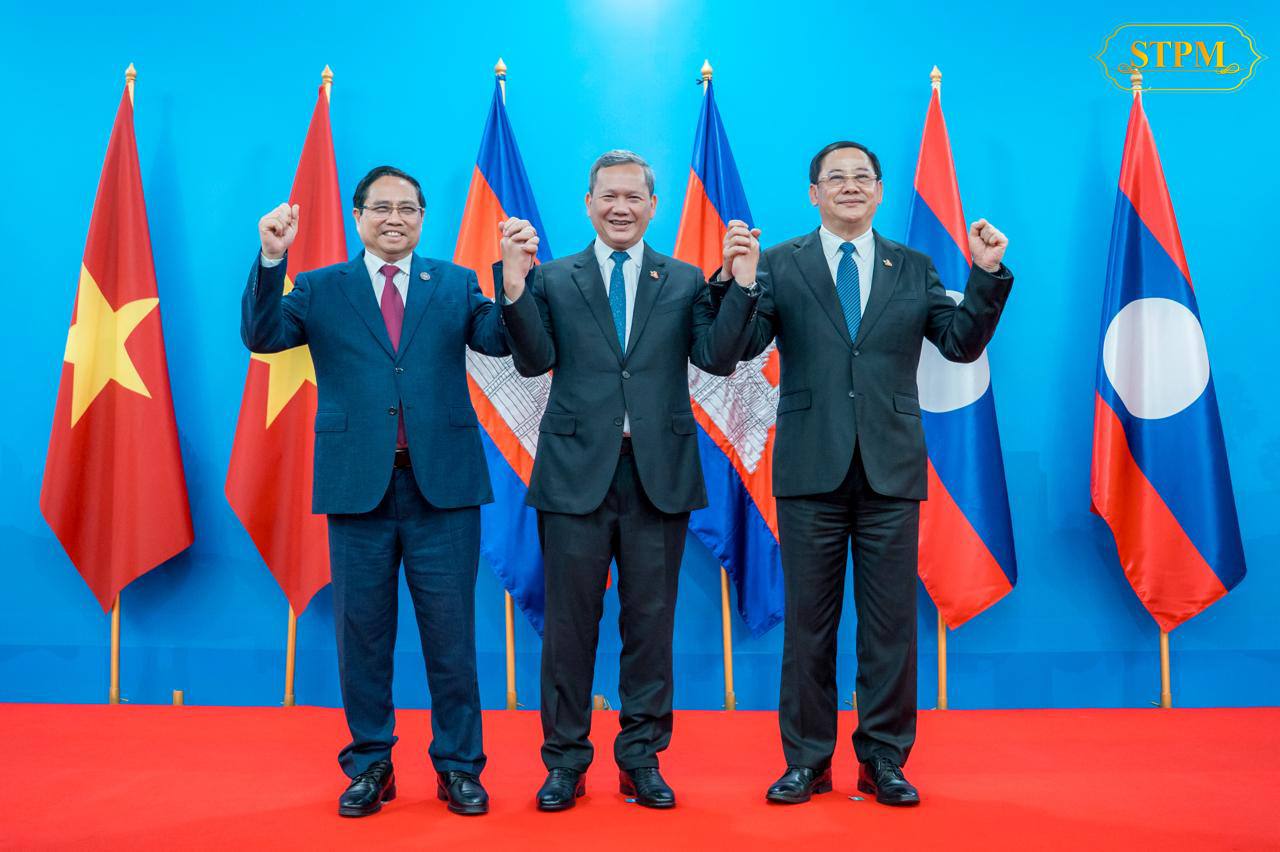
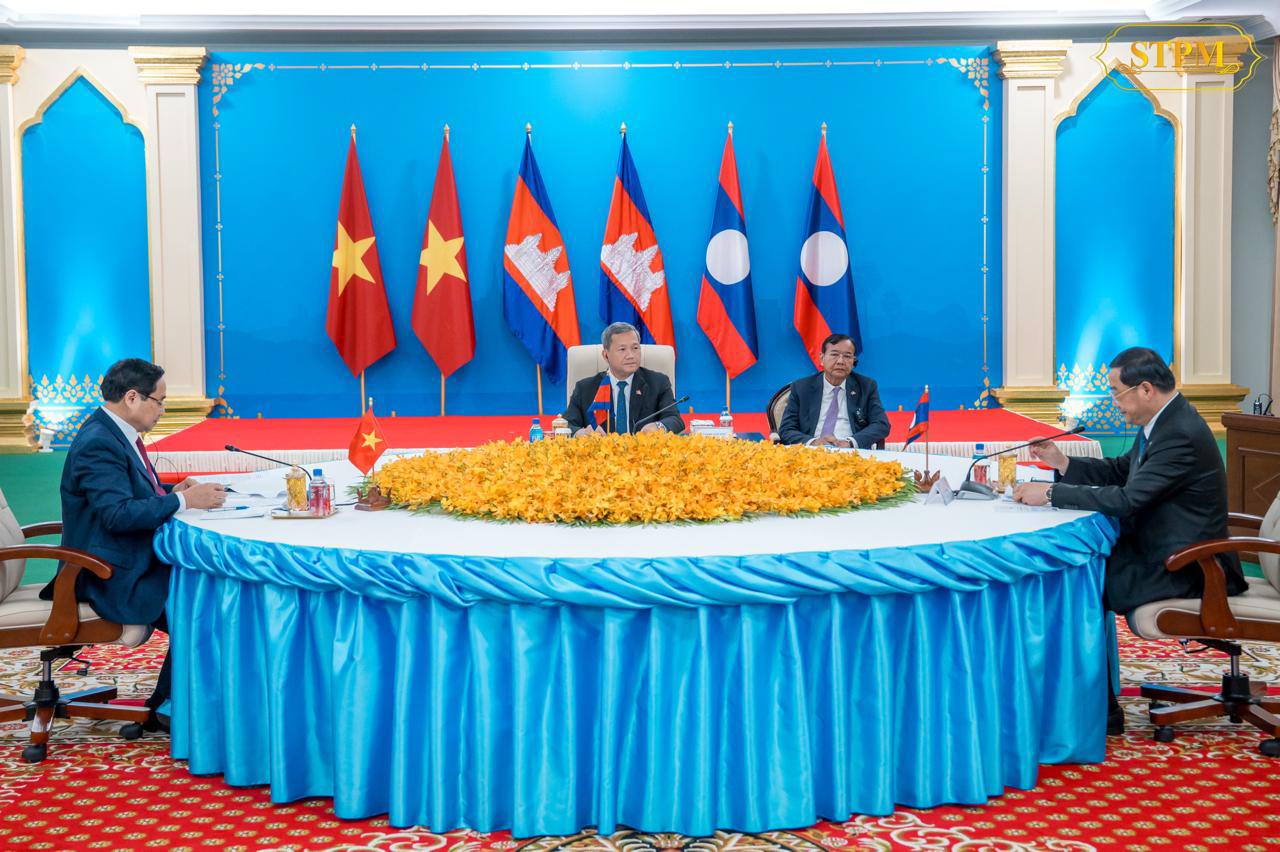
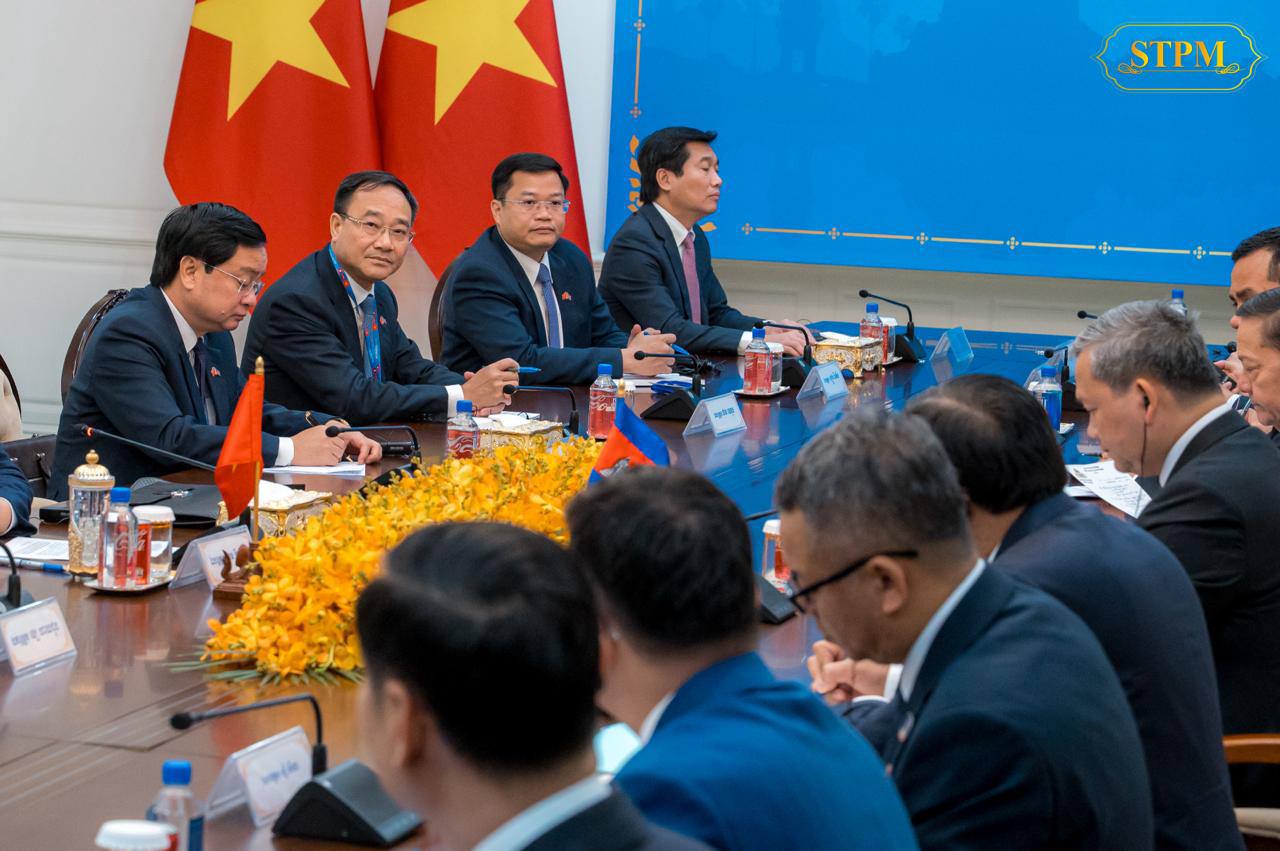
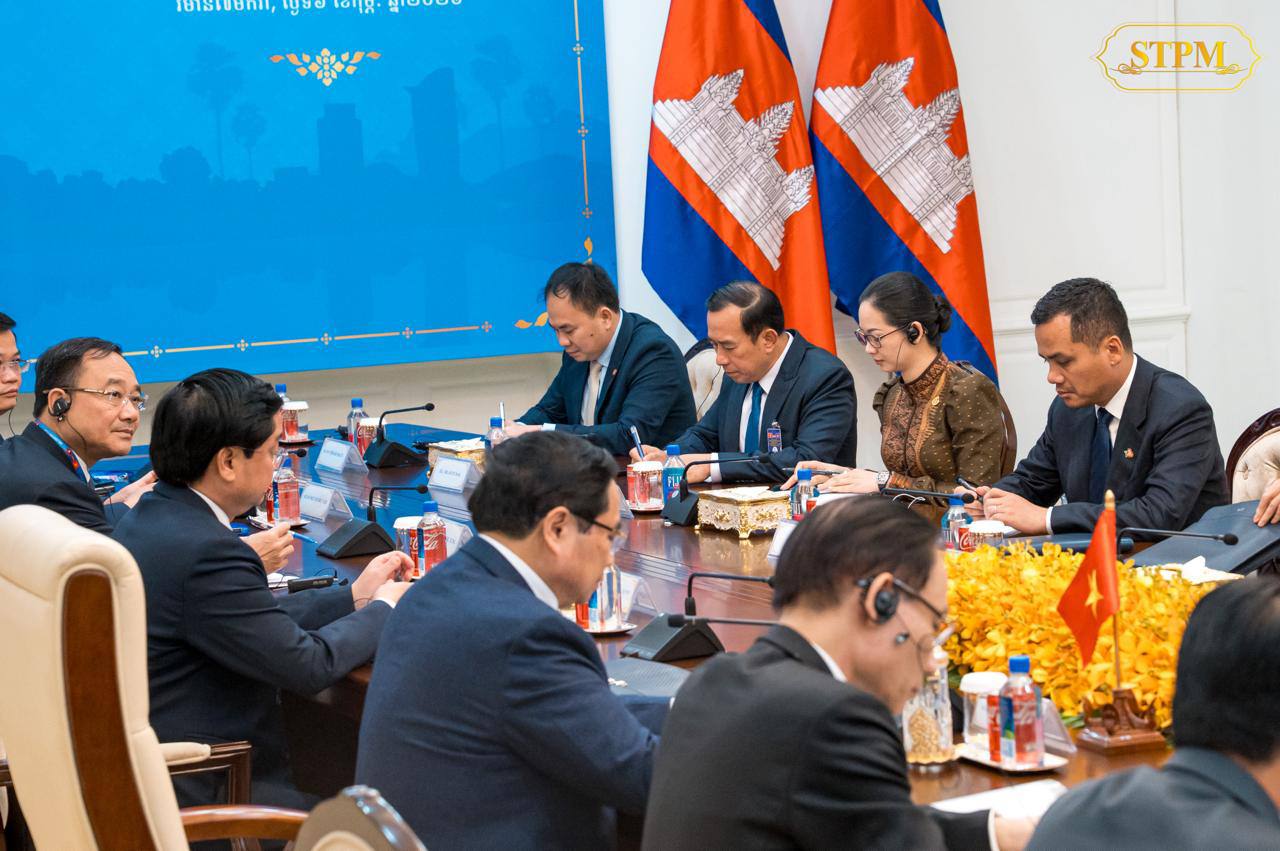
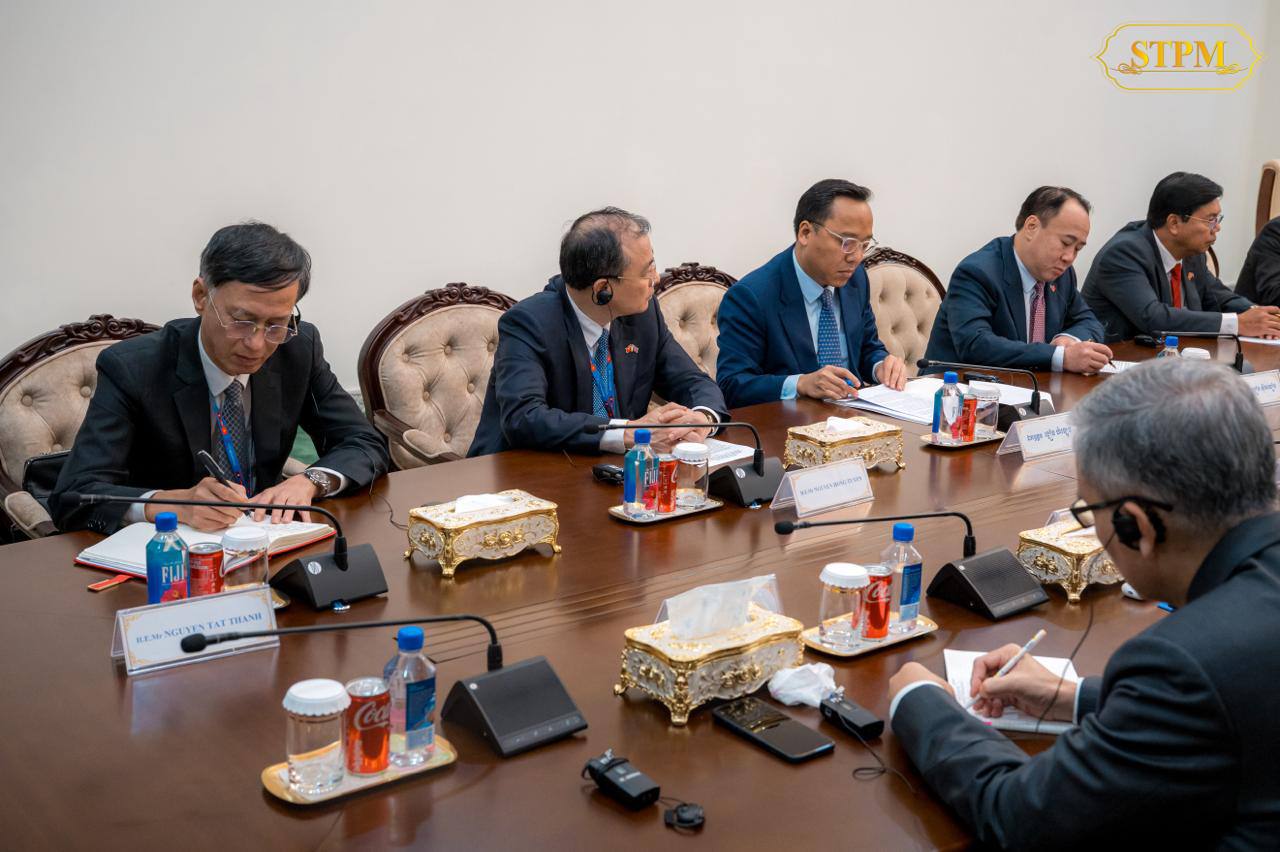
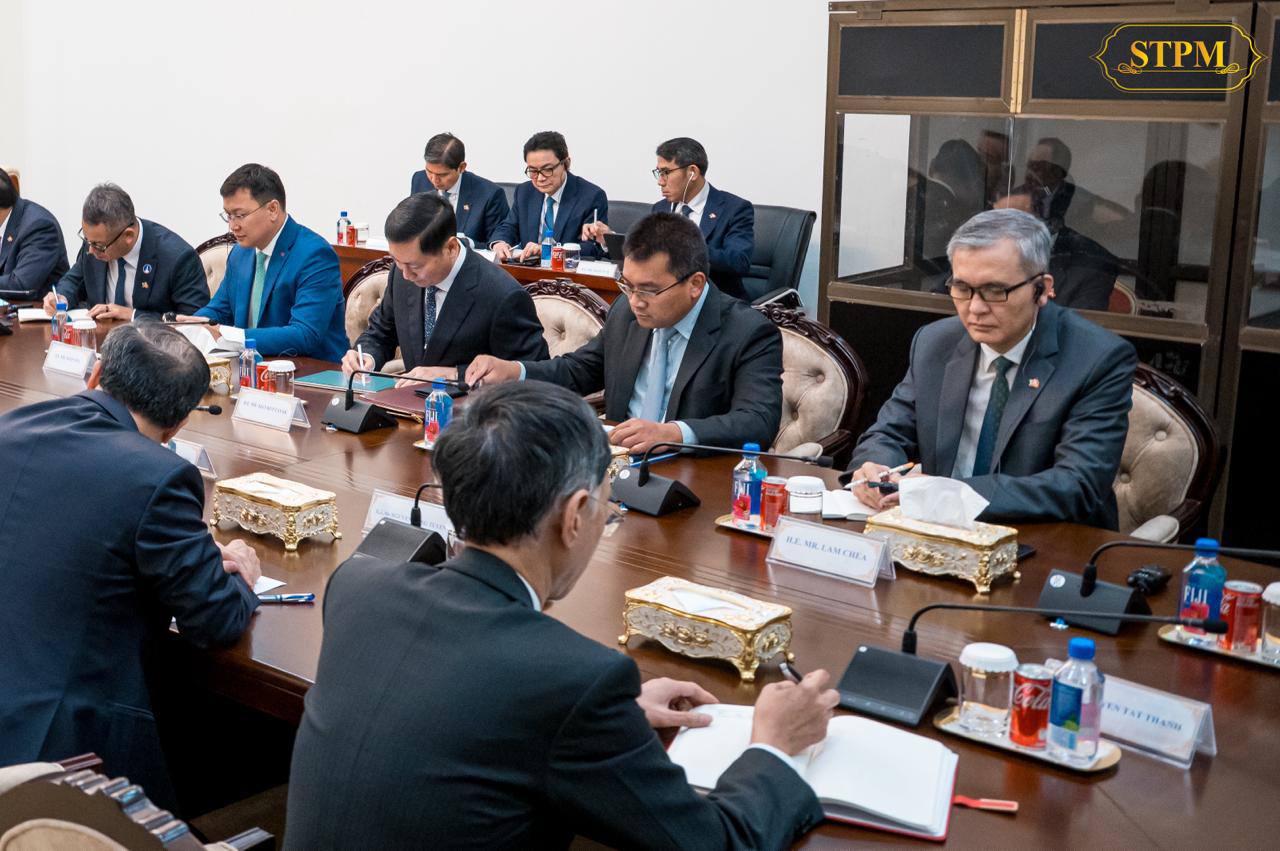
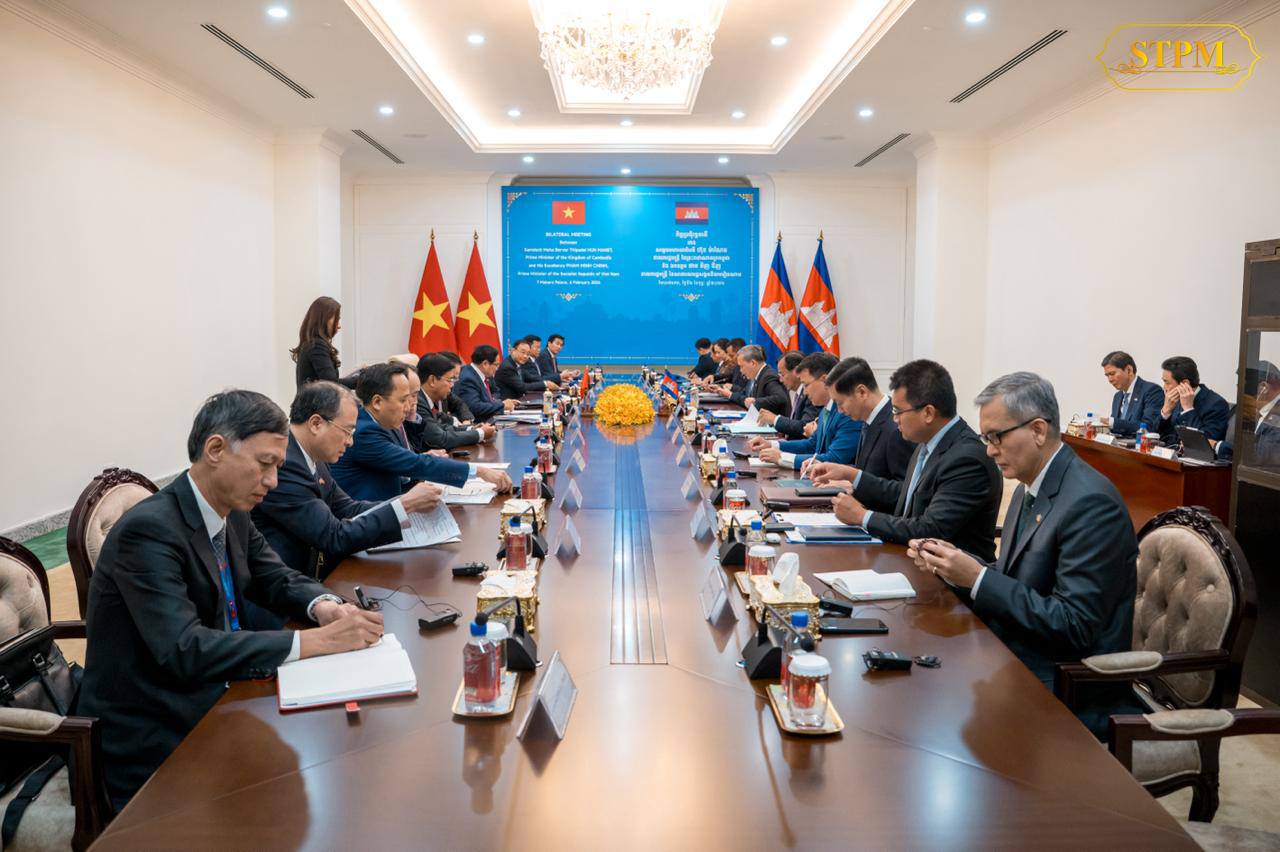
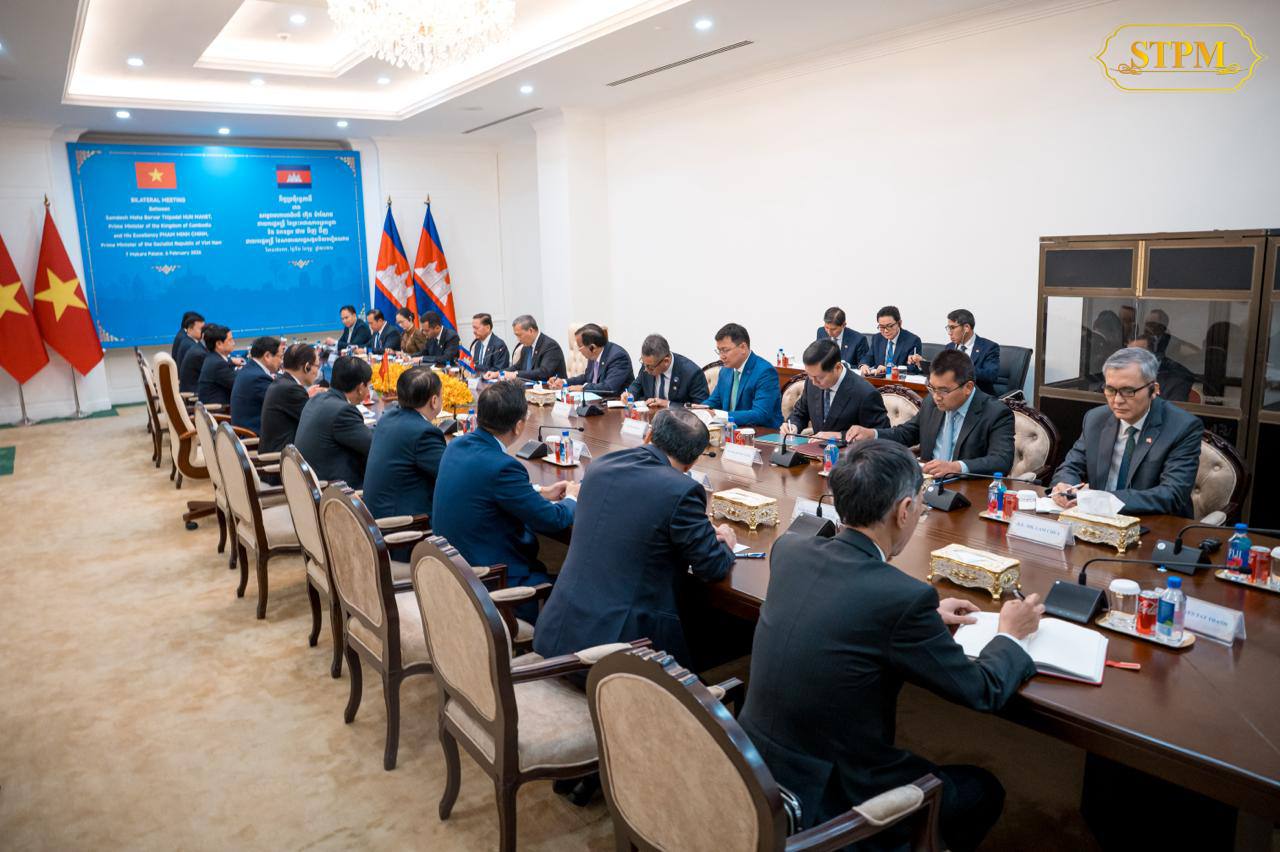
At a meeting of the prime ministers of Cambodia, Laos and Vietnam at the Solidarity Palace in Phnom Penh on February 6, the three heads of government stressed the importance of their relations and cooperation for development and for maintaining peace and stability in the region.
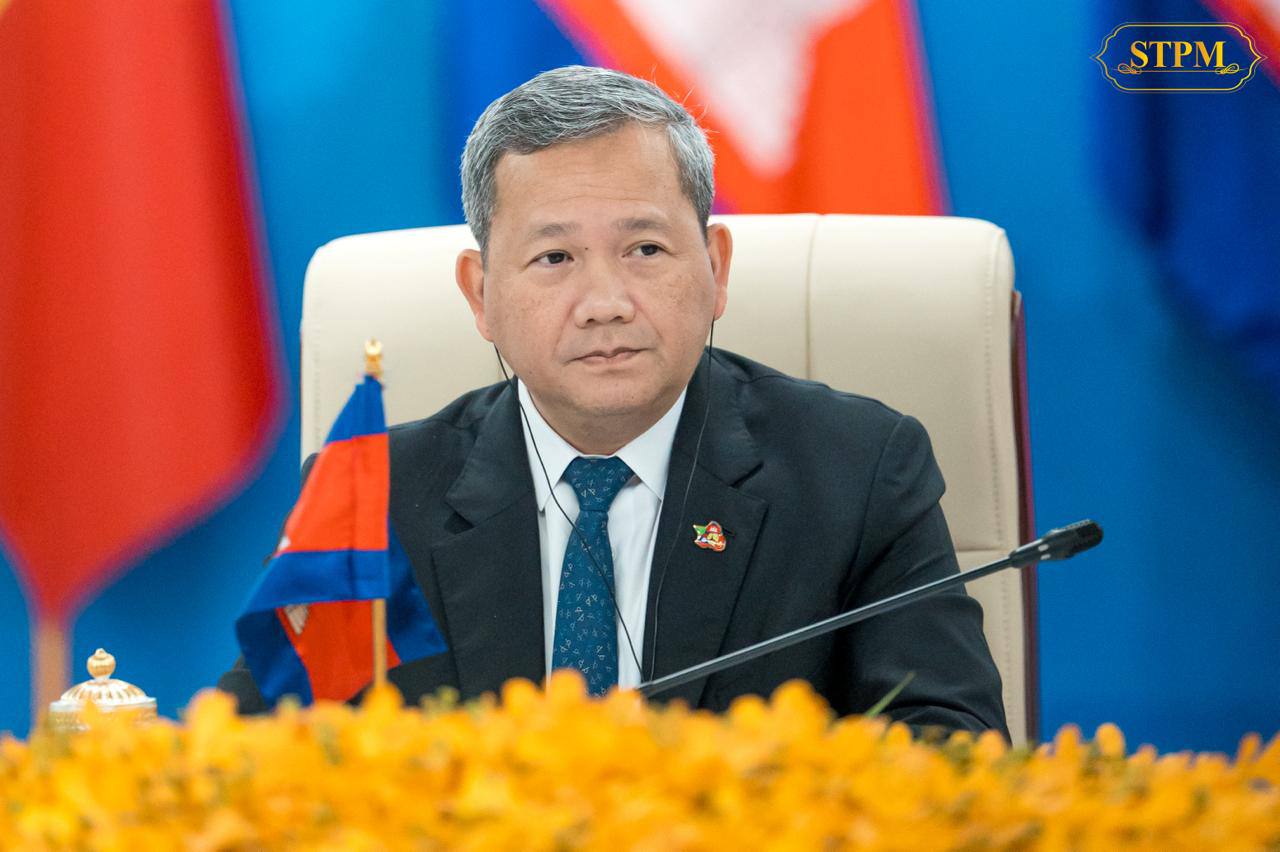
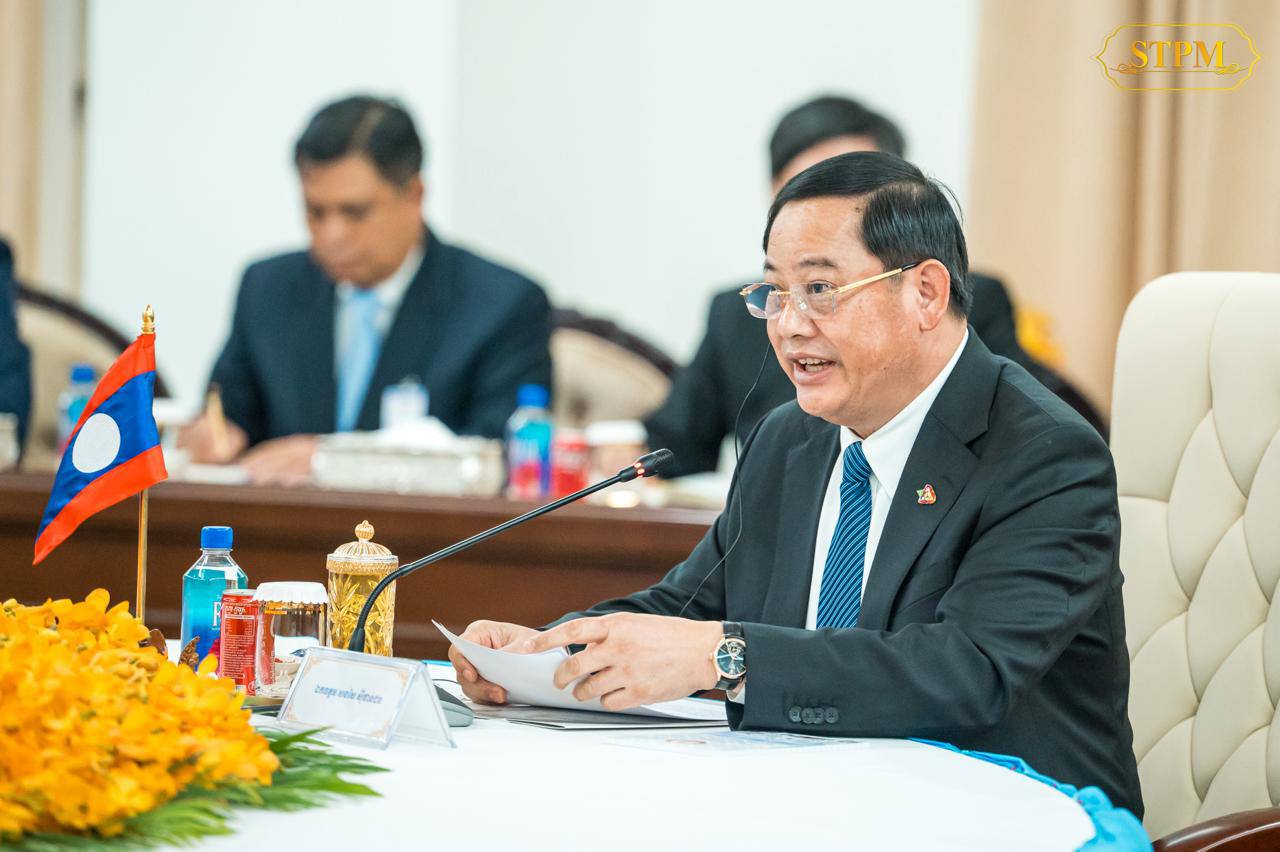
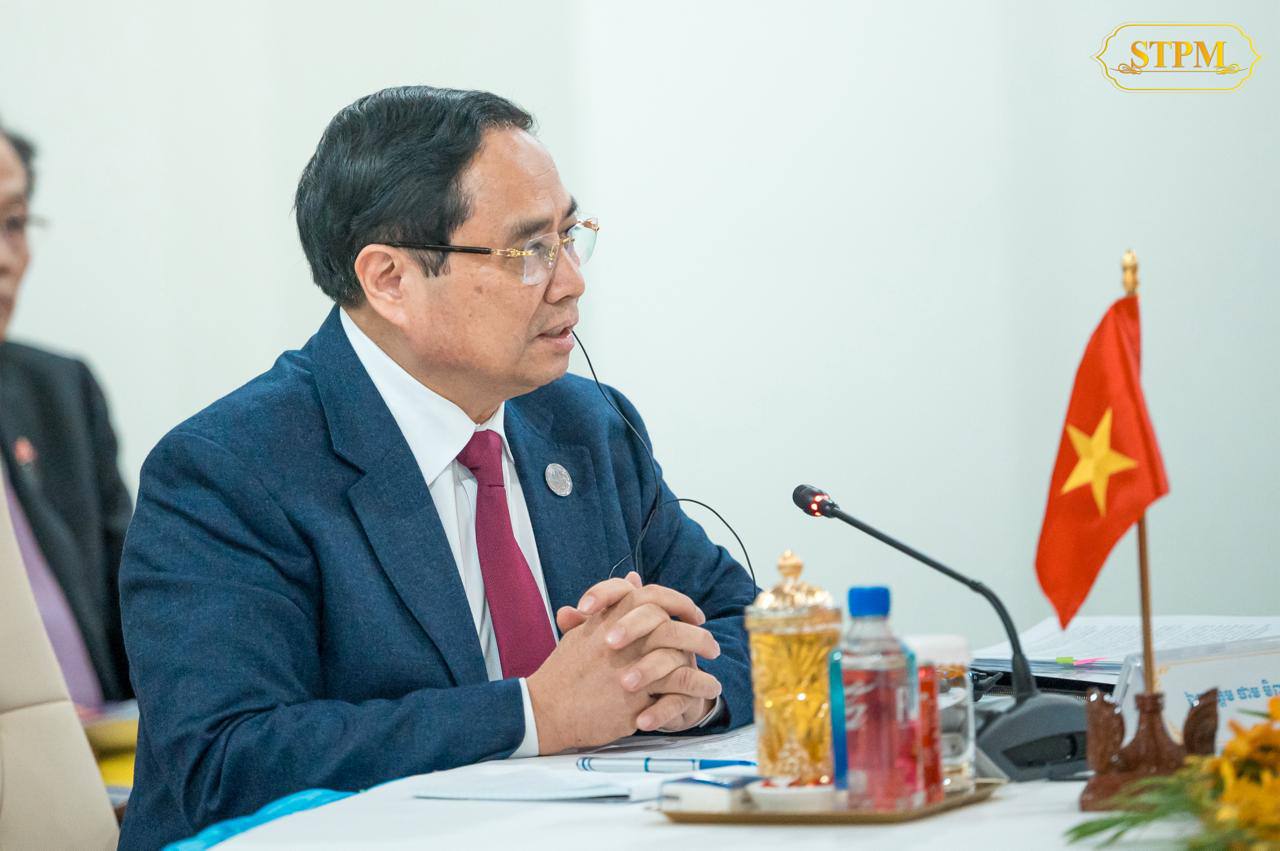
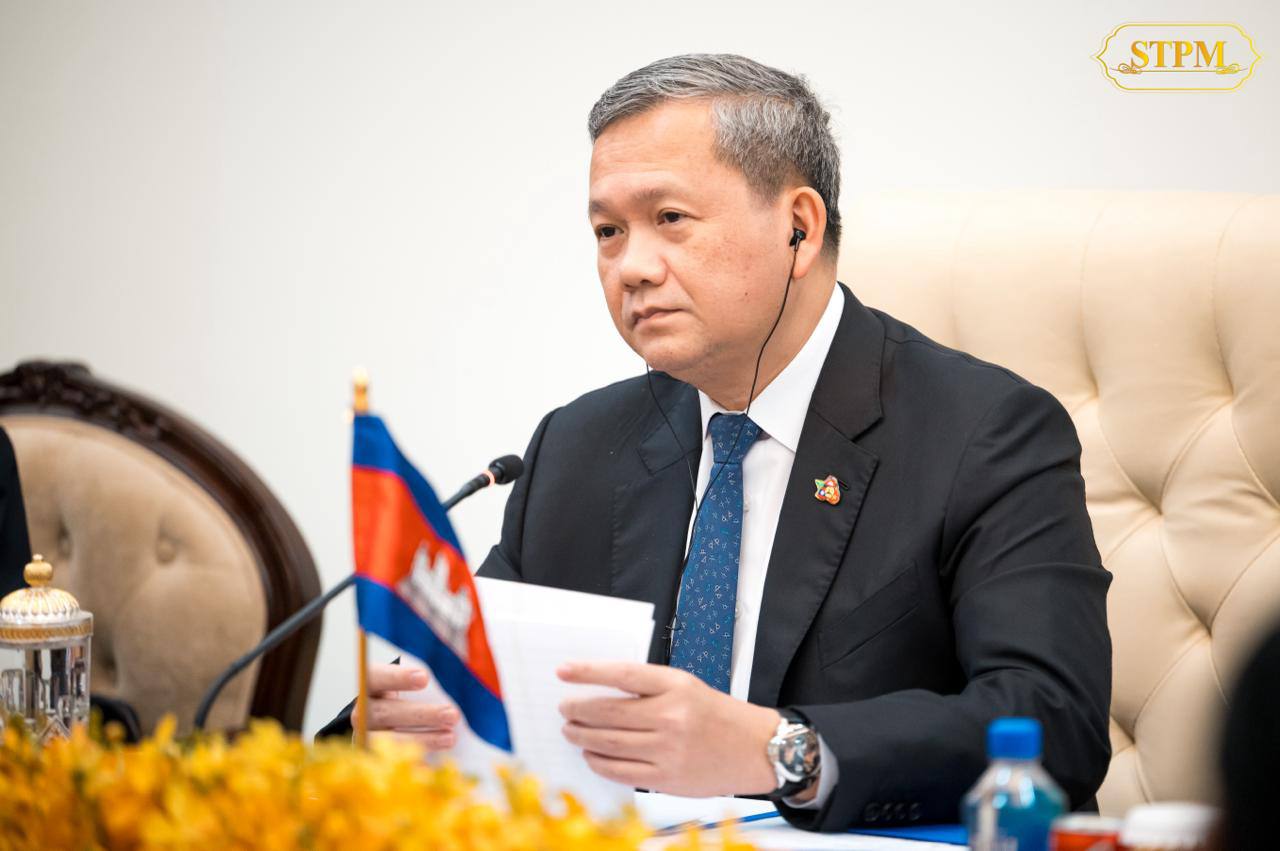
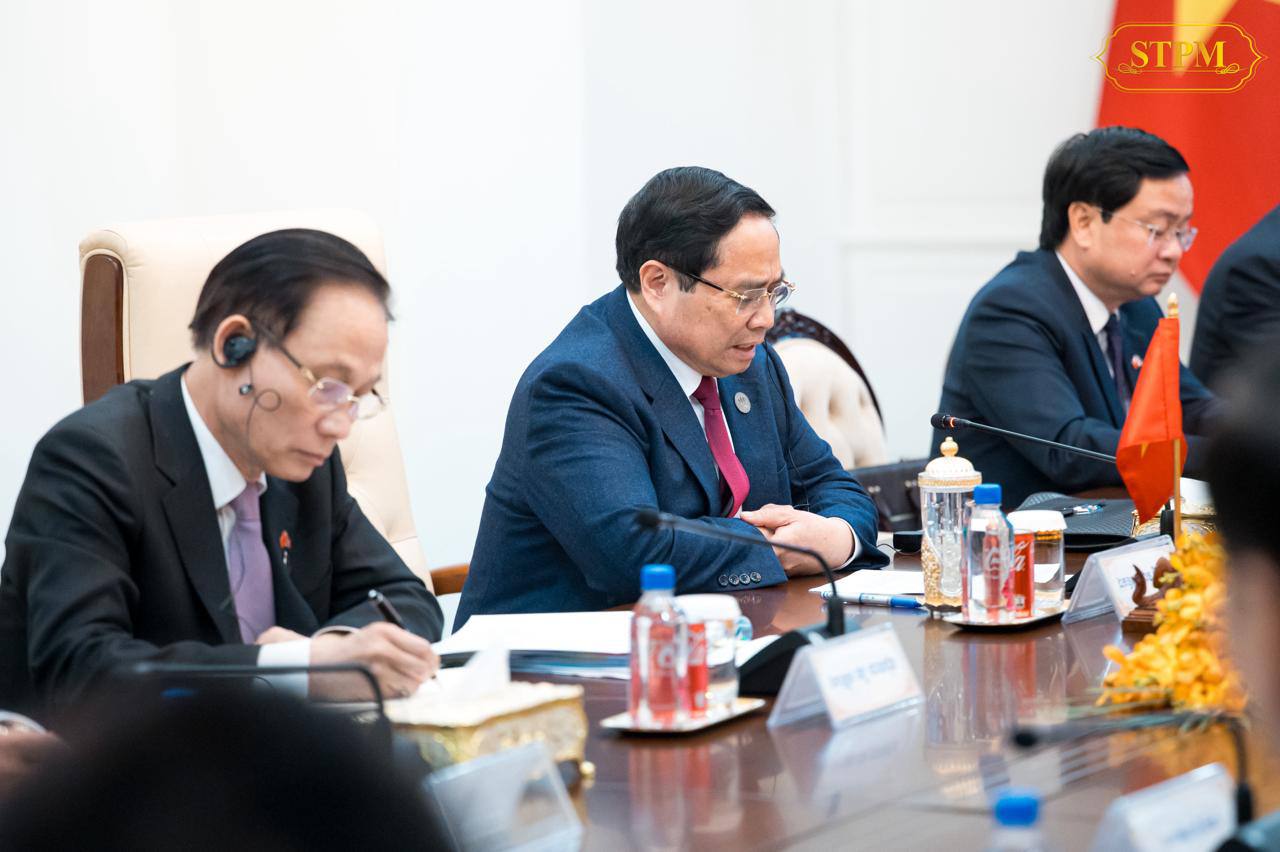
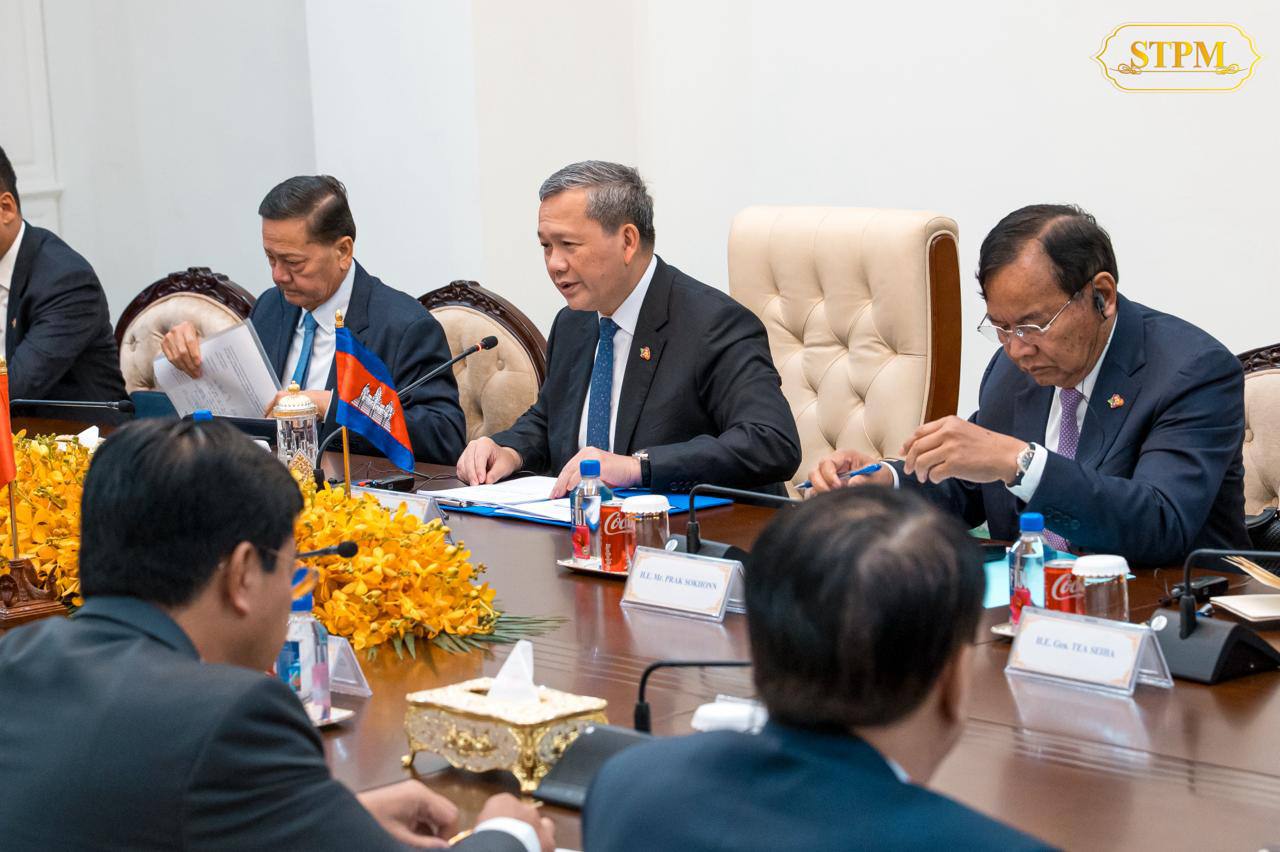
Cambodian Prime Minister Hun Manet chaired the meeting, joined by Vietnamese Prime Minister Pham Minh Chinh and Lao Prime Minister Sonexay Siphandone. The two visiting prime ministers were in Phnom Penh for the meeting of leaders of the Cambodian People's Party, Communist Party of Vietnam and Lao People's Revolutionary Party on February 6–7, 2026.
Hun Manet highly commended contacts at all levels and productive cooperation among the three countries. He noted progress in their economic and trade ties and proposed initiatives to further increase trade cooperation, aiming for US$700 million in trade with Laos by 2030 and US$20 billion with Vietnam in the future.
He also encouraged broader people-to-people exchanges and connectivity in infrastructure, transport, culture, tourism, electricity and other fields. He urged technical teams to accelerate identifying the connection point between the Phnom Penh–Bavet and Ho Chi Minh City–Moc Bai expressways.
The three heads of government reiterated the importance of their relations and cooperation for development and regional peace and stability. They continued promoting political and diplomatic cooperation, information exchanges through foreign-affairs mechanisms, mutual support in regional and international frameworks and links among the next generation of leaders.
The meeting also promoted defence and security cooperation to jointly prevent transnational crime, technology-enabled scams and non-traditional security problems. In trade and investment, Vietnam expressed readiness to further promote investment in Cambodia.
The three leaders also continued encouraging connectivity in physical infrastructure, transport, electricity, education and training to contribute to each country's economic development and promote “three countries, one destination” tourism.
By: Nget Pisant