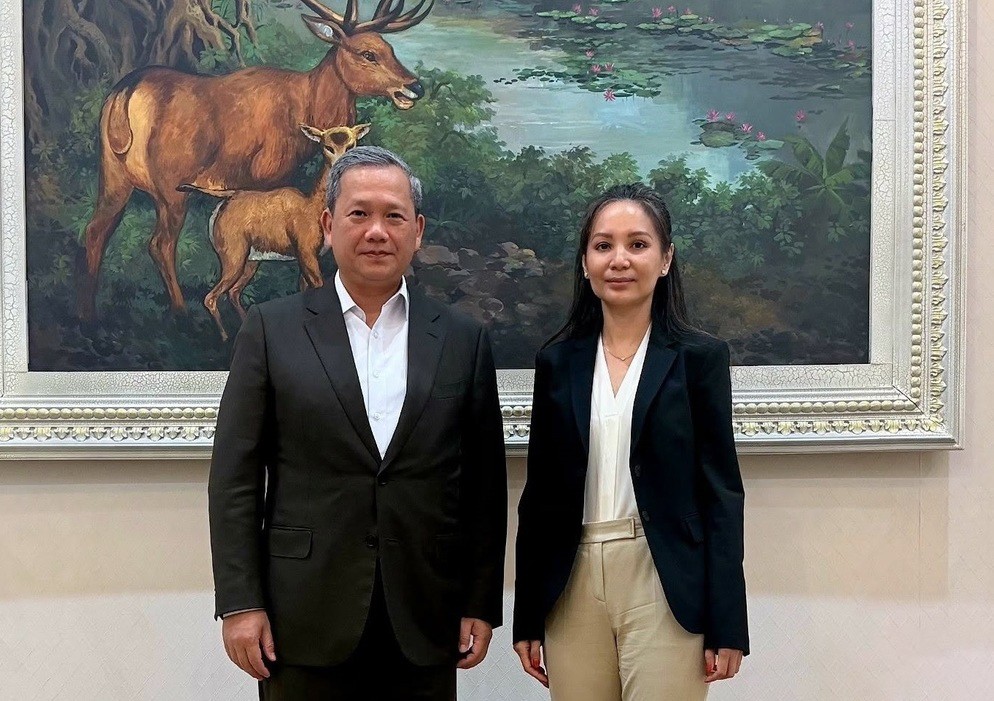
Relations between former Cambodia National Rescue Party (CNRP) president Kem Sokha and Cambodia's governing leadership have recently taken a new turn. On August 17, King Norodom Sihamoni signed a royal decree, at Prime Minister Hun Manet's request, appointing Kem Sokha's daughter and former senior CNRP official Kem Monovithya as a special envoy to the prime minister, with a rank equivalent to minister. Her specific portfolio had not been announced at the time of this report. The appointment comes amid changing relations between Kem Sokha's family and the governing leadership.
Kem Sokha was a leading opposition figure in Cambodia. He was arrested in 2017 on allegations of colluding with foreign powers, and the CNRP was subsequently dissolved. In 2023, the Phnom Penh Municipal Court sentenced him to 27 years in prison. On May 25 this year, Senate President Hun Sen, then serving as acting head of state, signed a royal decree pardoning the 27-year prison sentence. On July 24, King Norodom Sihamoni lifted the five-year ban on his travelling abroad. Restrictions on Kem Sokha's political activities remained in place.
Contacts between Kem Sokha's family and the governing leadership have also increased. On August 14, Hun Manet met Kem Monovithya and said they could cooperate in the national interest, particularly in international affairs. On August 16, Hun Sen met Kem Sokha and his family for about three hours. The following day, Kem Monovithya was formally appointed special envoy to the prime minister.
The pardon, the lifting of the travel ban, the high-level meetings and his daughter's appointment point to a gradual shift in relations between the family and Cambodia's governing leadership, from political confrontation towards engagement and cooperation.
At the time of this report, there was no evidence that restrictions on Kem Sokha's political activities had been lifted, or that Kem Monovithya had joined the Cambodian People's Party. The appointment therefore should not simply be interpreted as the opposition's return. It nevertheless signals that figures from different political backgrounds in Cambodia are exploring new opportunities for cooperation.