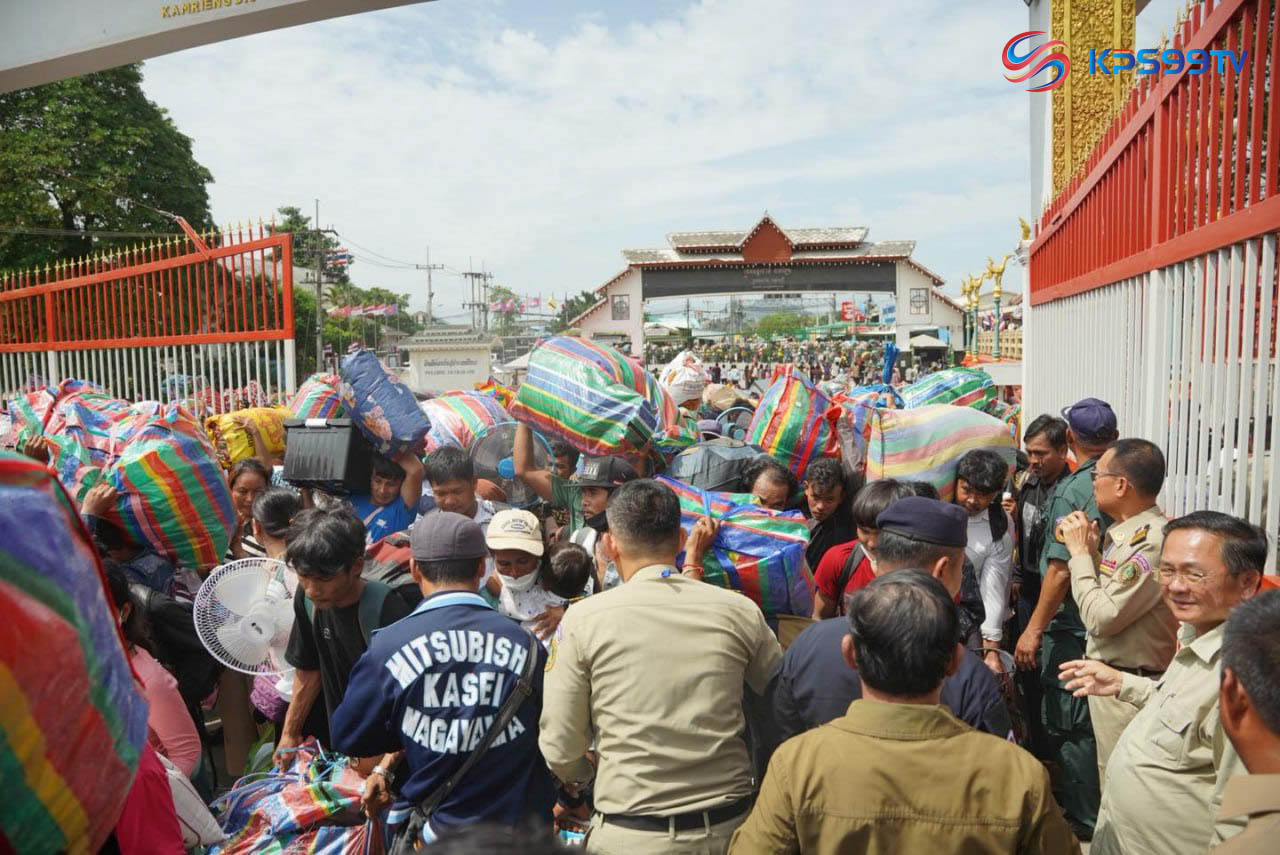
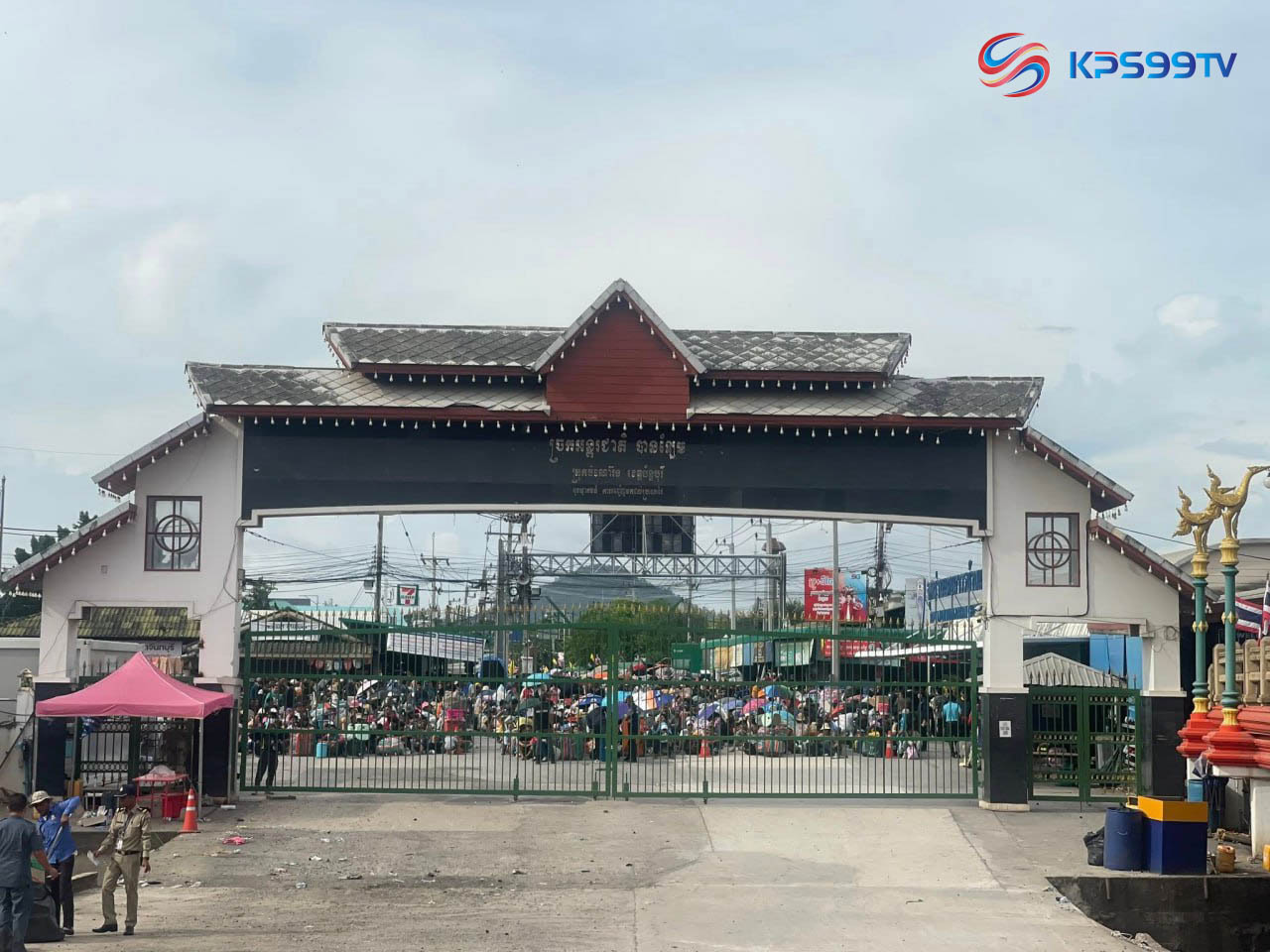
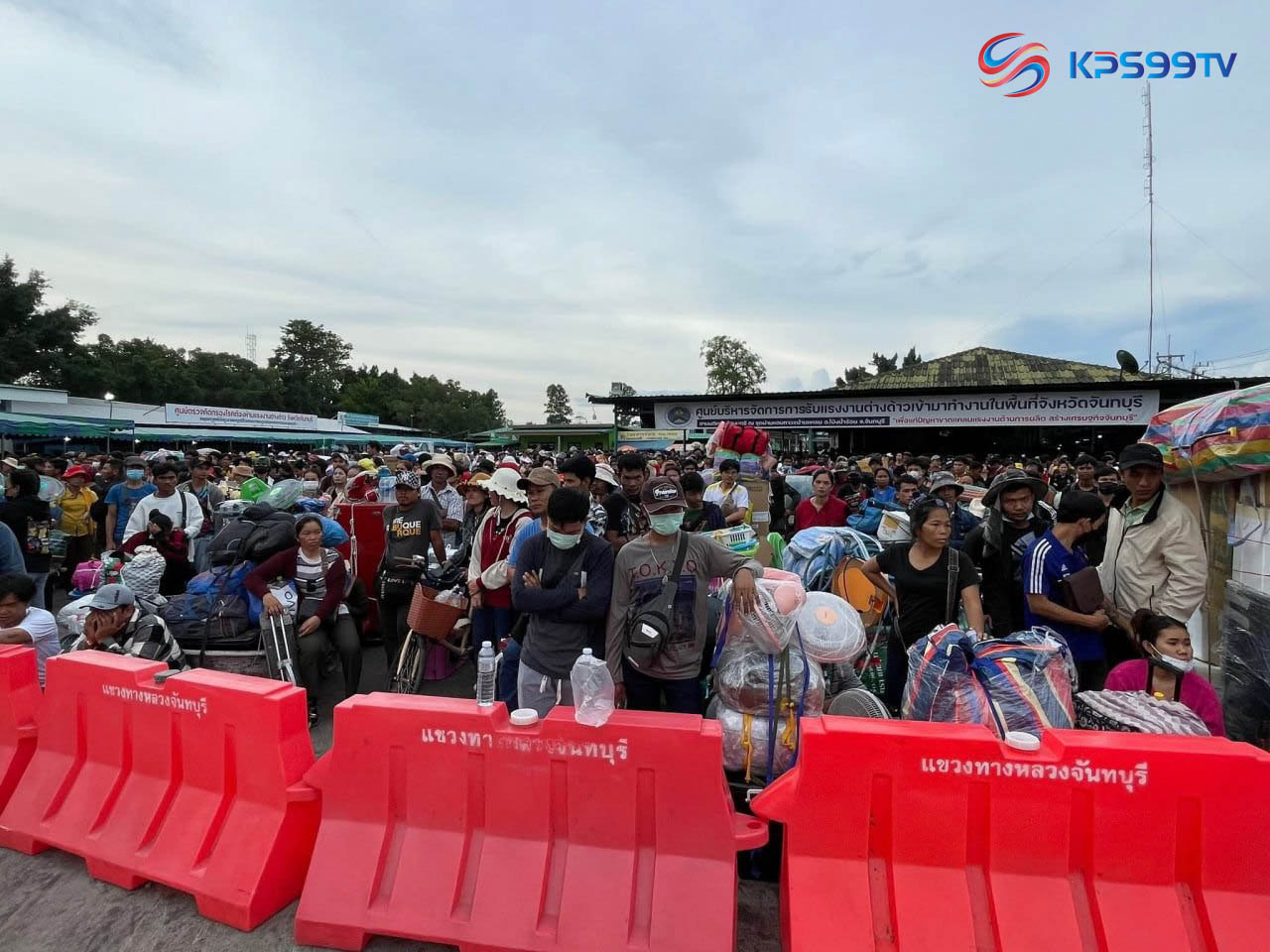
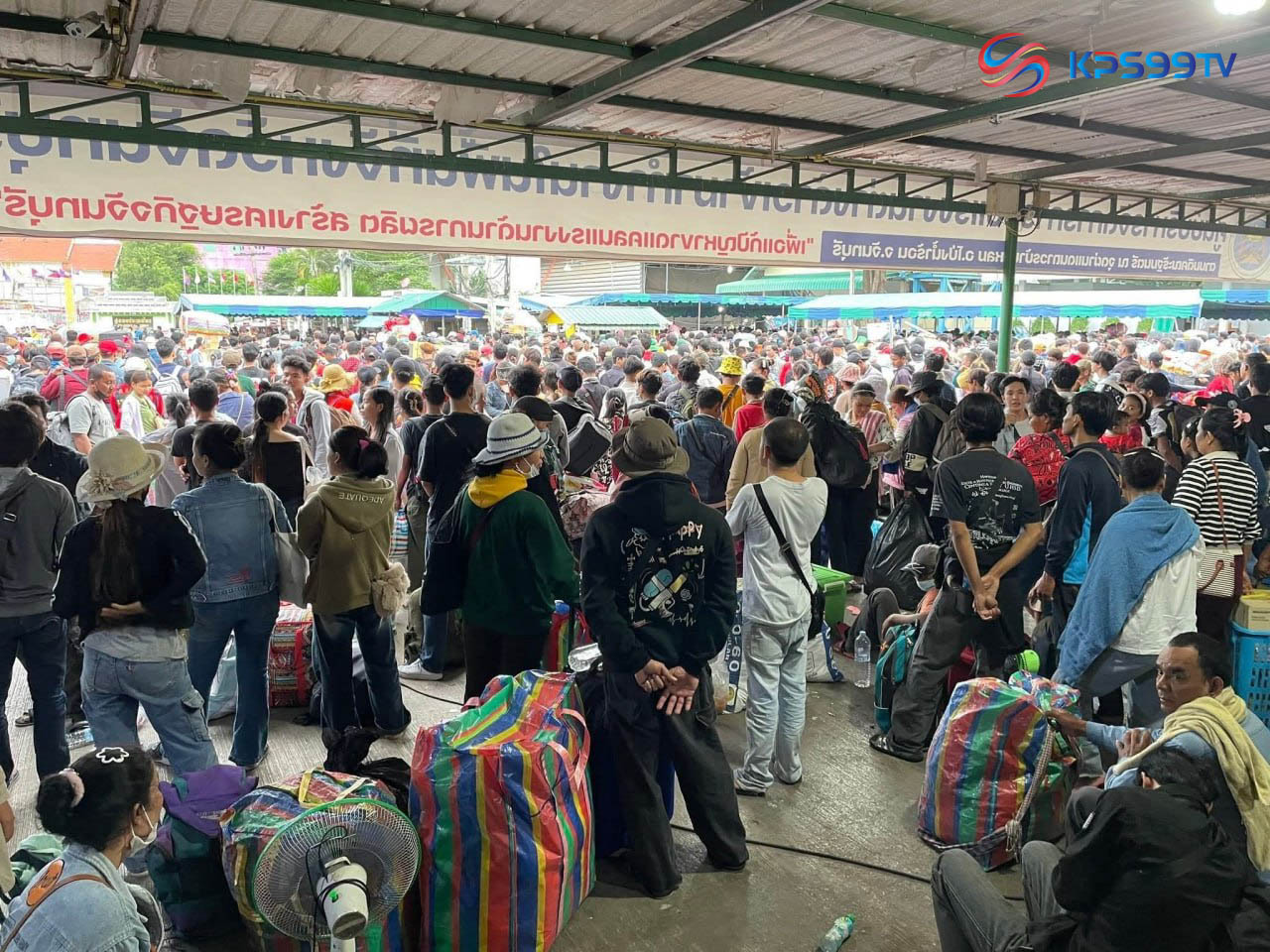
The effects of the Cambodia–Thailand border conflict went well beyond combat and casualties. As tensions began to ease, the serious consequences started to emerge. Infrastructure in border areas had been damaged and residents’ lives disrupted. Hundreds of thousands of Cambodians working in Thailand began returning home, creating a severe labour shortage in Thailand and putting pressure on Cambodia to receive and find jobs for the returnees.
Five days of fighting broke out on the Cambodia–Thailand border in late July 2025. More than 150,000 Cambodian workers left urgently on the first day, and nearly 400,000 had returned by the end of the fighting. According to Cambodian Labour Ministry figures, 670,839 Cambodian workers returned from Thailand between June 8 and August 5. A substantial number had to go home because of unrest on the border, disrupted employment or unpaid wages.
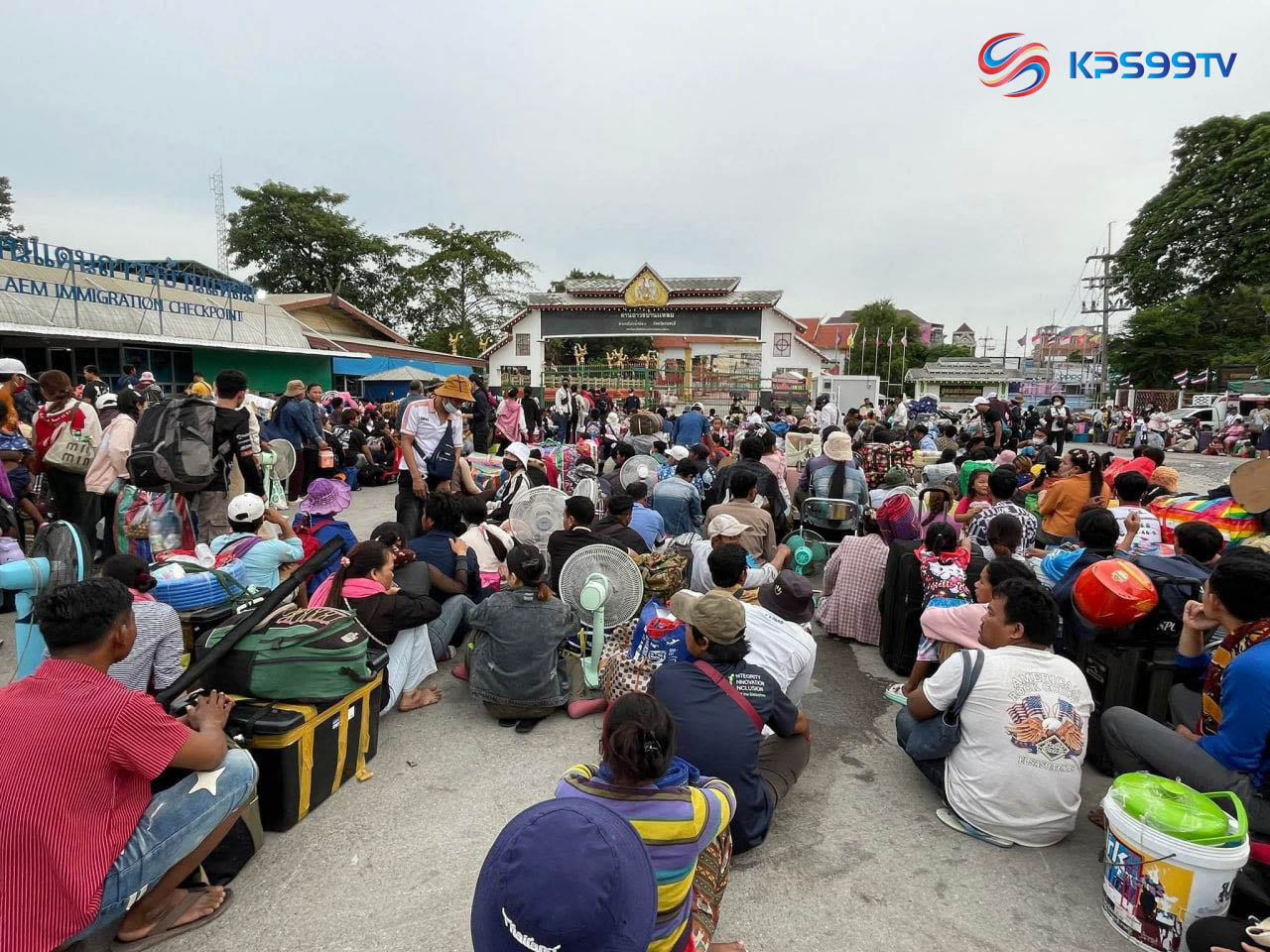
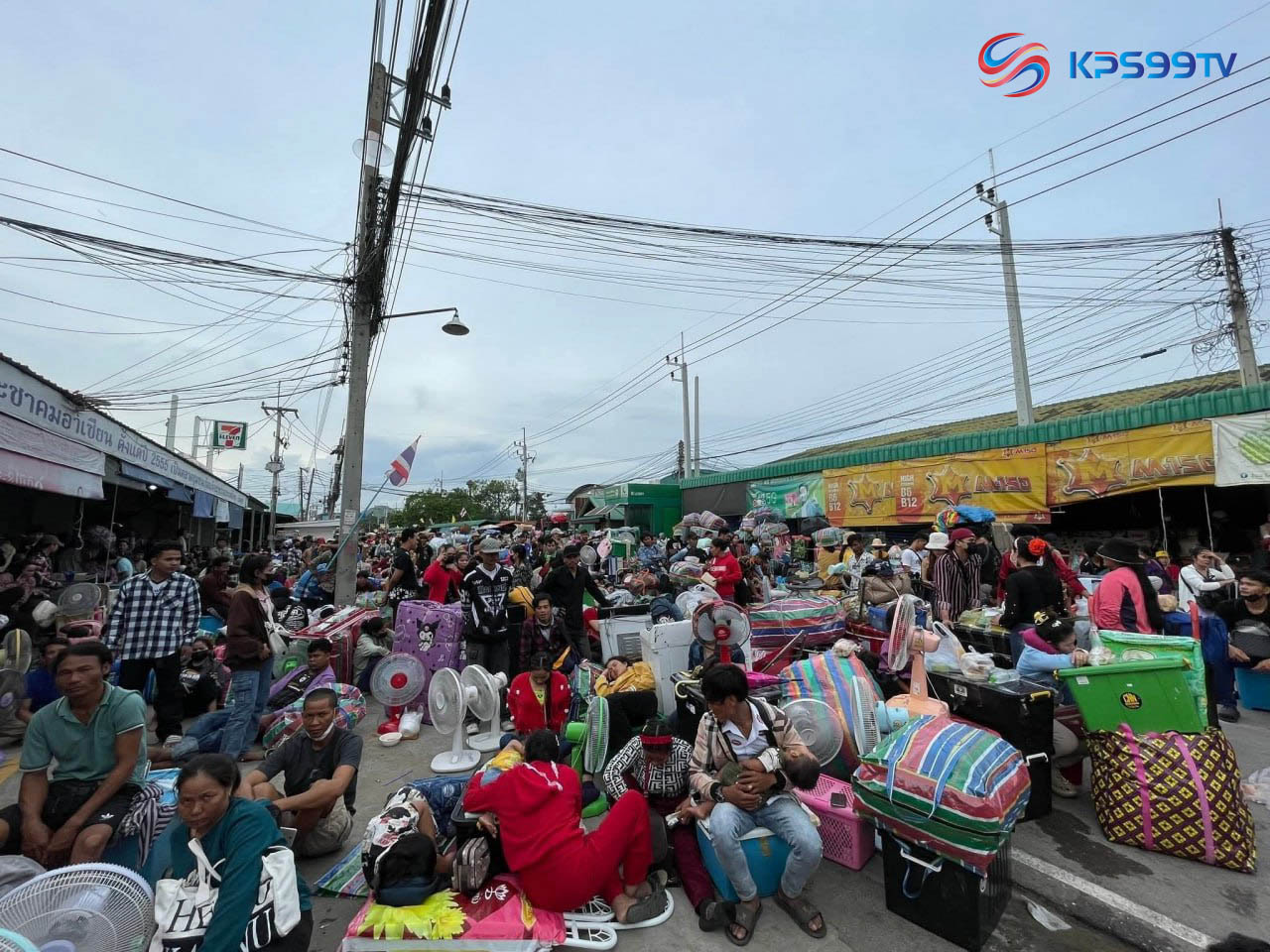
Reports said thousands of workers were waiting at the Ban Laem crossing on the Thai side at about 8:30 a.m. on August 6, 2025. They hoped to return through the Daung International Border Gate in Kamrieng district, Battambang province. According to the civil society group “Center”, many workers were gathered in border provinces, waiting for hours in the heat so they could get home.
“I left Thailand for Cambodia rather late because I was still waiting for my boss to pay me,” one returning worker said. He said he had stayed in Thailand until that day because his employer had yet to pay his wages.
Battambang Governor Sok Lou said that day that authorities had instructed relevant agencies to receive returning workers, provide humanitarian support, maintain order and coordinate accommodation and onward transfers within the province.
The conflict was also affecting Thailand’s labour market. The dean of the University of the Thai Chamber of Commerce’s economics school, who also headed its digital economy research centre, said the effects of the return were immediate. Agriculture, construction and manufacturing experienced widespread labour shortages. He said that Cambodians made up as much as 70–80% of the workforce in some border provinces, and their departure would directly affect output and export capacity.
Thailand had about 500,000 registered Cambodian workers. Including undocumented workers, the total may have been 1 to 1.2 million. These workers sent home roughly 40 to 65 billion baht a year. These remittances contributed more than 6.5% of Cambodia’s GDP, making the workers an important link between the two economies.
The sudden return of large numbers of workers also posed a major challenge for Cambodia. Finding jobs for hundreds of thousands of returnees, providing social protection and preventing a further economic shock were testing the government’s ability to organize and respond.
Analysts said the conflict was reshaping regional supply chains and labour flows as well as being a military confrontation. In the medium and long term, labour mobility and cross-border economic cooperation could suffer if Cambodia and Thailand could not maintain peace at the border through diplomacy and regular dialogue.
This report was compiled by Preah Sihanouk Provincial Television.