Cambodia’s Ministry of Culture and Fine Arts firmly rejected claims by Thailand’s Minister of Culture, Sabeeda Thaised, concerning Khnar and Ta Krabey temples that were reported in the Khaosod newspaper on October 25, 2026.
According to the Thai side’s claims, both temples are situated in Thai territory and have been listed in Thailand’s national heritage register, while the management of the sites and collection of art objects from the temple areas are intended for study, maintenance and conservation. Cambodia’s Ministry of Culture and Fine Arts, however, considers these claims groundless and inconsistent with international law.
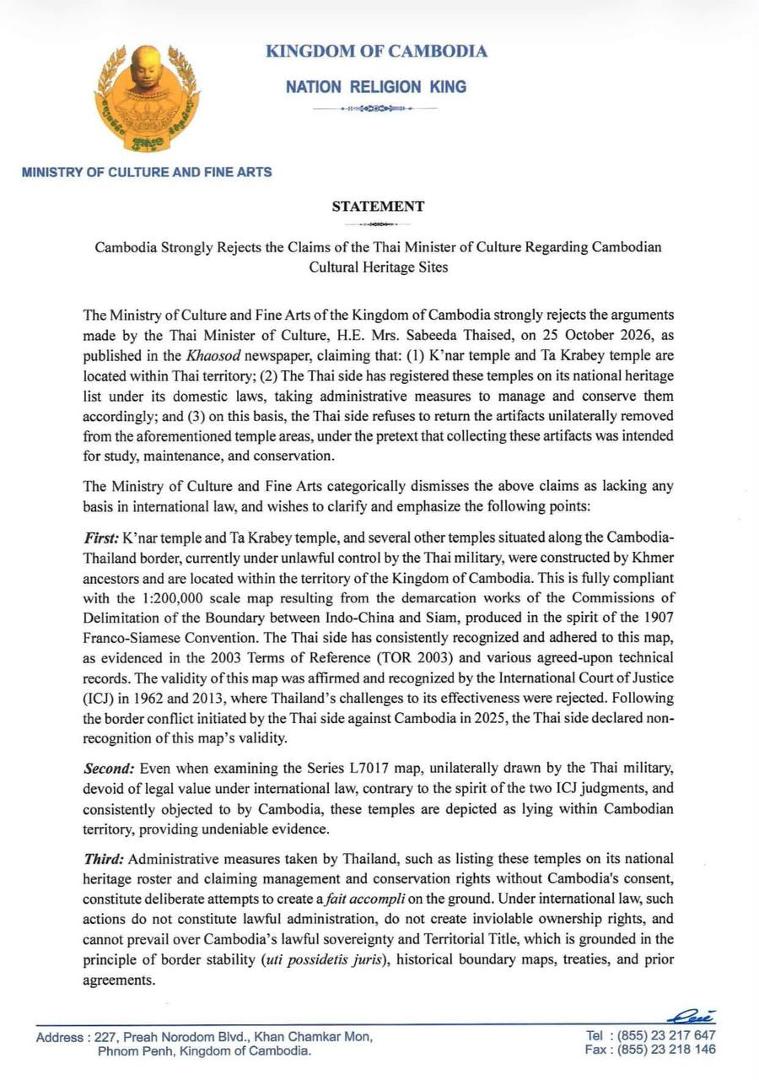
In its statement, the Ministry set out five key points, stating that Khnar, Ta Krabey and a number of other temples along the Cambodia–Thailand border are heritage structures built by Khmer ancestors and situated in Cambodian territory, citing a 1:200,000-scale map relating to boundary delimitation and the Franco-Siamese Convention of 1907.
The Ministry also said that this map had been confirmed by the International Court of Justice (ICJ) in its 1962 and 2013 decisions. It further claimed that even the L7017 map series, which Cambodia objects to as having been drawn unilaterally, shows these temples within Cambodian territory.
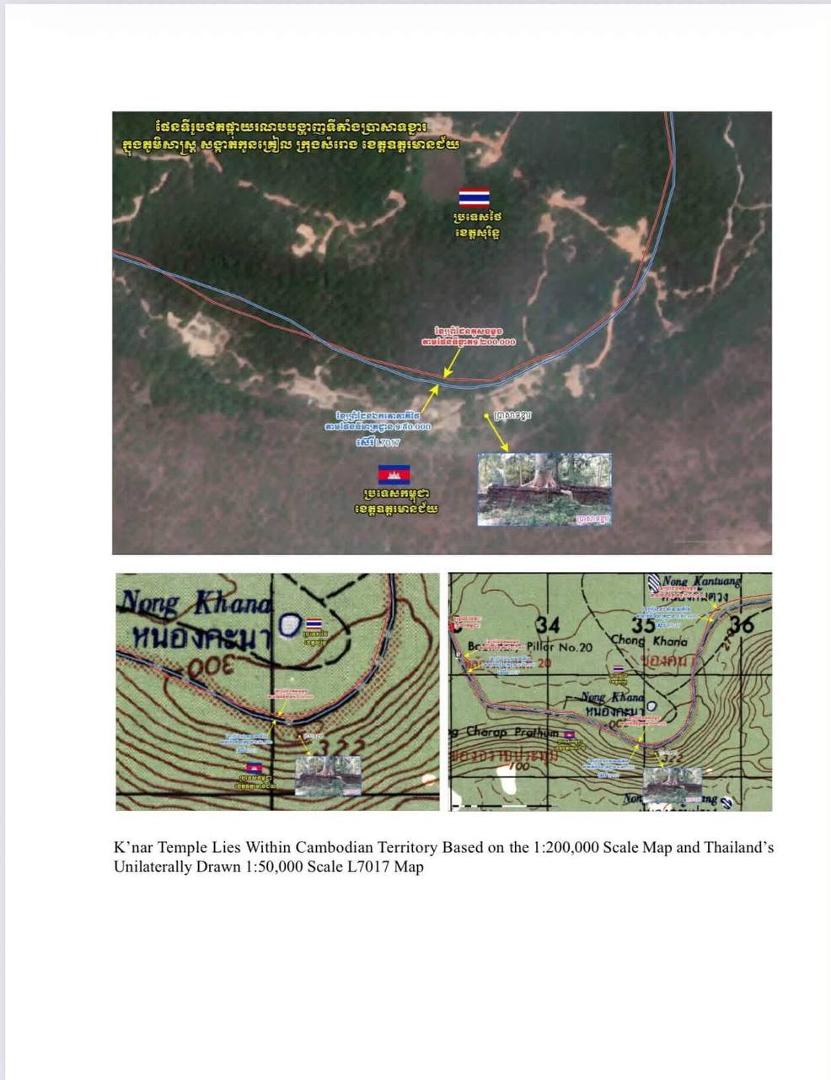
The Ministry of Culture and Fine Arts added that listing the temples in Thailand’s heritage register and taking management measures without Cambodia’s agreement cannot establish lawful administrative rights or alter Cambodia’s sovereignty and territorial integrity. The Ministry cited the principle of maintaining existing boundaries (uti possidetis juris), treaties, historical maps and agreements previously reached by both sides.
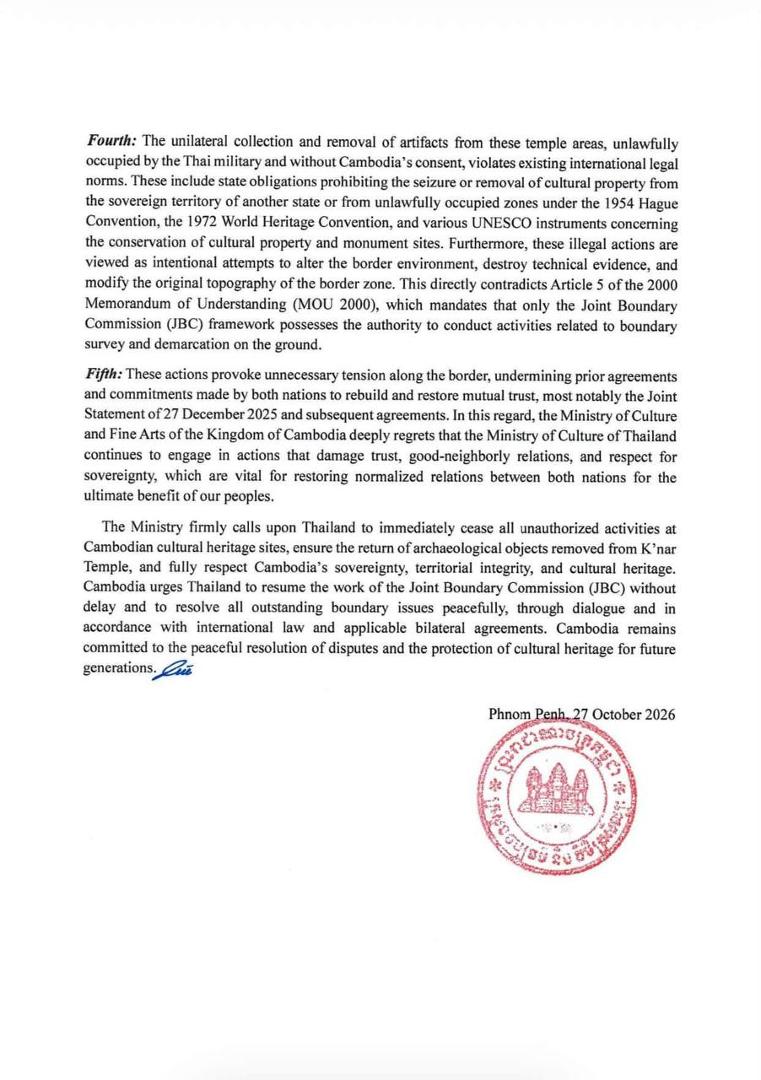
Regarding the removal of art objects from the temple areas, the Ministry considers such actions a violation of international legal standards concerning the protection of cultural heritage, including the 1954 Hague Convention, the 1972 Convention and relevant UNESCO instruments. It also said these actions could affect technical evidence and the original condition of the border areas, contrary to Article 5 of the 2000 Memorandum of Understanding (MOU). The Ministry stated that the Joint Boundary Commission (JBC) is the mechanism mandated to conduct boundary surveys and demarcation on the ground.
The Ministry also expressed regret over actions that it considers to heighten tensions along the border and undermine trust between the two countries, recalling the Joint Statement of December 27, 2025 and previous commitments to restoring trust and good-neighbourly relations.
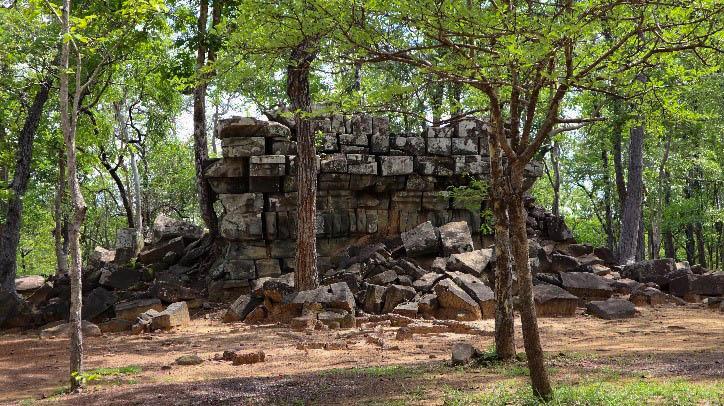
Finally, Cambodia’s Ministry of Culture and Fine Arts demanded that the Thai side immediately cease activities at Cambodia’s cultural heritage sites that lack Cambodian authorisation, return the antiquities removed from Khnar Temple, and respect Cambodia’s sovereignty, territorial integrity and cultural heritage.
Cambodia also urged Thailand to resume the work of the Joint Boundary Commission (JBC) without delay and address remaining border issues through peaceful dialogue in accordance with international law and relevant bilateral agreements.
The Ministry reaffirmed that Cambodia remains committed to settling disputes peacefully and protecting cultural heritage to preserve this valuable legacy for future generations. By: Sopheak