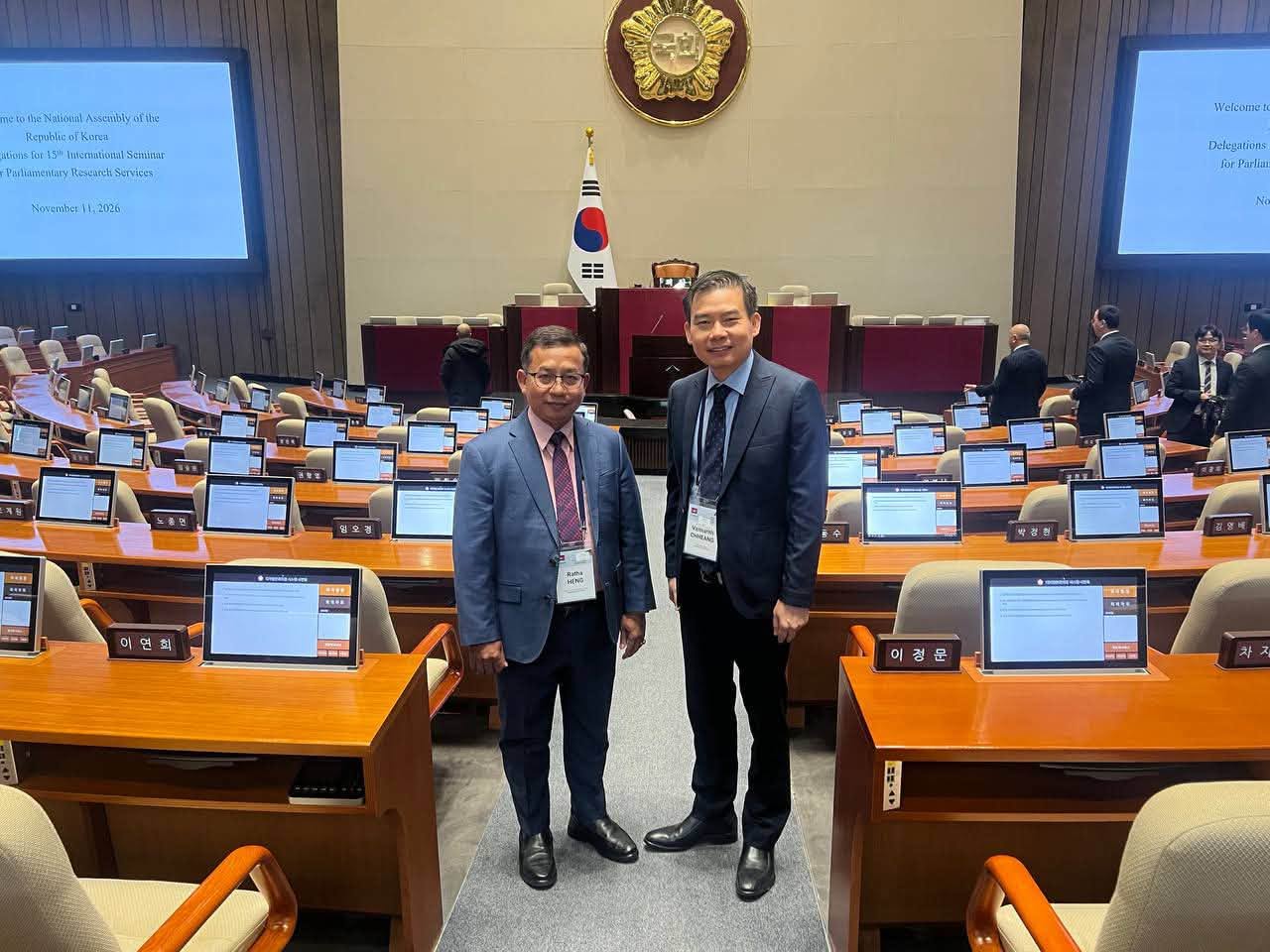
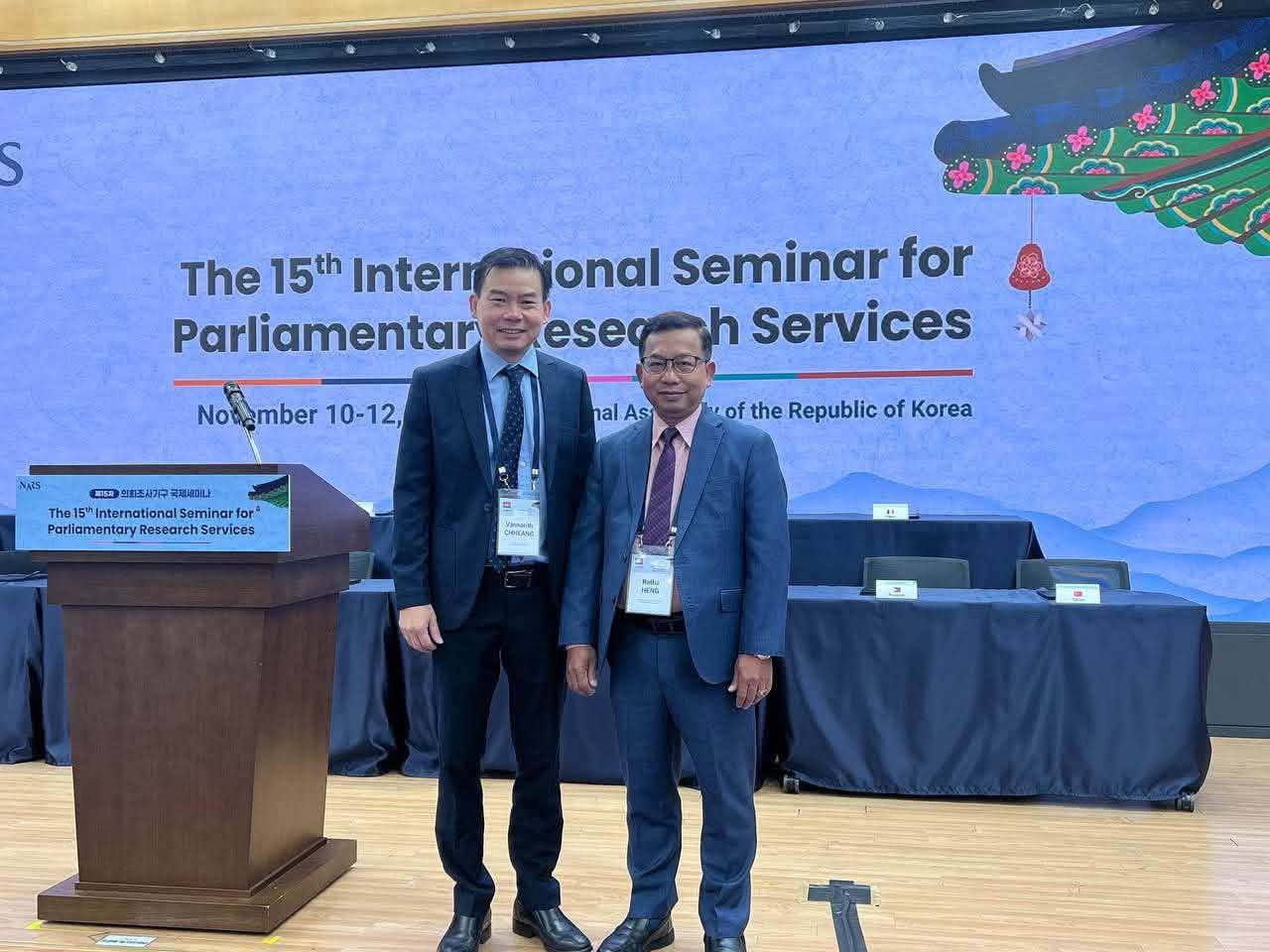
A delegation from the National Assembly Secretariat of Cambodia, led by Deputy Secretary-General of the National Assembly and Head of the National Assembly Advisory Group ឈាង វណ្ណារិទ្ធ, joined ហេង រដ្ឋា, Head of the International Research Department, in sharing experiences and discussing the development of digital parliaments and the responsible integration of artificial intelligence (AI) into parliamentary research services. The event took place at the 15th international seminar in Seoul, South Korea, from November 10 to 12, 2026.
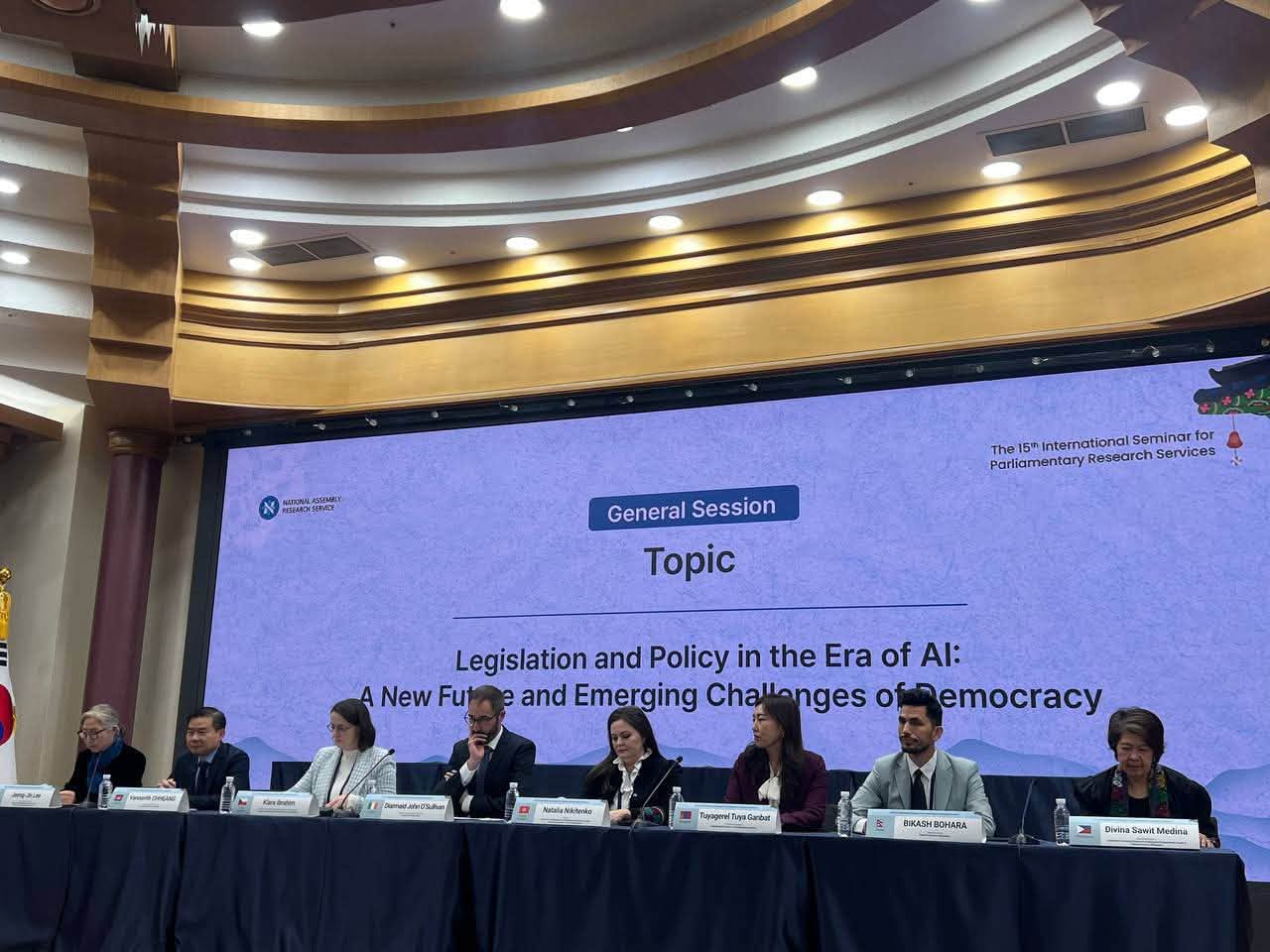
In an event attended by delegations from 24 countries, the seminar participants agreed that artificial intelligence (AI) is a highly promising tool that can assist and support legislative research, but it cannot replace human judgment. The use of AI must therefore always remain subject to professional supervision and verification, giving priority to trust, accountability and reliable data rather than focusing solely on speed.
In this context, Deputy Secretary-General of the National Assembly and Head of the National Assembly Advisory Group ឈាង វណ្ណារិទ្ធ highlighted the progress of Cambodia’s parliament, emphasizing that institutional reform must proceed in tandem with the development of human capital to build trustworthy AI systems. He stressed that parliament must first strengthen knowledge, human skills and digital infrastructure before expanding the use of AI across institutions, while aligning it with ethics, risk prevention, smart regulation and stronger international cooperation, ensuring that this technology genuinely contributes to democratic development and shared prosperity.
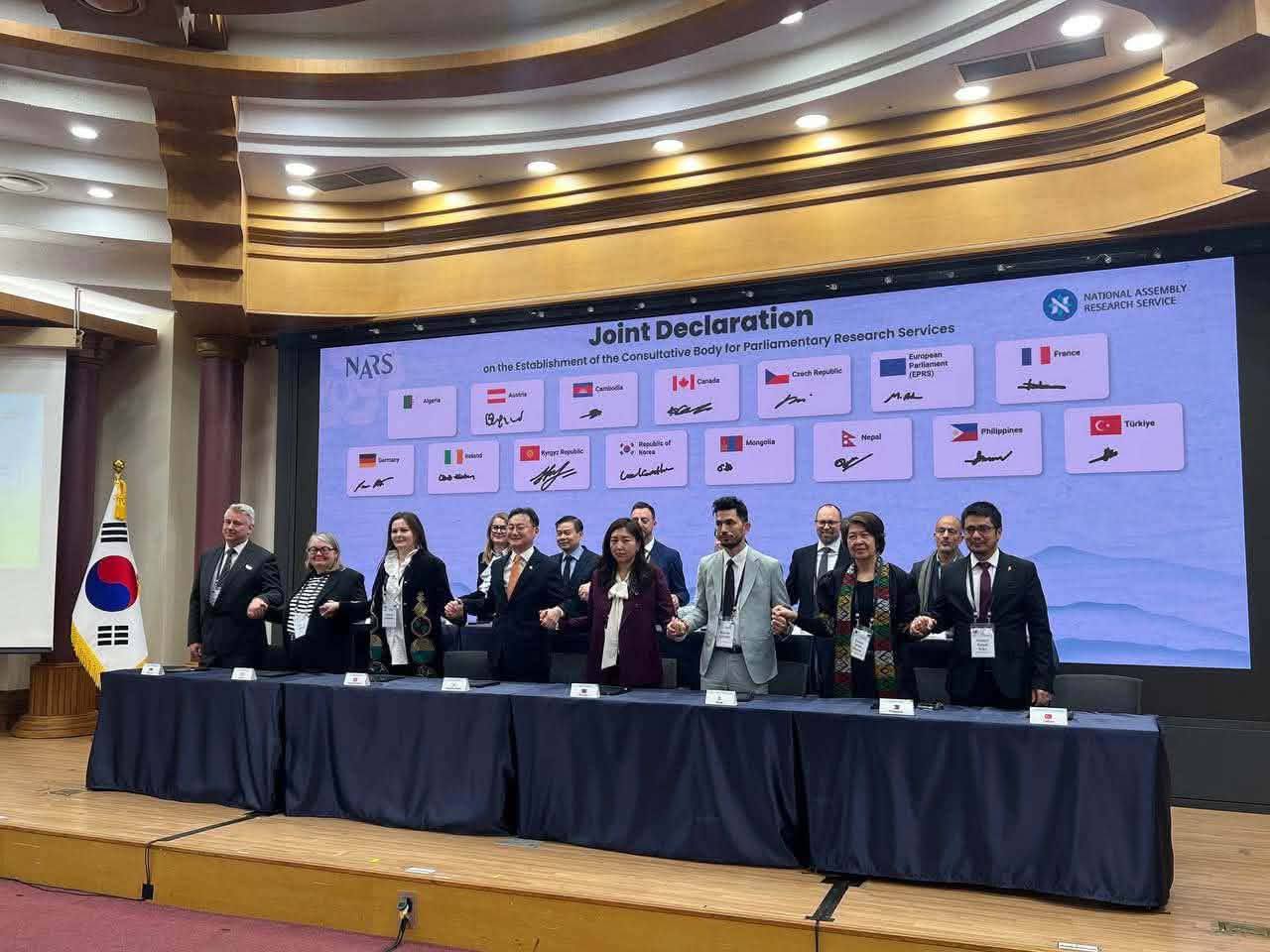
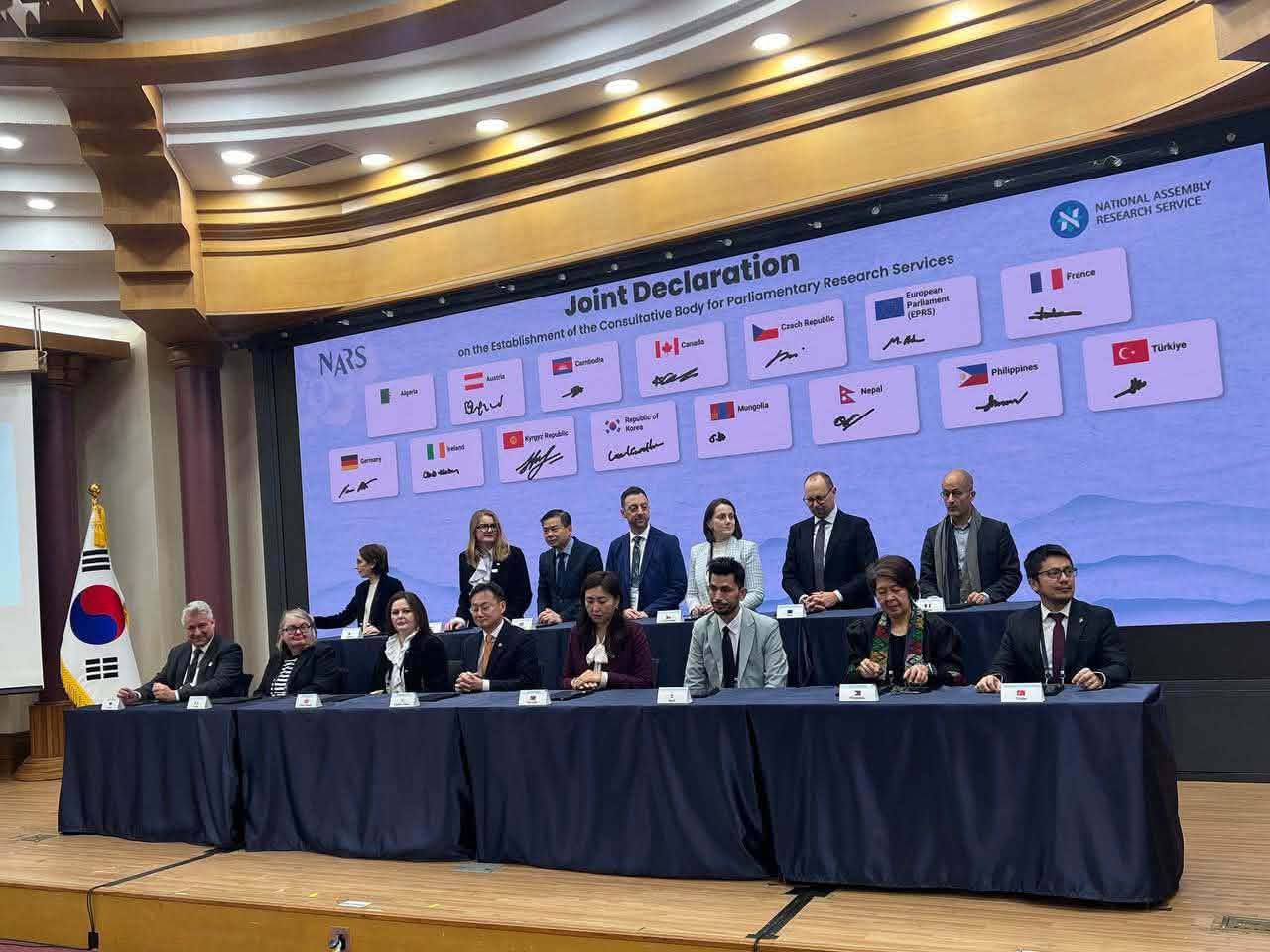
In addition to sharing experiences on digital parliaments, Deputy Secretary-General of the National Assembly and Head of the National Assembly Advisory Group ឈាង វណ្ណារិទ្ធ also signed a joint statement to establish a “Consultative Body for Parliamentary Research Services.” This new cooperation platform will play an important role in strengthening connections among international parliamentary research institutions, including sharing knowledge and research methods, maintaining ongoing dialogue both in seminars and online, and promoting voluntary collaborative research on topics of shared interest. By: ស្រីពី