
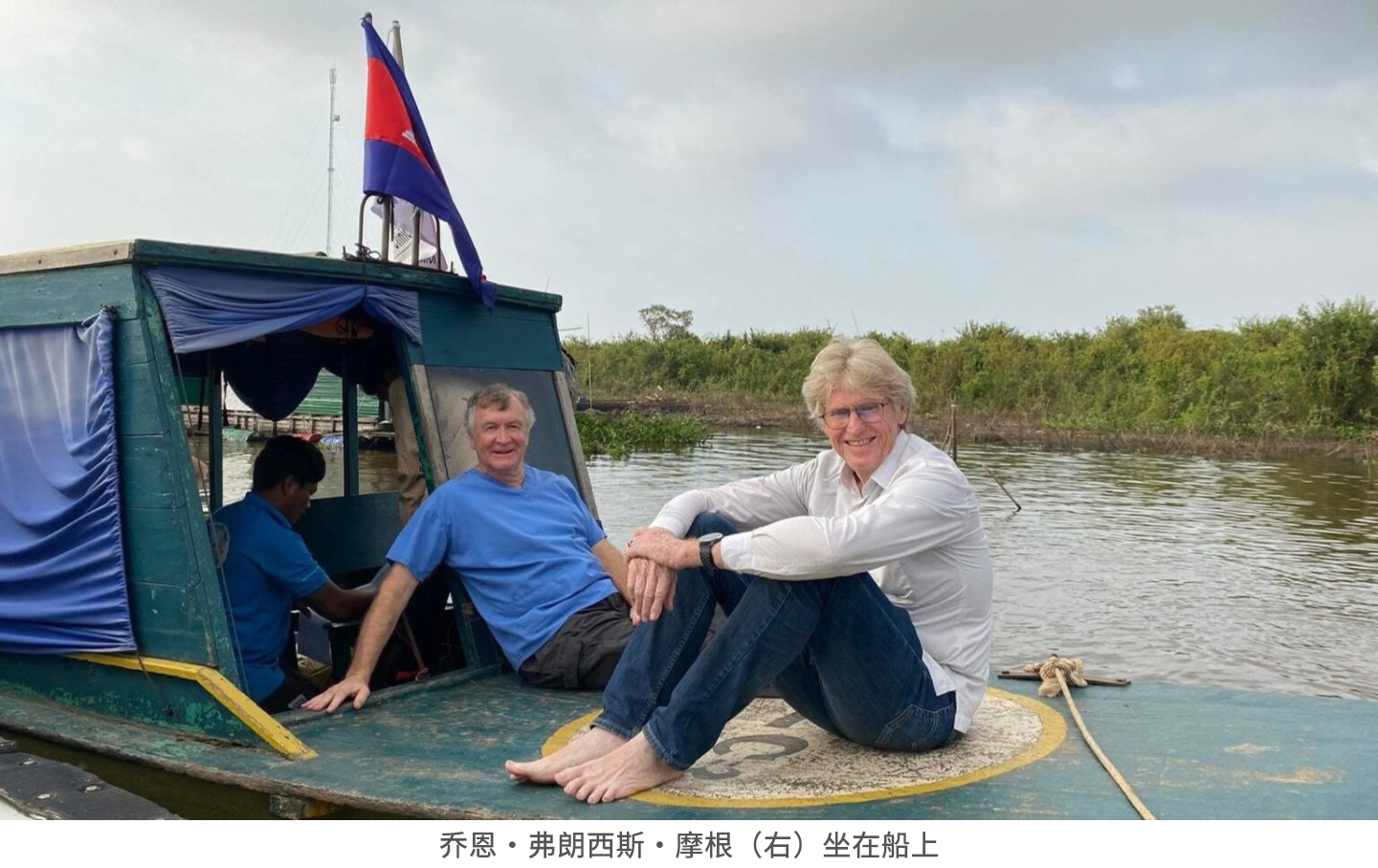
Families living on Tonle Sap Lake earn an average of about $2.50 a day and mostly make a living fishing. Some villages are at least five hours from the nearest hospital or health center by boat and road. A trip ashore can cost $50 in fuel alone—roughly 20 days of income for a family—which most families cannot afford.
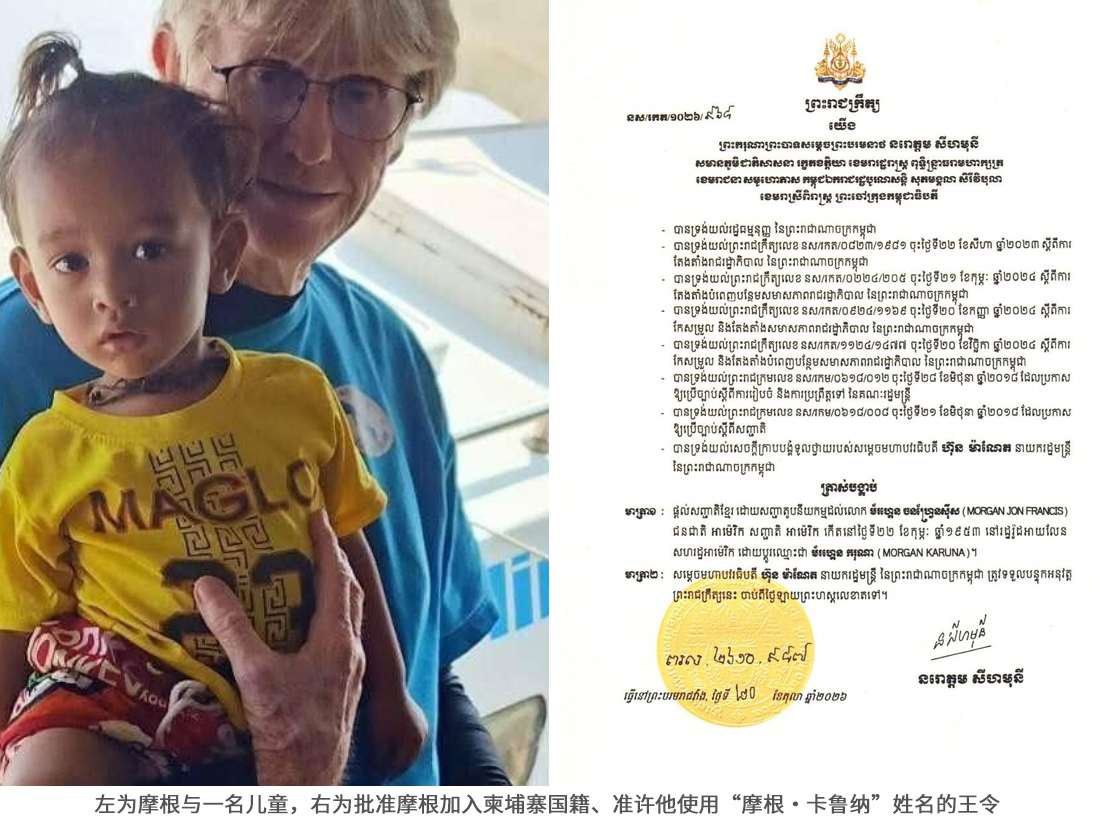
Not long ago, King Norodom Sihamoni signed a royal decree granting Cambodian citizenship to 73-year-old American Jon Francis Morgan (MORGAN JON FRANCIS) and authorizing him to use the name “Morgan Karuna.”
“Karuna” is written ករុណា in Khmer. It means compassion or mercy, a word frequently used in Buddhism.
Morgan was born on February 22, 1953, in Rhode Island in the United States. After spending half his life in a foreign country, he was finally granted citizenship and given a name meaning compassion—an acknowledgment by the nation of the belief and perseverance he has demonstrated day after day for decades. He spent long years immersed in the lake, devoting himself to the healthcare difficulties of the people living on the water, repeatedly pulling the poor—who could not afford travel costs and had to endure illness without treatment—back from the brink.
In 1994, Morgan came to Siem Reap for work. According to records from the Cooperation Committee for Cambodia (CCC), he and his wife traveled there by boat that year and saw firsthand the difficult lives of residents on Tonle Sap Lake. Looking at faces isolated by the lake and unable to find medical care when they fell ill, he came to an idea: medicine should not remain behind the high walls of hospitals on shore; these families living on the water needed to be seen and treated too. In 1998, he helped establish Angkor Hospital for Children in Siem Reap, which provided free medical care to local children, and served as its first executive director until 2007. Throughout his years at the hospital, he never abandoned his concern for the remote water villages around the lake.
These villages are scattered across Southeast Asia’s largest freshwater lake. More than one million people live in the lake region and surrounding areas, which include some of Cambodia’s poorest and most remote communities. Many families live their entire lives in wooden houses floating on the water or raised on stilts. There are no health stations or hospitals on the lake.
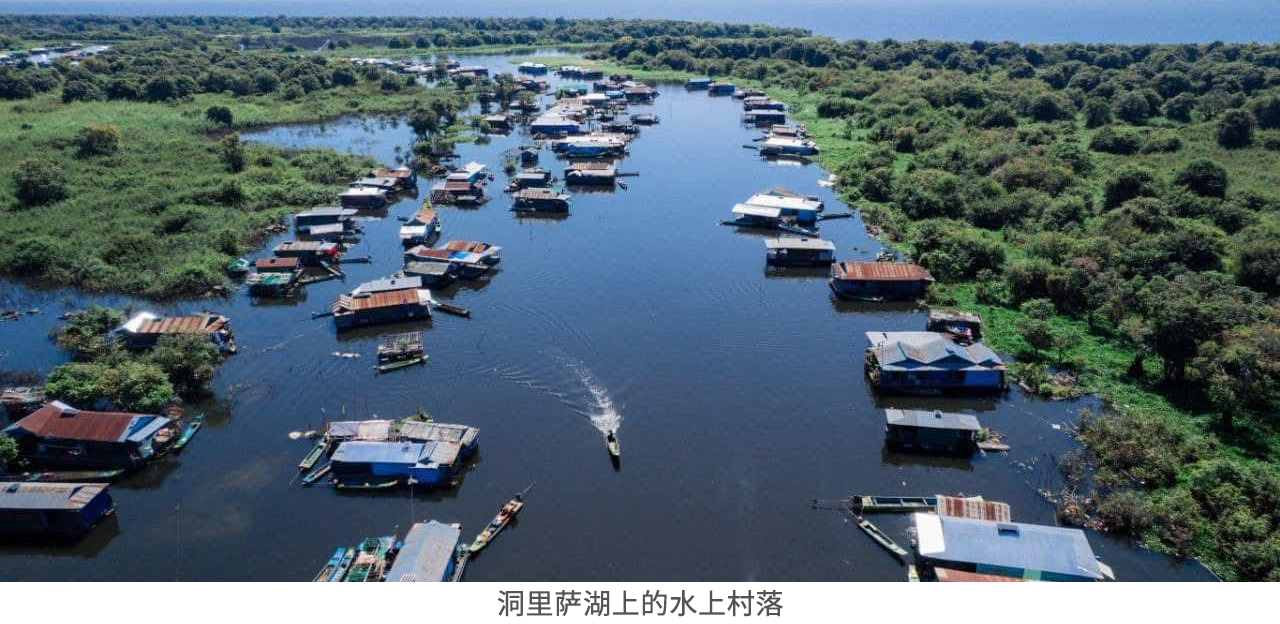
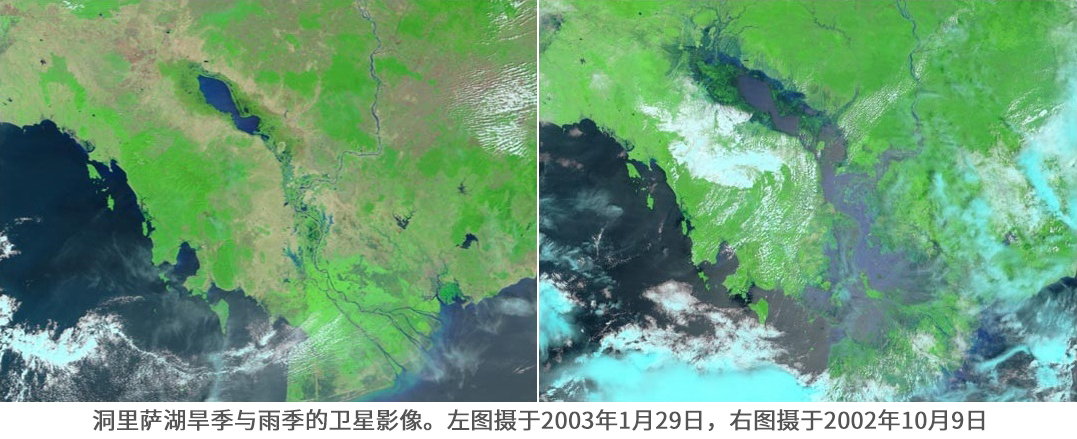
The lake’s changing conditions pose an even greater challenge. From the dry season to the rainy season, the average water depth rises from 0.5 meters to 9 meters, while the area expands from 2,700 square kilometers to 16,000 square kilometers. When people discuss the difficulty of obtaining medical care in remote areas, they often think first of a shortage of doctors. Yet here on the water, what most often stands between people and lifesaving care is not the quality of medical expertise, but the long journey by water and the heavy cost of completing it.
In 2002, Morgan began working with the Asian Development Bank to deliver medical services to villages by boat. He gradually realized that occasional clinics could not meet residents’ long-term healthcare needs. After leaving the hospital in 2007, he founded The Lake Clinic, a nongovernmental organization registered in Cambodia. It uses a single boat to bring doctors and nurses directly to water villages, turning irregular medical deliveries into scheduled clinic visits.
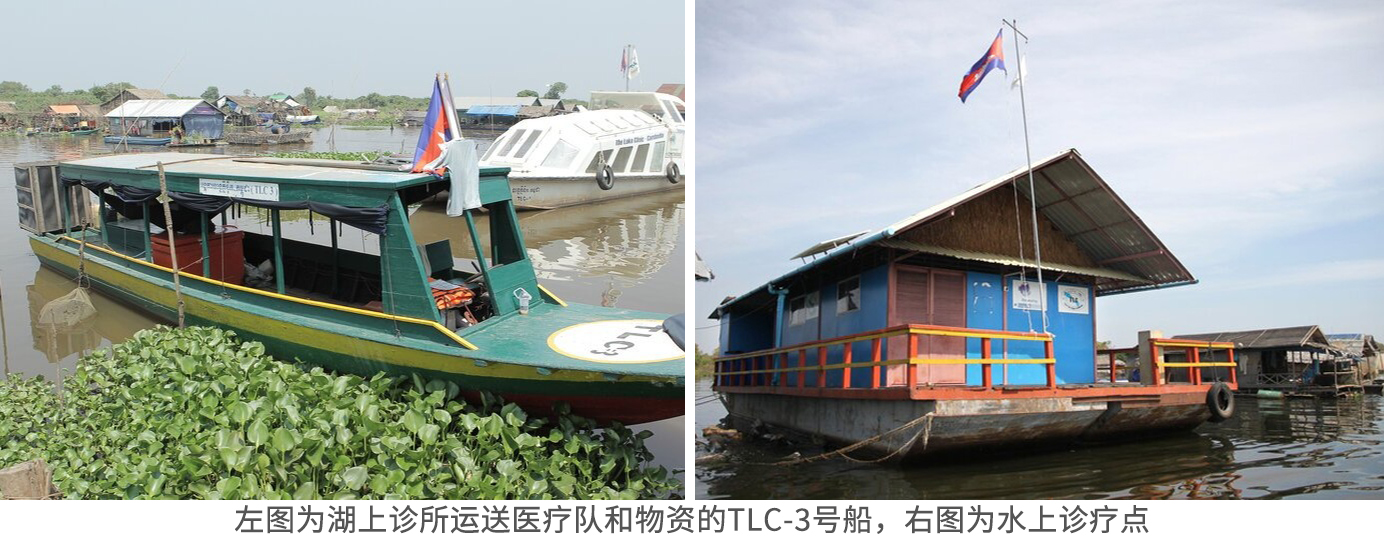
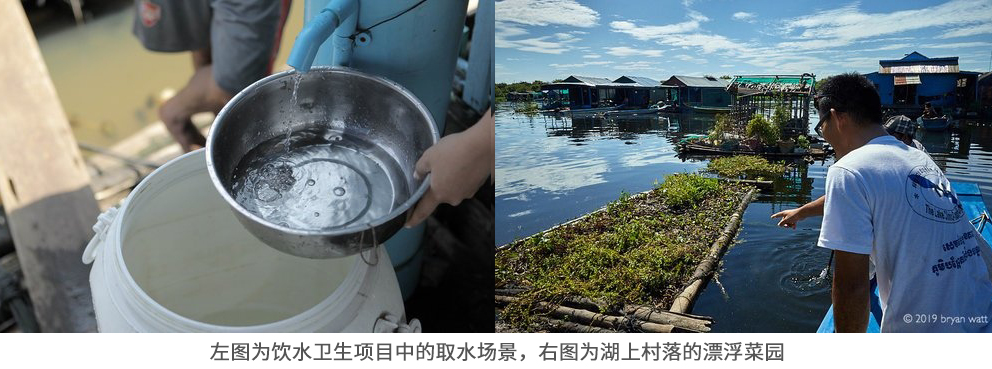
As the medical team’s small boat reaches shore, adults and children gather around. The staff measure blood pressure, administer vaccines, provide dental and vision care, and conduct prenatal examinations, while also teaching basic health knowledge. They help arrange referrals for serious cases that villages cannot handle, including the boats and vehicles needed to travel to major hospitals ashore. Community outreach workers paddle small boats from house to house, knocking on the doors of stilt homes and teaching residents step by step how to improve drinking-water sanitation and grow floating gardens on wooden platforms to supplement their nutrition. They also provide special care for vulnerable children, older people, and people with disabilities who have no one to turn to. When the main obstacle is the journey, delivering doctors to the village gate and arranging the boats and vehicles for referrals is itself a form of treatment.
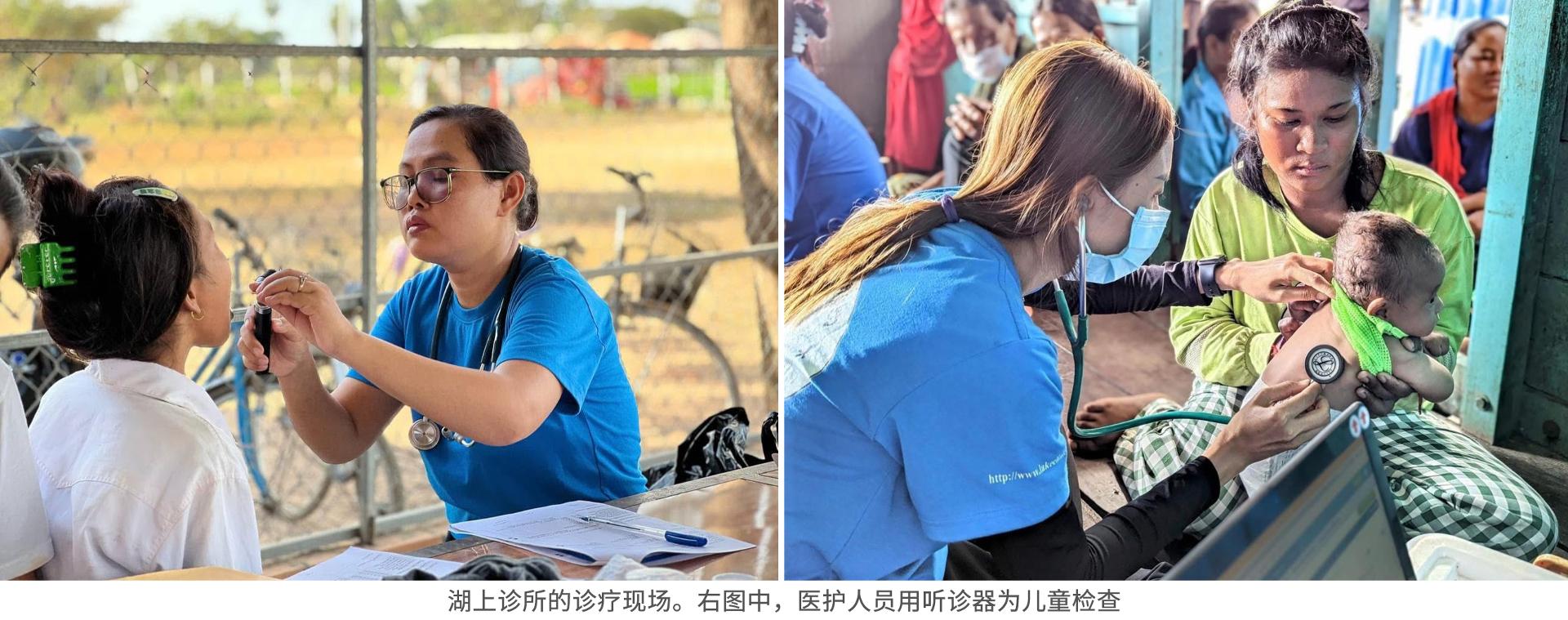
In Morgan’s first-half 2026 report on the international fundraising website GlobalGiving, he noted that the clinic regularly served nine water villages, the nearest of which was about 30 kilometers from the dock and the farthest about 100 kilometers. From January through June, the clinic braved storms and winds to make 186 outreach trips, provided 6,210 consultations, and helped transfer 26 seriously ill patients to higher-level hospitals. Since 2007, it has provided more than 360,000 free medical services.
With more than one million people in the lake region, one boat covering only these villages is far from enough, and this painstaking approach cannot cover the entire lake region. Yet for the villages the clinic already serves, access to medical care is at least no longer entirely left to chance.
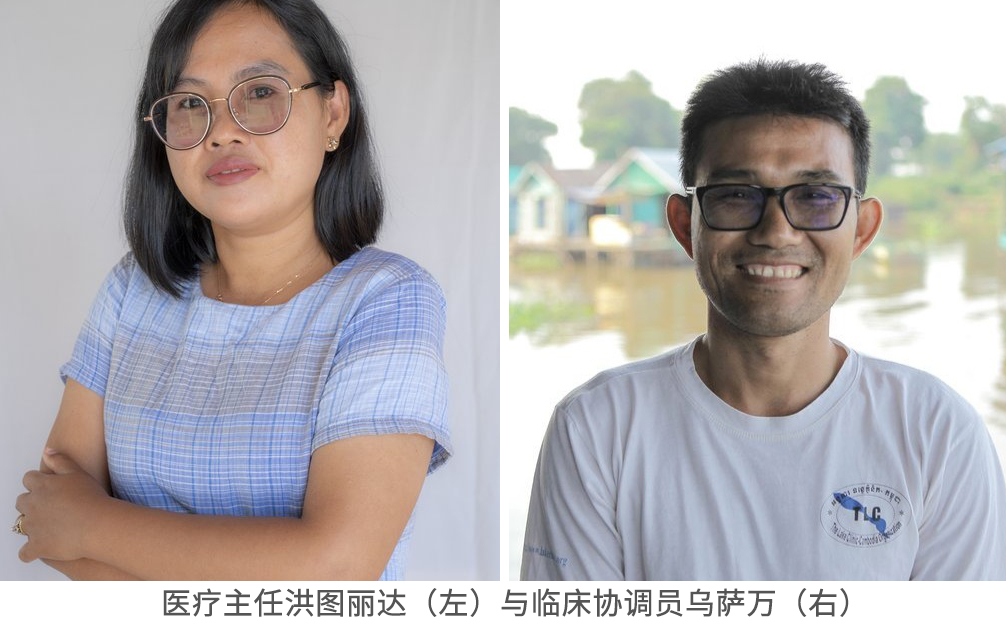
The clinic has more than 25 Cambodian staff members, including doctors, nurses, midwives, outreach workers, boat captains, and cooks. Medical Director Dr. Thourida Hun joined after graduating from medical school in St. Petersburg in Russia in 2012. She wanted to return to her country to do something for people who had nothing. Clinical coordinator Uk Savann has not left since the clinic’s first outreach trip. The founder is now 73. Whether the boat can continue sailing into the villages on schedule will depend largely on whether these local staff members take ownership of the work and continue it.
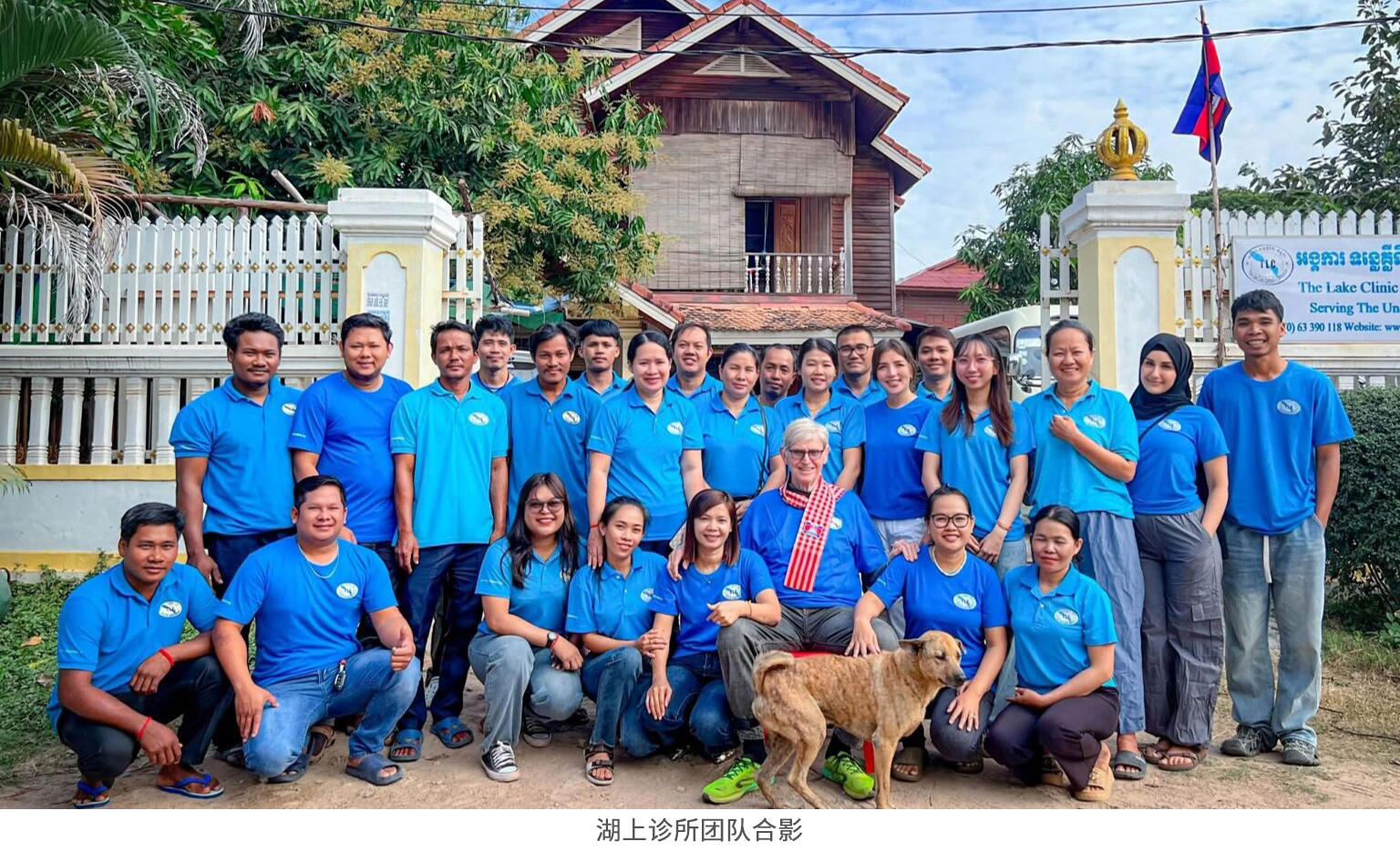
When an American elder spent most of his life immersed in a foreign lake, his three decades of commitment rested on respect for every life and a pure, unwavering compassion. The King’s conferral of the name “Karuna” captures a relay of conviction across national borders. With the founder now in his seventies, Thourida Hun, Uk Savann, and the many local people whose faces are darkened by the sun are taking up the heavy medical kit, and they are carrying hope into the villages time and again. The great lake remains silent, but as more local young people choose to treat their compatriots’ suffering as their own responsibility, and one boat becomes countless hands, what flows across these waters is no longer merely isolated redemption, but an enduring journey together.
Endnotes
Citizenship and name Preah Sihanouk Province Television citizenship report· Royal decree published by Meatophoum· Compassion entry in the Buddhist treatise Vibhanga
Founding experience Cooperation Committee for Cambodia (CCC) organization profile
Healthcare journeys, treatment, and outreach Lake Clinic service overview· Outreach programs
Outreach data and team Morgan’s first-half 2026 GlobalGiving report· Lake Clinic team introduction
Image credits Images 1, 3, 6, and 9: Preah Sihanouk Province Television· Image 2: Meatophoum· Image 4: NASA Earth Observatory (Jesse Allen/MODIS)
Images 5, 7, and 8 Clinic facilities· Outreach programs (floating-garden photography by Bryan Watt)· Team portraits