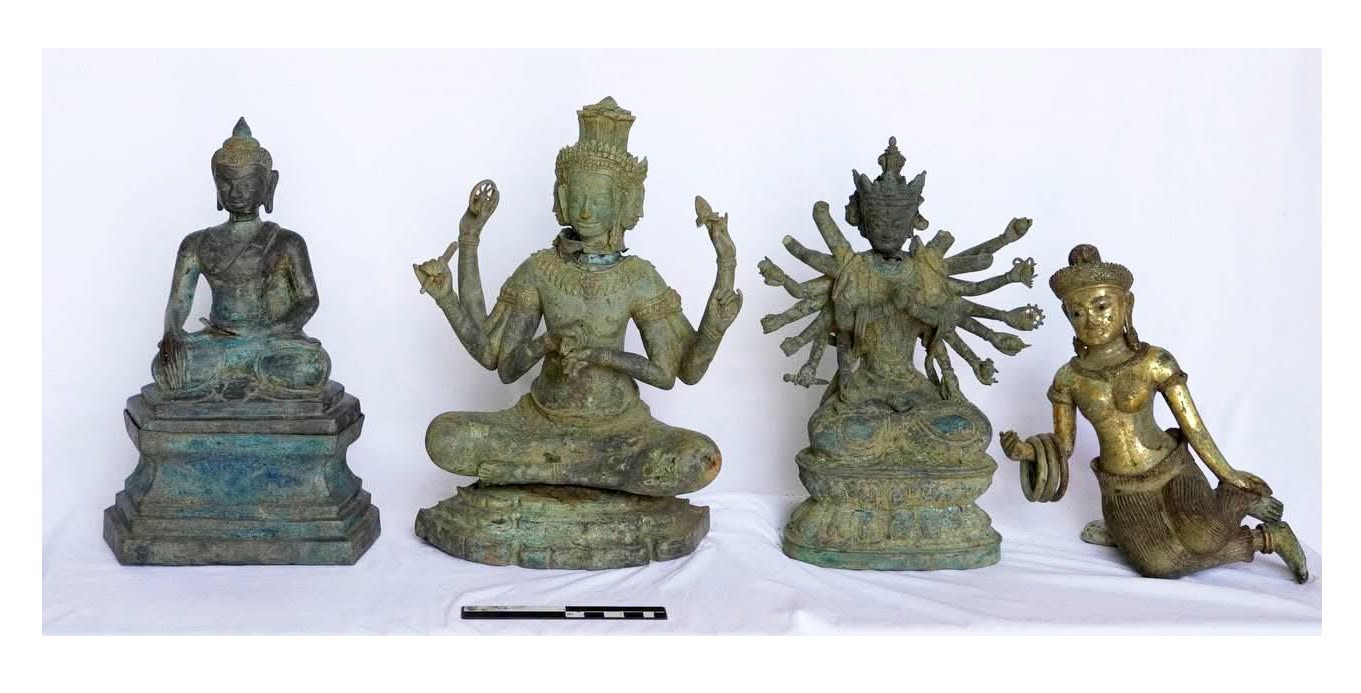
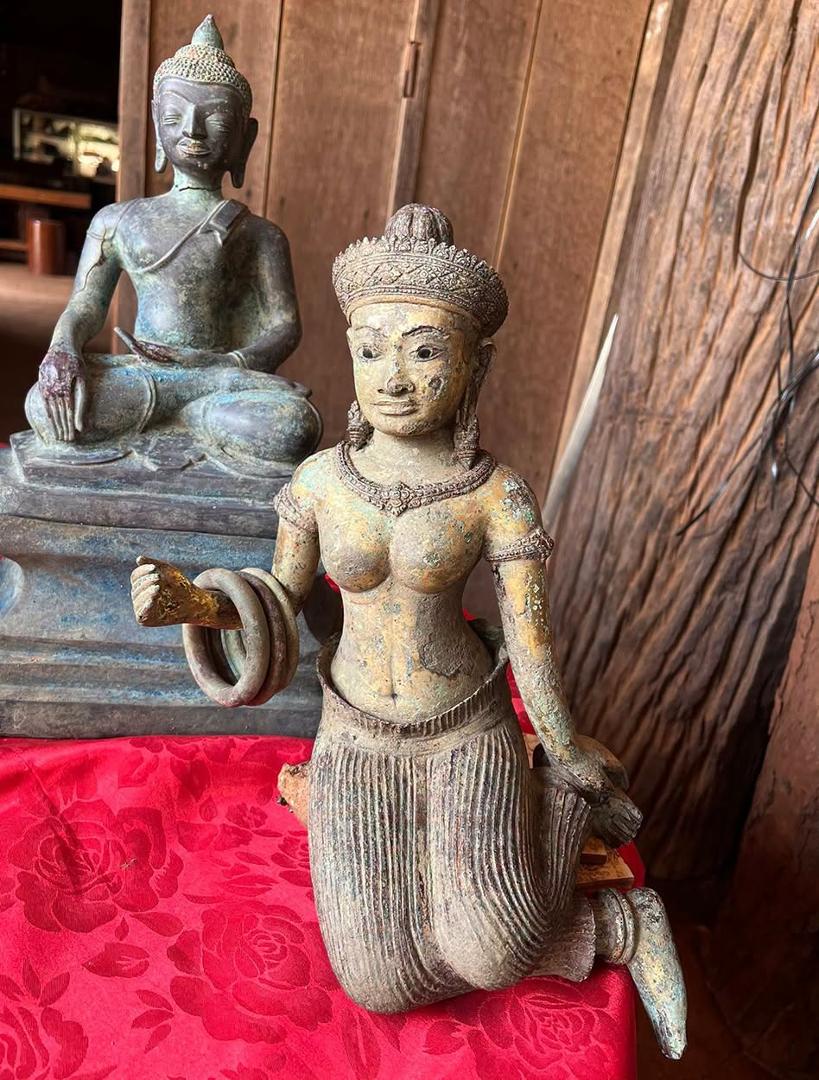
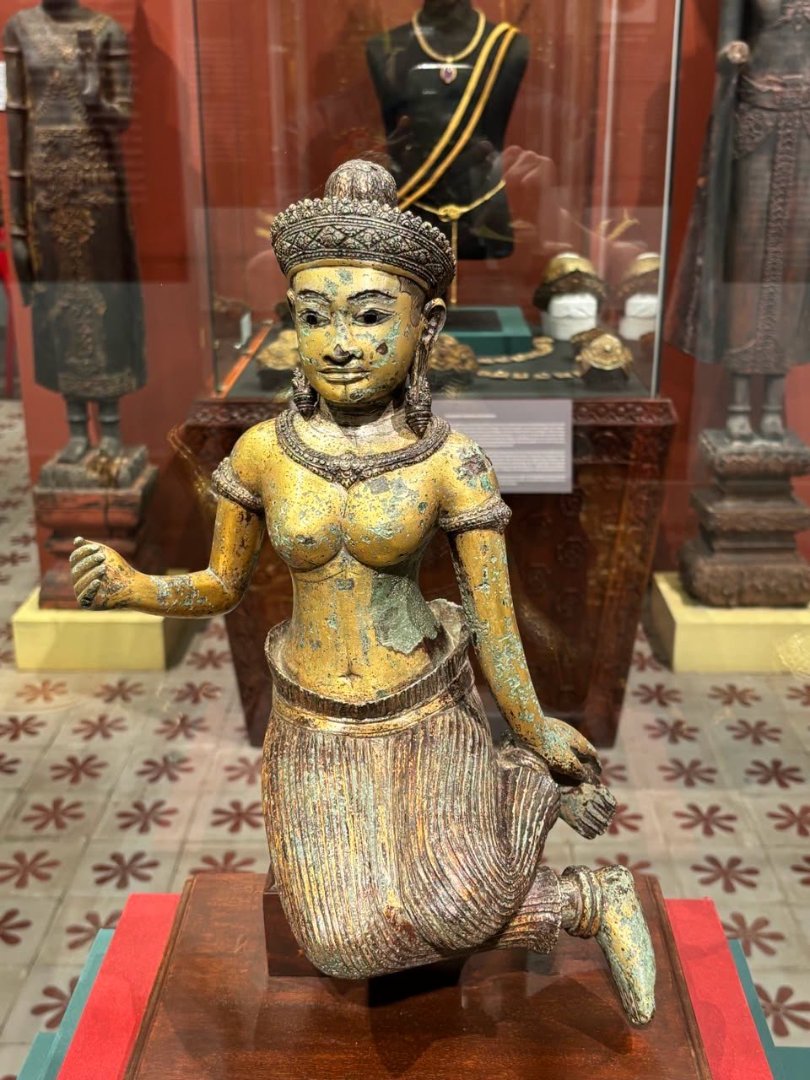
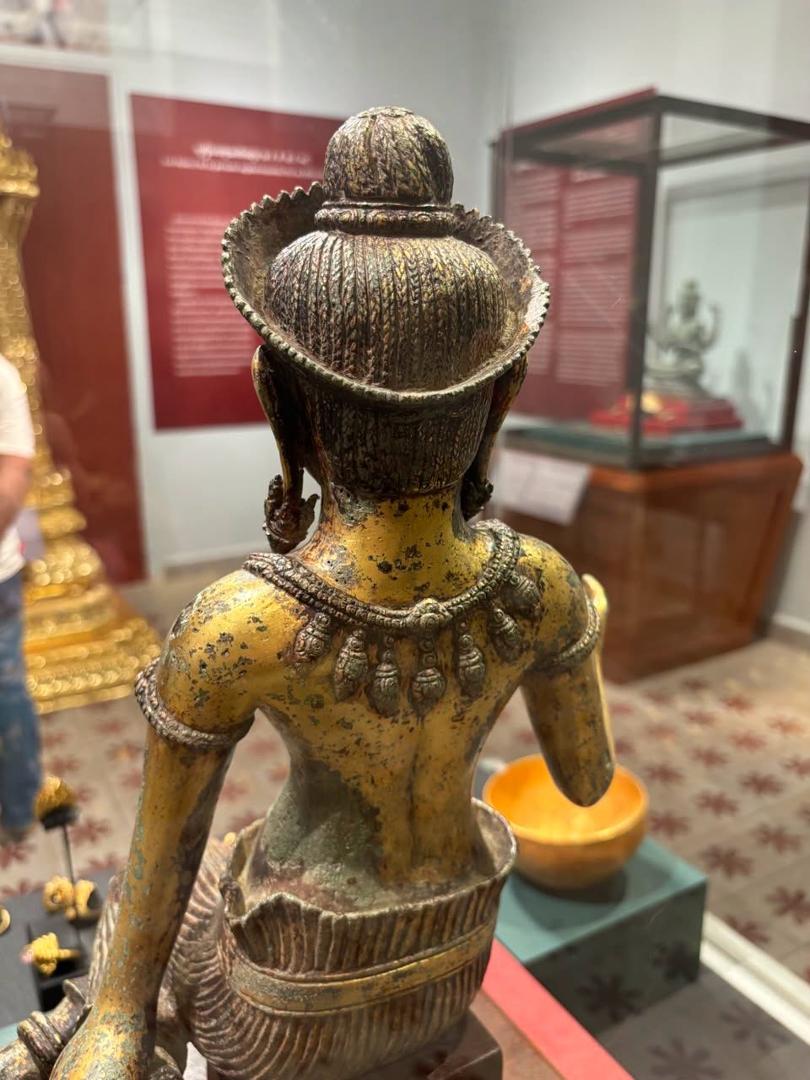
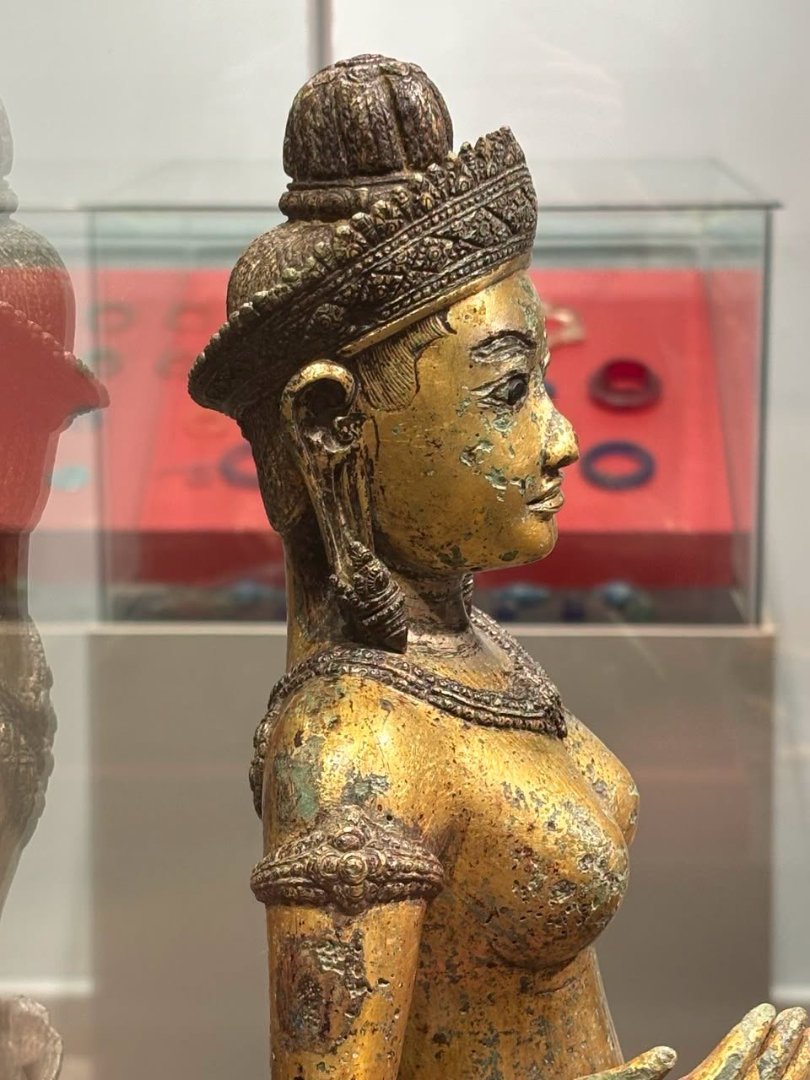
A golden statue of the goddess Uma, a rare gilded-bronze masterpiece from the Angkorian period, is on display in a short-term exhibition at the National Museum, showcasing the splendour of ancient Khmer art and craftsmanship. The statue was found buried in the ground, together with three other bronze statues, by farmers working their fields in Tumring commune, Sandan district, Kampong Thom province in June 2026, and was then handed over to local authorities. After cleaning and restoration, the statue was determined to date from the mid-10th century and to be a work in the Khleang style of the Angkorian period.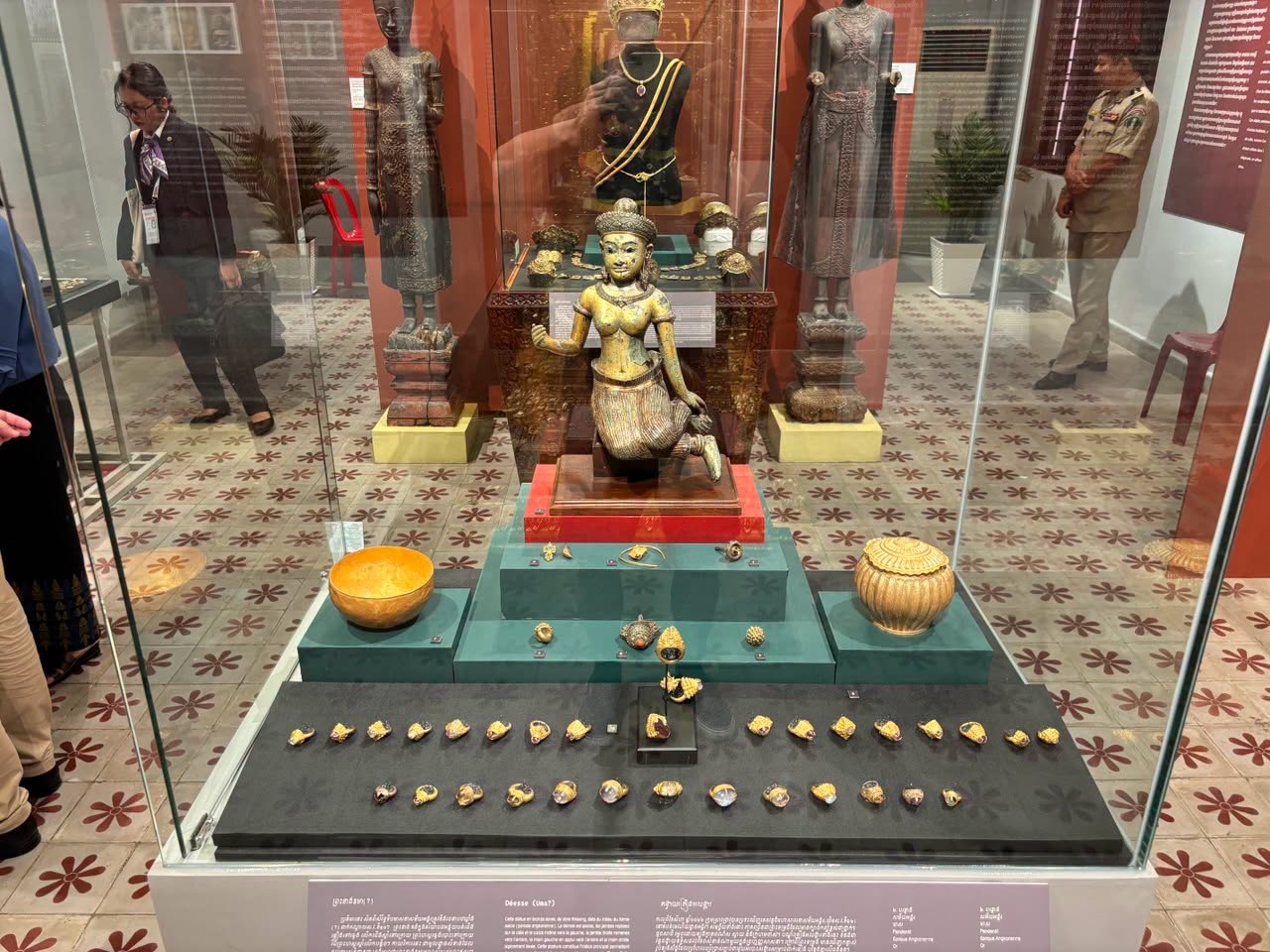
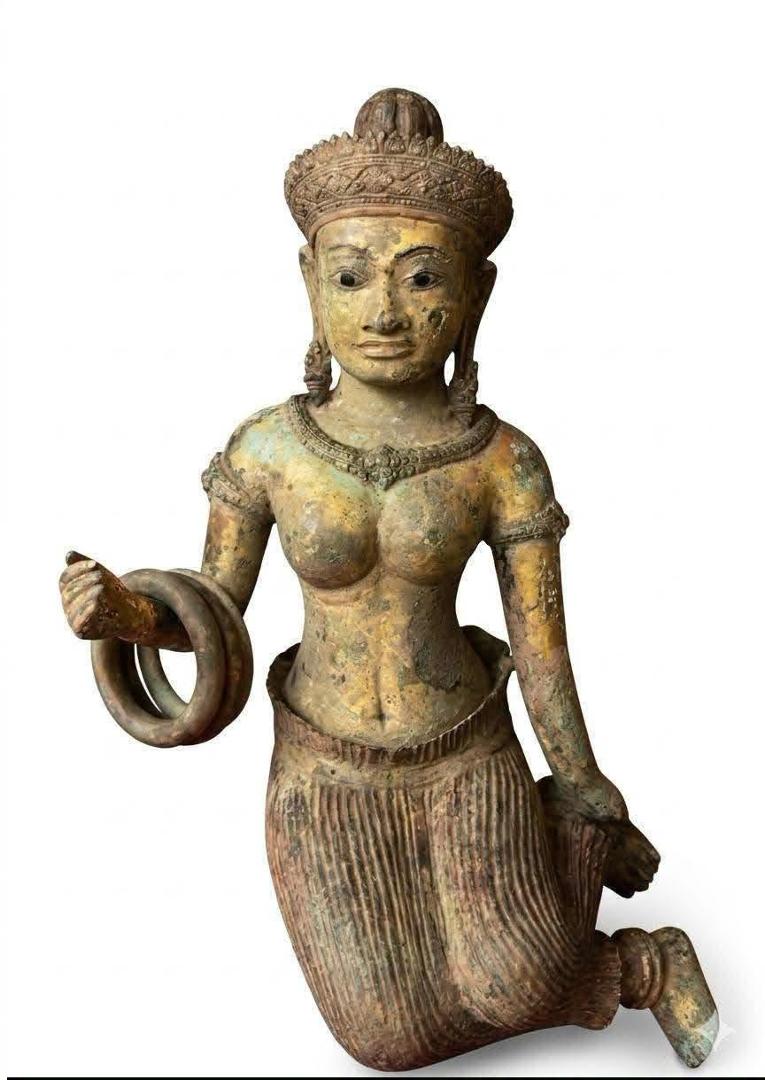
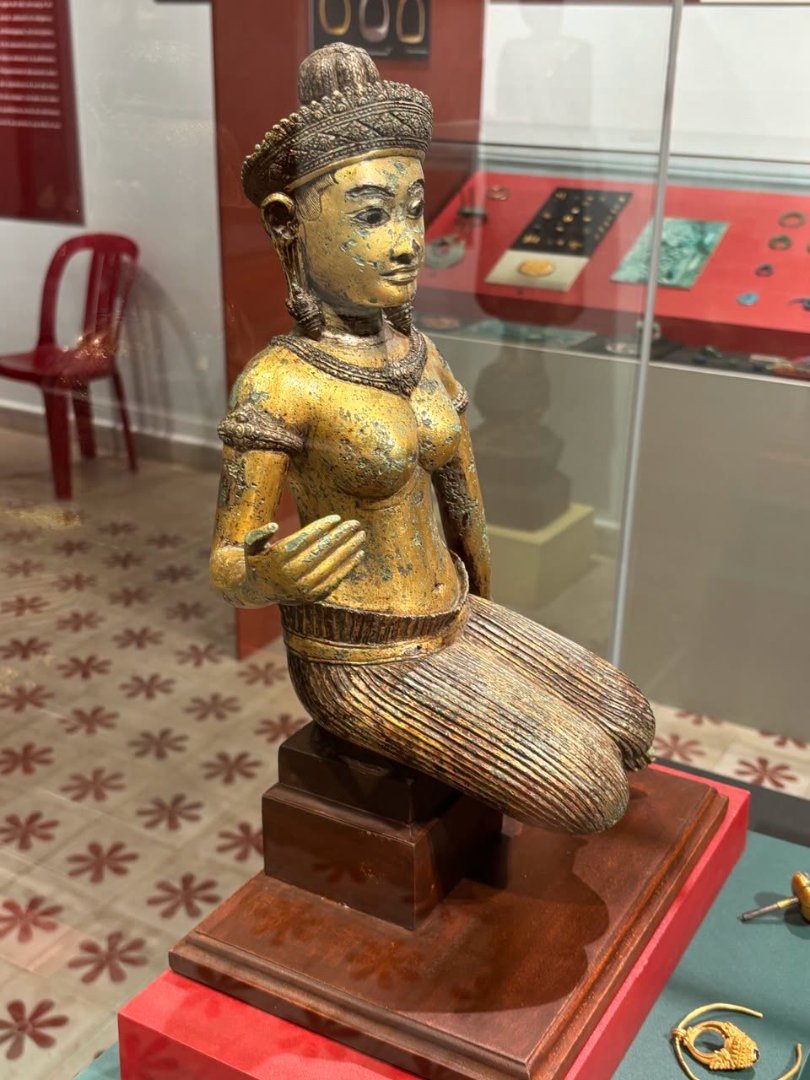 What makes the statue stand out is its exquisite carving and ornamentation. Uma is depicted seated with her legs folded to one side, her right leg drawn back and her left hand holding her left leg for support. This posture recalls the goddess Uma, consort of Shiva, who in ancient Khmer art is often shown seated beside her husband on the back of the bull Nandin.
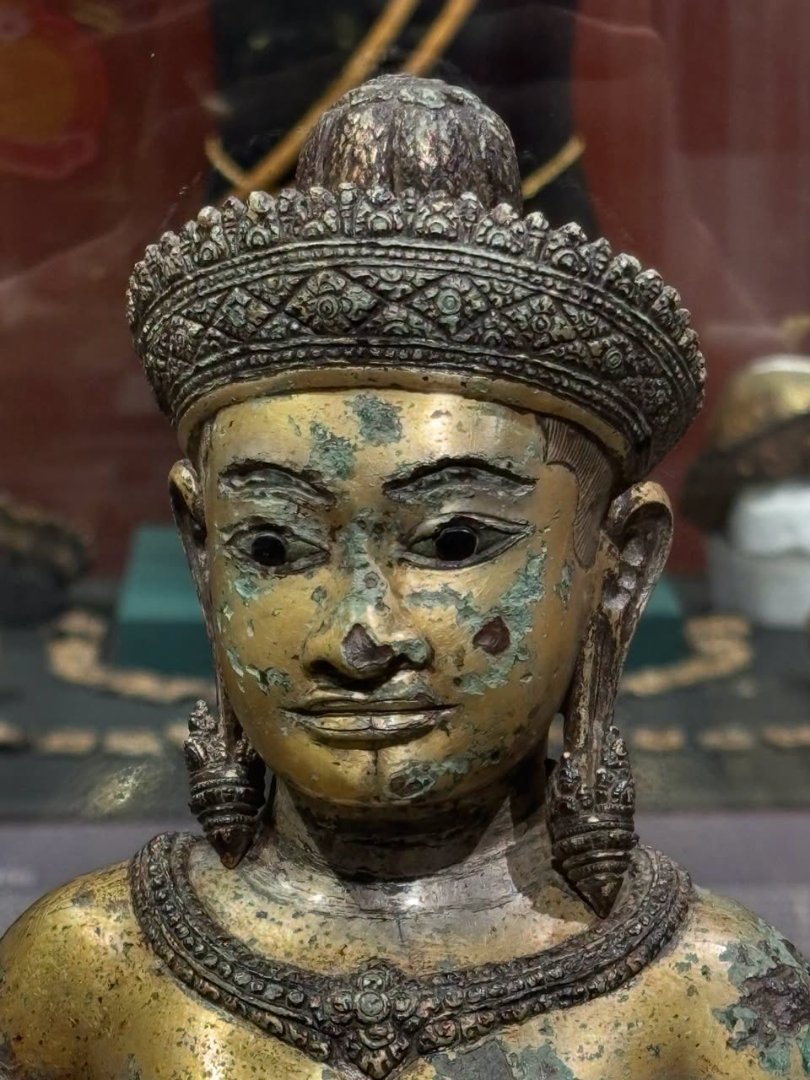
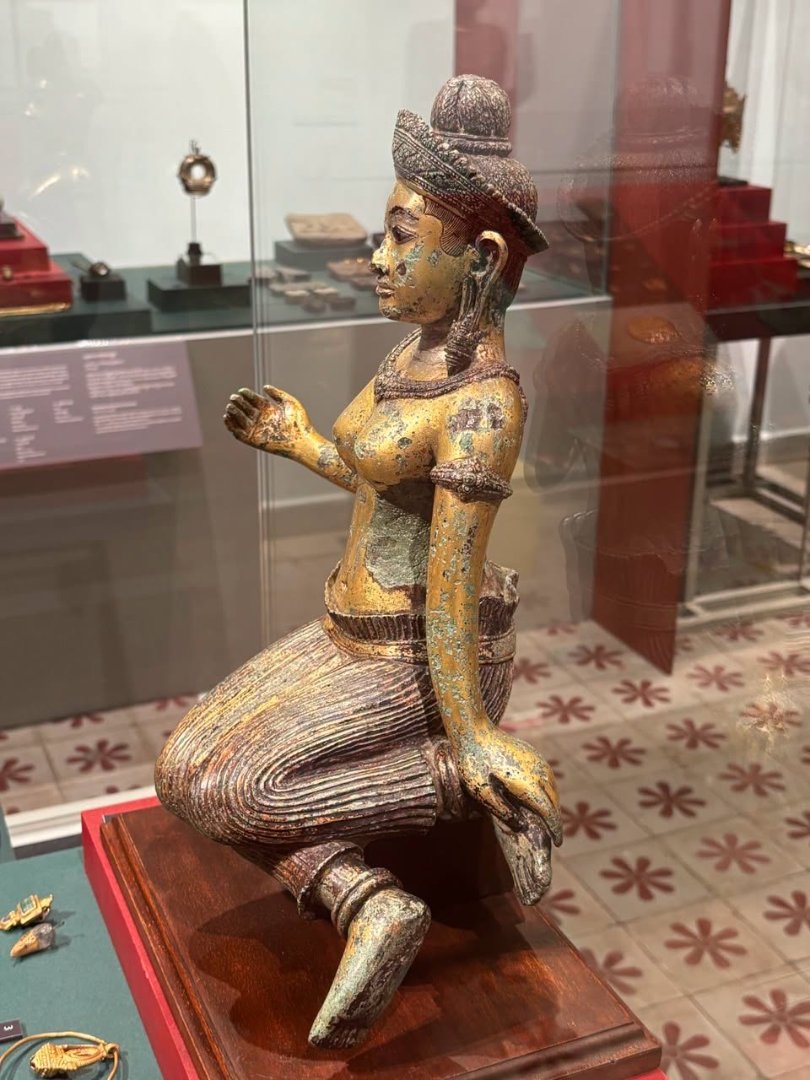 The statue wears an ornamental diadem tied at the back of her braided hair, with her hair gathered up into a topknot, as well as earrings, a necklace hung with finely carved pendants, bracelets and anklets, and a long pleated skirt with a belt at the waist. Her face shows a calm and gentle expression; the eyes appear to be made of black obsidian, and the eyebrows are incised and may once have been inlaid with silver.
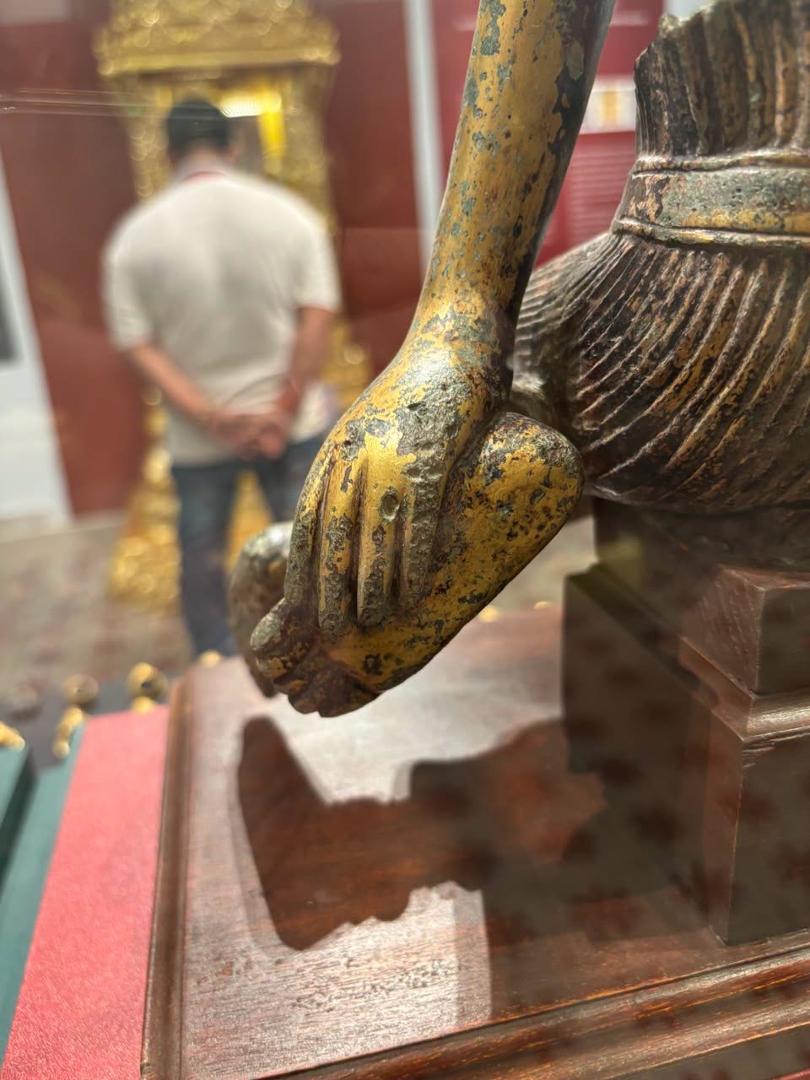
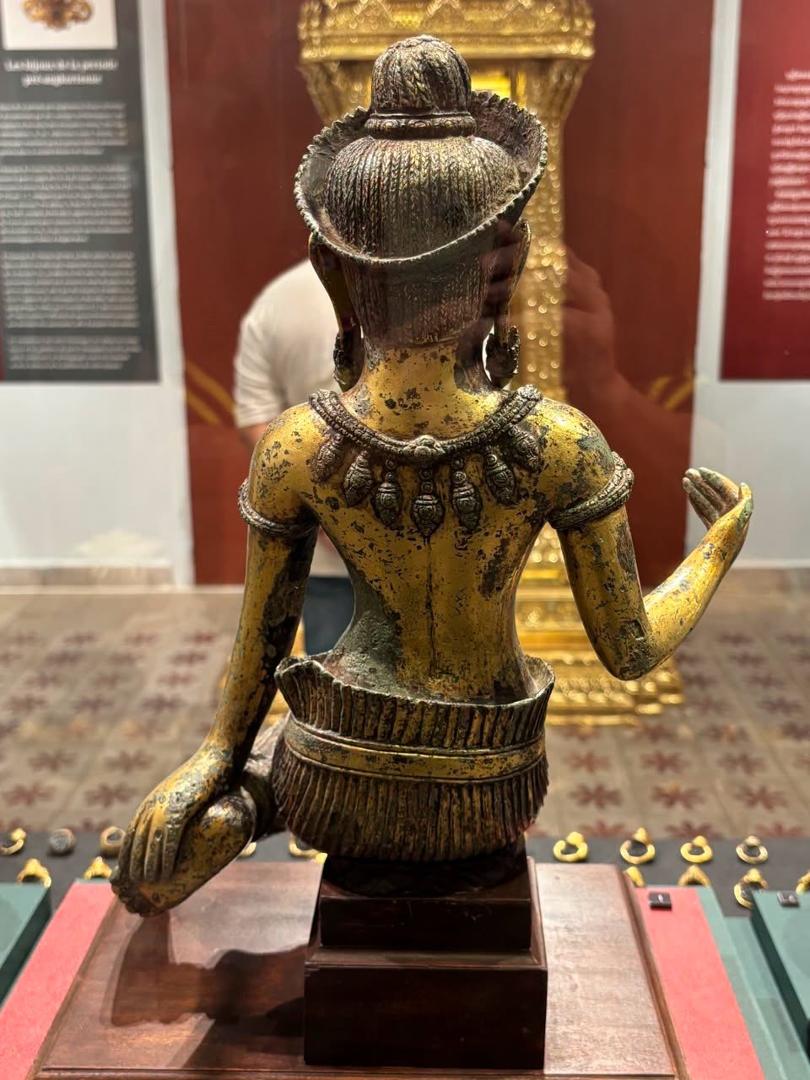
Although it is about 1,000 years old and lay buried in the ground for a long time, the golden Uma statue remains in remarkably good condition, demonstrating the technical skill and talent of Khmer artisans in bronze casting as early as the 10th century. Alongside the statue, the exhibition at the National Museum also displays gold rings and many other gold antiquities, illustrating the richness and diversity of ancient Khmer jewellery and art. The exhibition will remain open to the public until Sunday. By: សុភ័ក្រ្ត