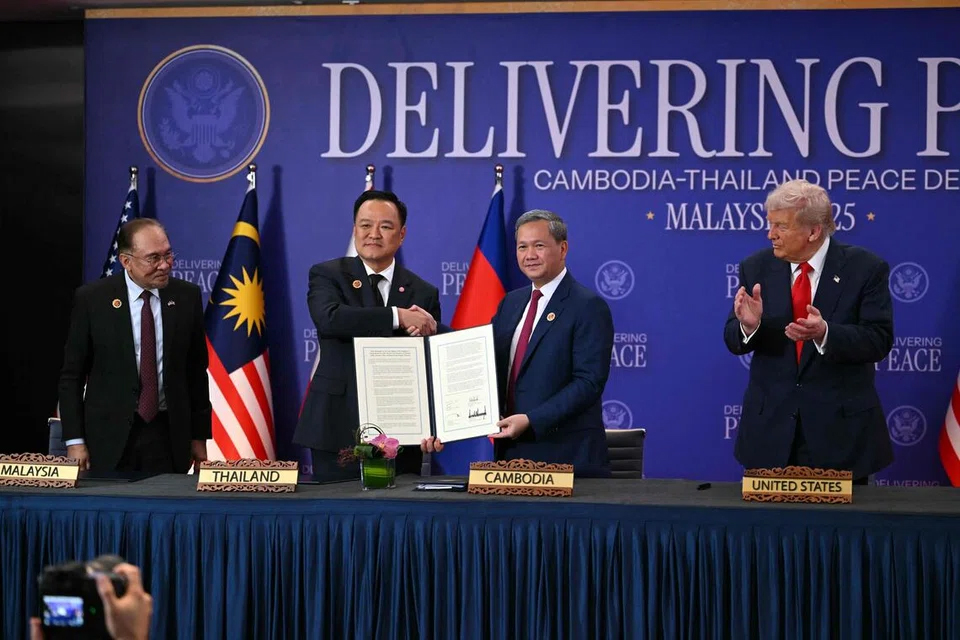
Since "818", Cambodia has been experiencing a social change markedly different from those of the past.
Entering 2026, the Cambodian government has pursued an exceptionally intensive crackdown on telecom scams and related transnational crime. Scam compounds in Phnom Penh, Sihanoukville, Moc Bai and other places have been cleared. At the same time, the Cambodia-Thailand border war, the arrest of Prince Group's Chen Zhi and sanctions against Huione occurred in quick succession, delivering a triple shock to Cambodia's social functioning and economic environment.
Together, these events have rapidly deprived a system long dependent on the grey economy of its support, signalling a deep reshaping of order.
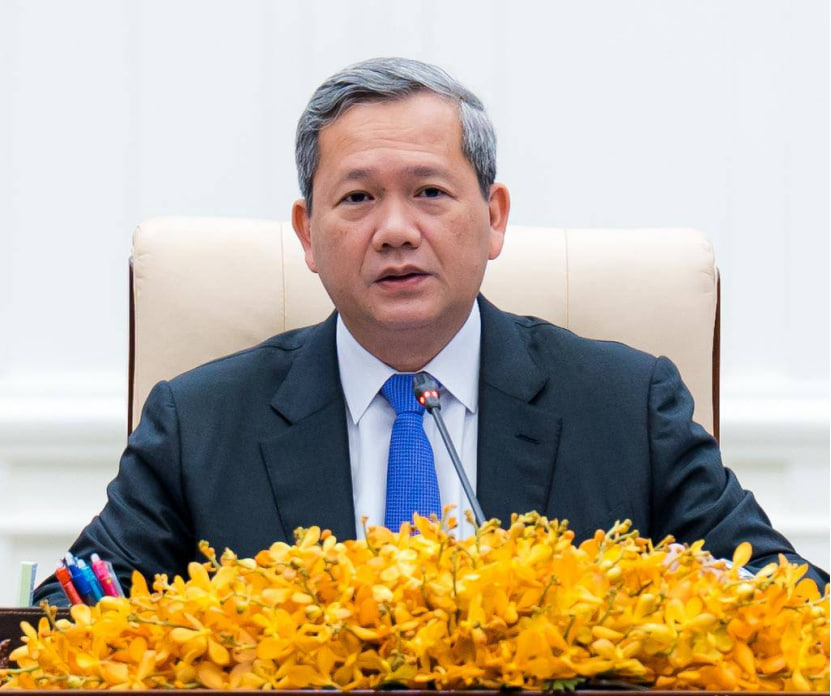
Why is this time different?
Cambodia has cracked down on telecom scams repeatedly in recent years, but this time is clearly different.
First, operations are broader, taking place in multiple locations at once rather than stopping at limited interventions. Second, the targets are more direct, reaching people and systems seldom touched in the past. Third, the stance is clearer: sustained action rather than short-lived enforcement campaigns.
Against this background, government statements repeatedly emphasise international cooperation and long-term governance. This suggests that anti-scam work is becoming part of routine governance rather than a temporary exercise.
It also explains why some compounds emptied so quickly: their former closed operating model has become difficult to sustain.
What happened after the "exodus"?
As some compounds were cleared, large numbers of people gathered in Phnom Penh and other places in a short period, seeking to leave through embassies and air transit. This produced what outside observers called an "exodus".
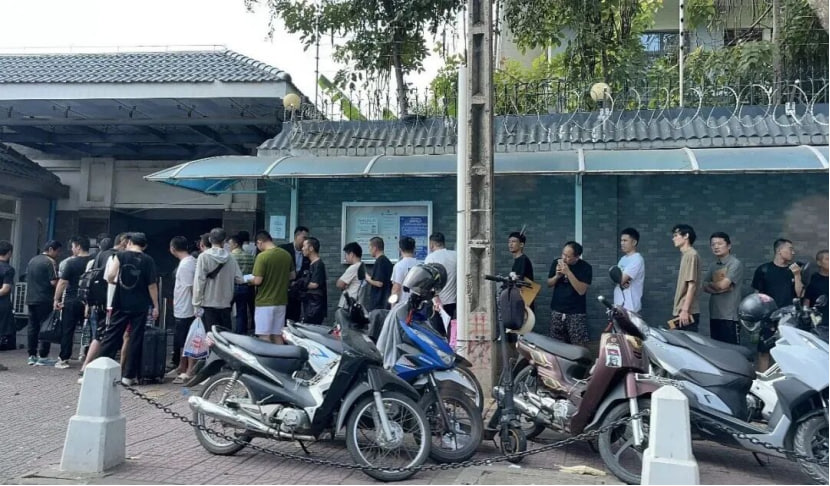
This concentrated movement quickly triggered a series of knock-on effects:
1. Embassy workloads increased markedly;
2. Airfare and hotel prices fluctuated in the short term;
3. Parts of the catering, entertainment and property sectors dependent on Chinese customers cooled.
These changes look more like the pain of the grey economy's retreat than the whole country suddenly failing. The compound economy does not itself create real value, and its contraction does not mean the real economy is collapsing.
Cambodia's real economy continues to run on factories, construction, tourism and compliant investment.
Chinese residents in Cambodia have reached a crossroads
For Chinese people working and doing business legally in Cambodia, the impact of these changes is especially direct.
One clear perception is that there are fewer Chinese people and business is harder.
From the second half of 2025, regular customers declined, new customers stopped coming, and business models circulating only within Chinese communities began to falter.
Against this background, more Chinese residents have started changing direction:
1. Trying the local market instead of focusing only on Chinese customers;
2. Seeking compliance instead of relying on grey areas;
3. Considering long-term viability instead of chasing quick money.
This path brings slower returns, but it is safer and more realistic.
Over the longer term, Cambodia is using a high-pressure anti-scam campaign to clear space for its development. Among Chinese residents, those able to remain will often be people willing to adapt to new rules and build stable relationships with local society.
The old way of operating is retreating, while a new order is still taking shape.
Whatever happens, every Chinese person in Cambodia already knows clearly that, in 2026, the country will reach a new turning point amid the anti-scam storm.