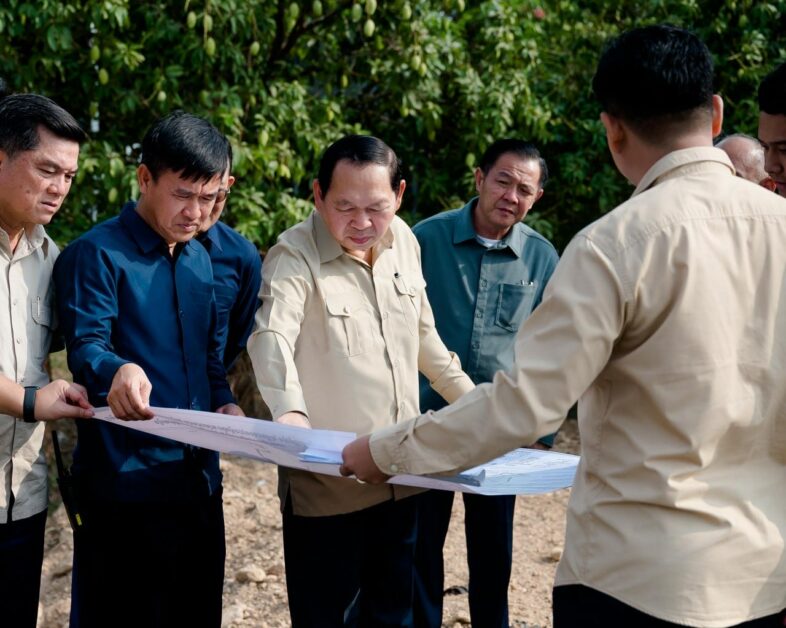
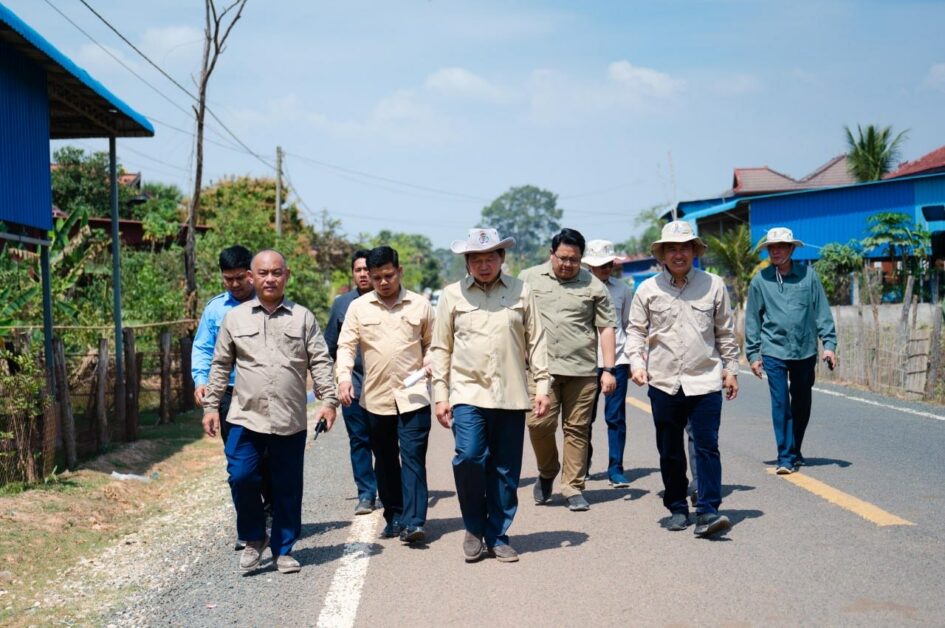
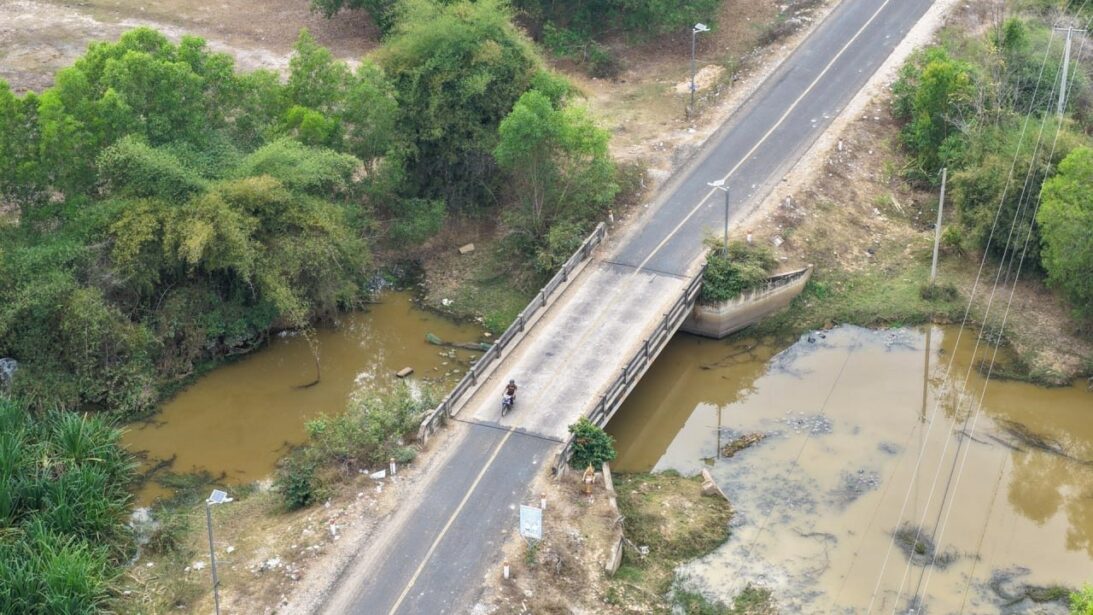
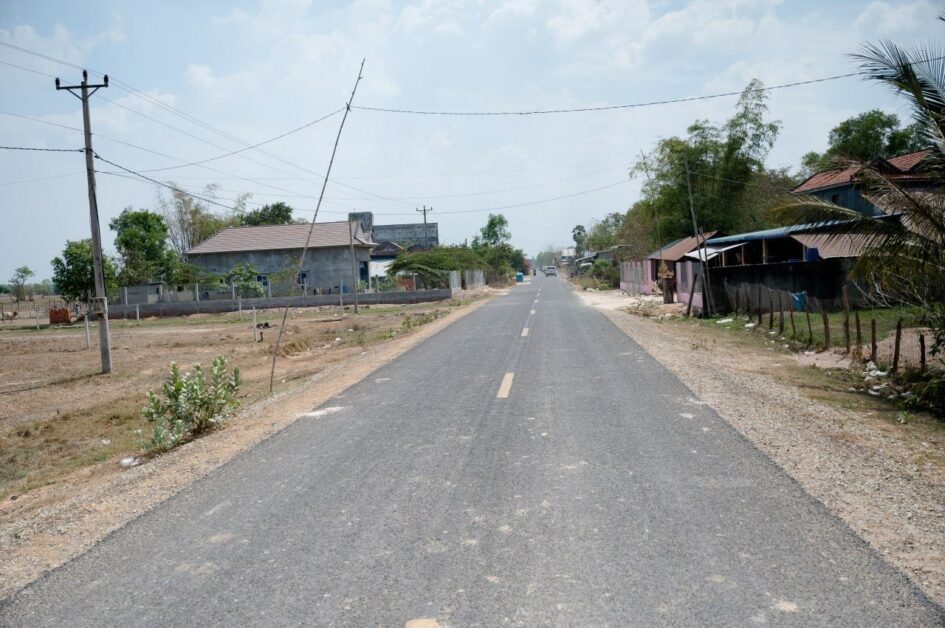
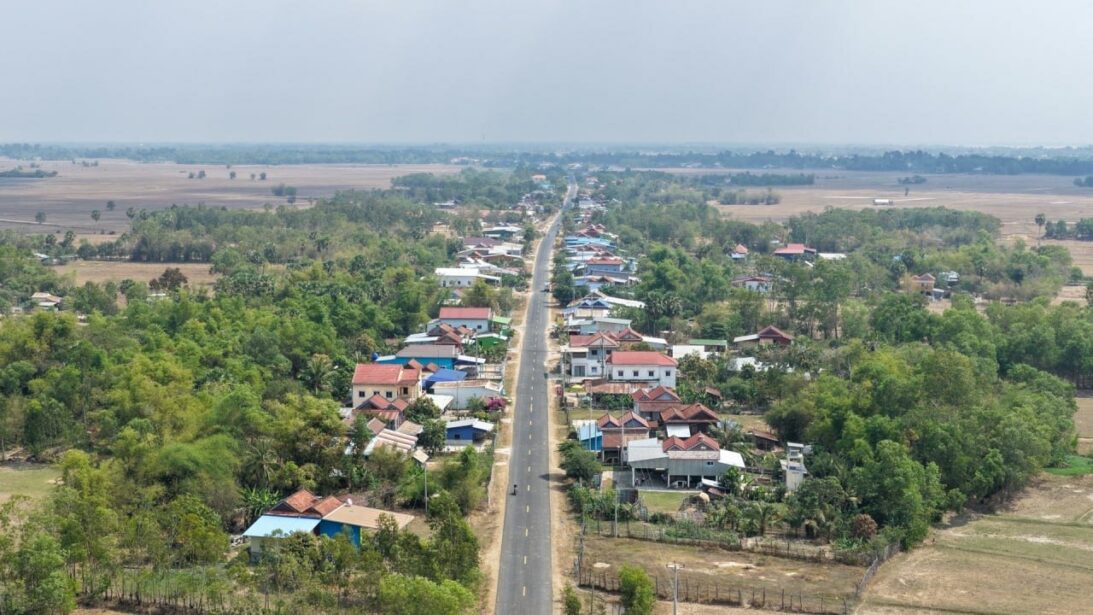
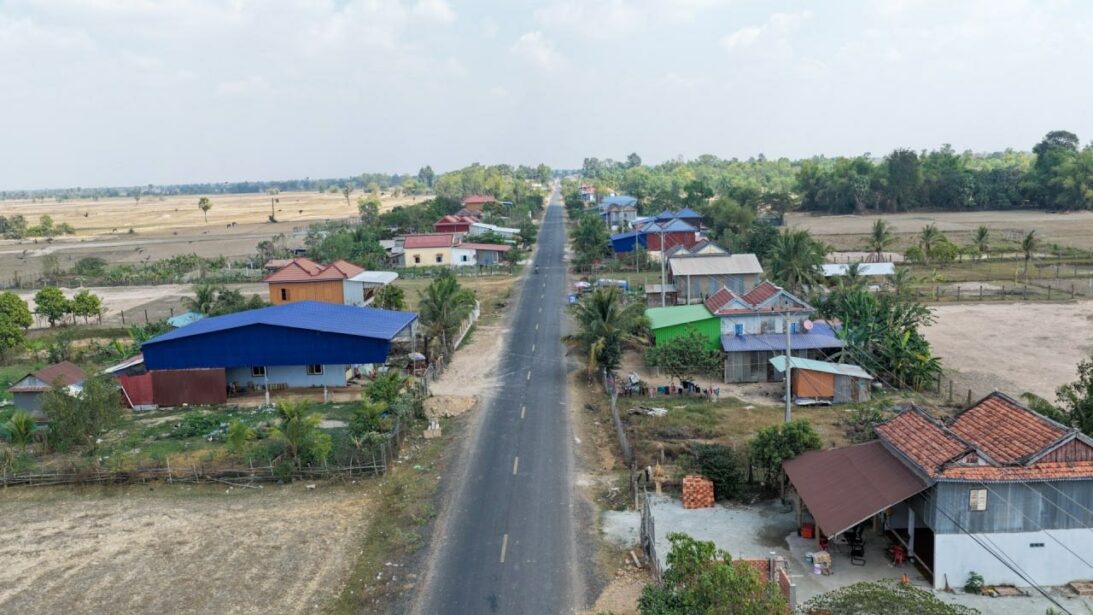
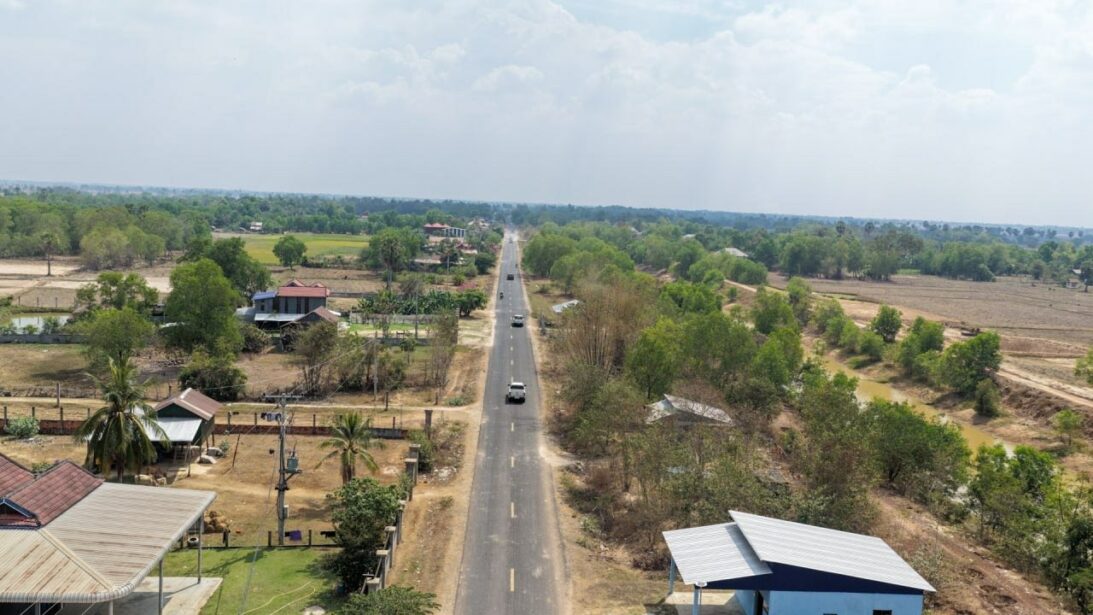
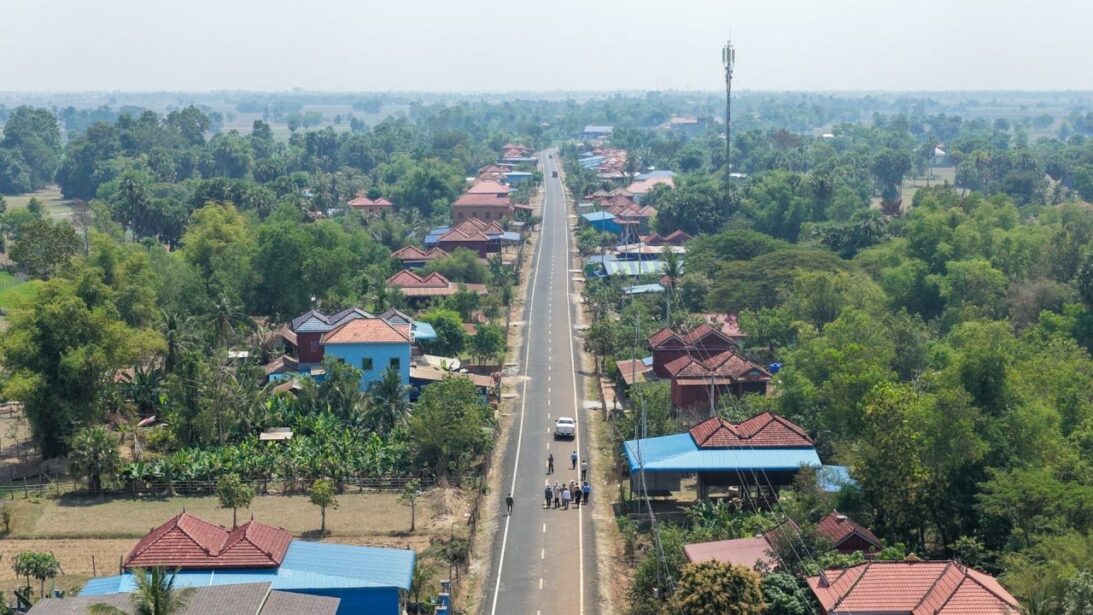
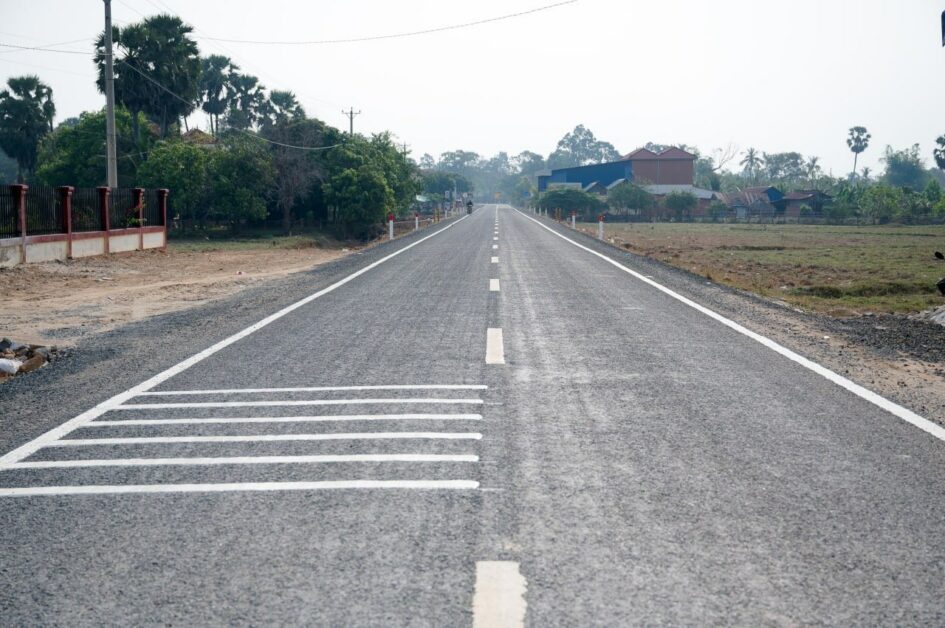
On the afternoon of February 12, 2026, Rural Development Minister Chhay Rithisen, ministry leaders, specialists and the Svay Rieng rural development department inspected the quality and condition of five rural roads in the province.
The five roads were:
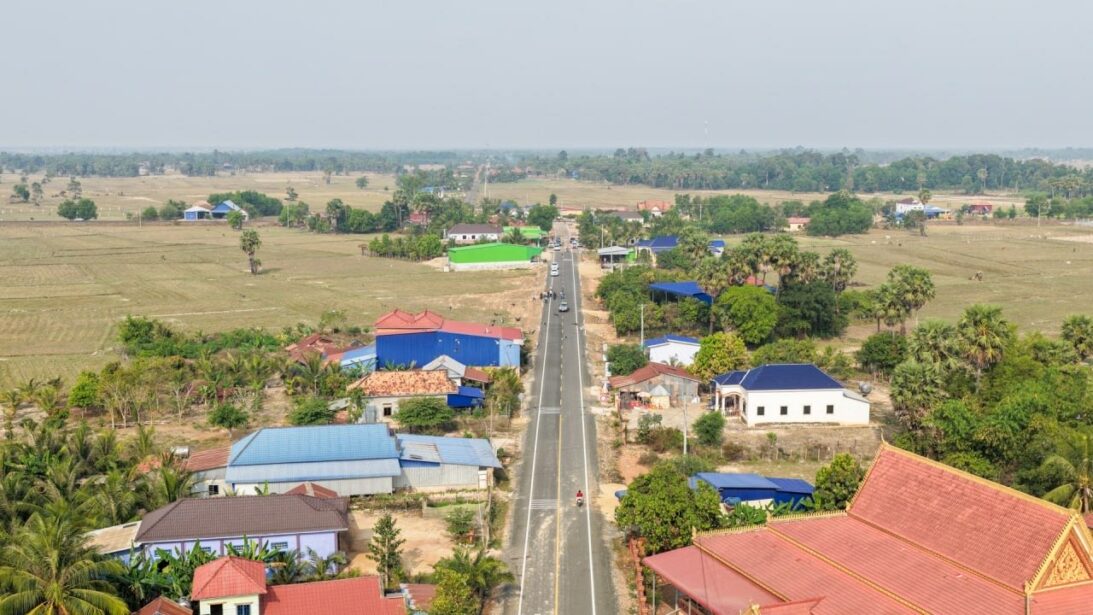
First, Ampil–Koki, with double bituminous surface treatment (DBST) and concrete sections, totalling 11.86 km in length and 8 metres in width. It connects Ampil village and commune to Ta Vang village, Koki commune, in Romeas Hek district.
Second, Chantrei–Mream, also with DBST and concrete sections, totalling 12.43 km and 7 metres wide. It connects Chantrei village and commune to Mream Khang Tboung village, Mream commune, in Romeas Hek district.
The Rural Development Ministry built these two roads in 2025 under SAAMBAT, a project supporting sustainable rural infrastructure for farmers’ markets and agricultural commercialisation, using cooperation financing from the Cambodian government, IFAD and EU-AIF.
Third, Prey Kiev–Kampong Ampil, a DBST road 26.759 km long with a 6-metre top width, connects Prey Kiev village, Kampong Chak commune, to Kampong Ampil village and commune in Rumduol district.
Fourth, Phsar Chak–Pong Tuek, a DBST road 9.166 km long with a 6-metre top width, connects Chak village, Kampong Chak commune, to Bos Toch village, Pong Tuek commune, in Rumduol district.
The ministry built the third and fourth roads in 2023 under Rural Roads Improvement Project Phase III, or RRIP-III, using Cambodian government cooperation funds and an ADB loan.
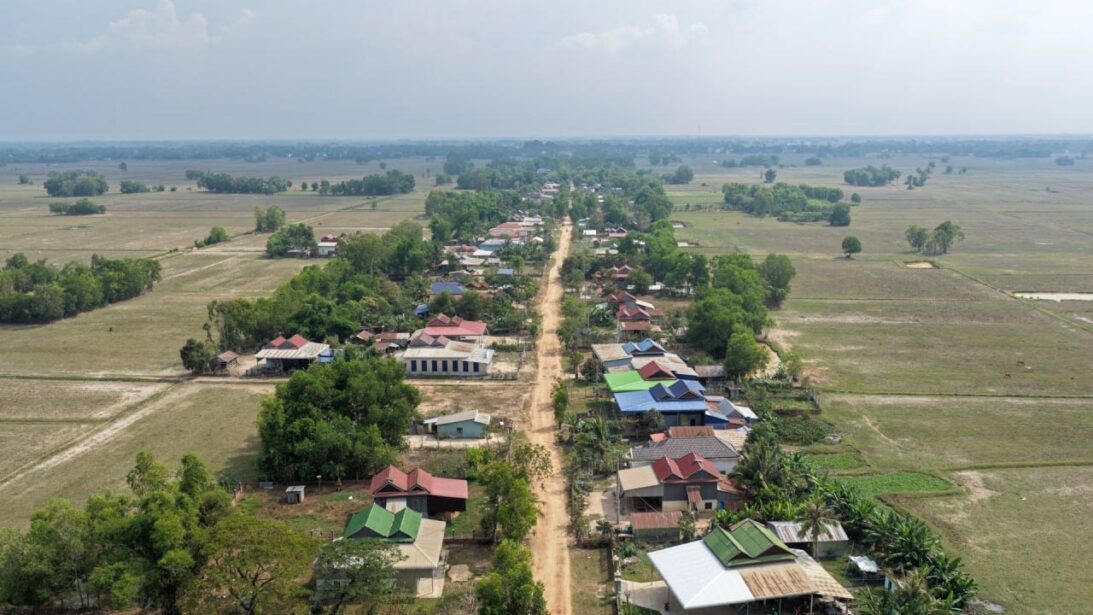
After inspecting those four roads, Chhay Rithisen and the delegation examined an additional road surfaced with a gravel mixture, Kak–Trapeang Damrei, 19.70 km long and 5 metres wide. It runs from Kak village, Svay Rumpear commune, Svay Teap district, to Trapeang Damrei village, Kampong Ampil commune, Rumduol district.
Finding conditions very difficult, the minister instructed the Svay Rieng rural development department to include it in a development-partner project for an asphalt or concrete road resilient to climate change, helping residents travel in every season and ensuring lasting use.
By Pai Sokhim.