Khmer Sbai: A Precious Ancestral Heritage Dating Back to the Funan Era
The Khmer sbai is a traditional shoulder cloth carrying centuries of history, dressmaking traditions and cultural identity, still used in weddings, dance and ceremonies.
While Thailand is muddying the international narrative by falsely claiming the sbai as its own, historical facts show that Thai civilization emerged after the Khmer Empire. His Excellency Neth Pheaktra, Minister of Information, shared insights on the history of the sbai: Khmer sbai is not merely a piece of fabric used to adorn the body, but a valuable cultural heritage deeply tied to the history, traditions, art, and identity of the Khmer people from ancient times to the present. Historical studies and archaeological evidence show that traditional Khmer dress has evolved over many centuries. On 14 March 2026, Cambodia's Ministry of Culture and Fine Arts affirmed that the sbai is part of Khmer cultural heritage, with roots linked to Khmer civilization since the Funan era and has been passed down from generation to generation.
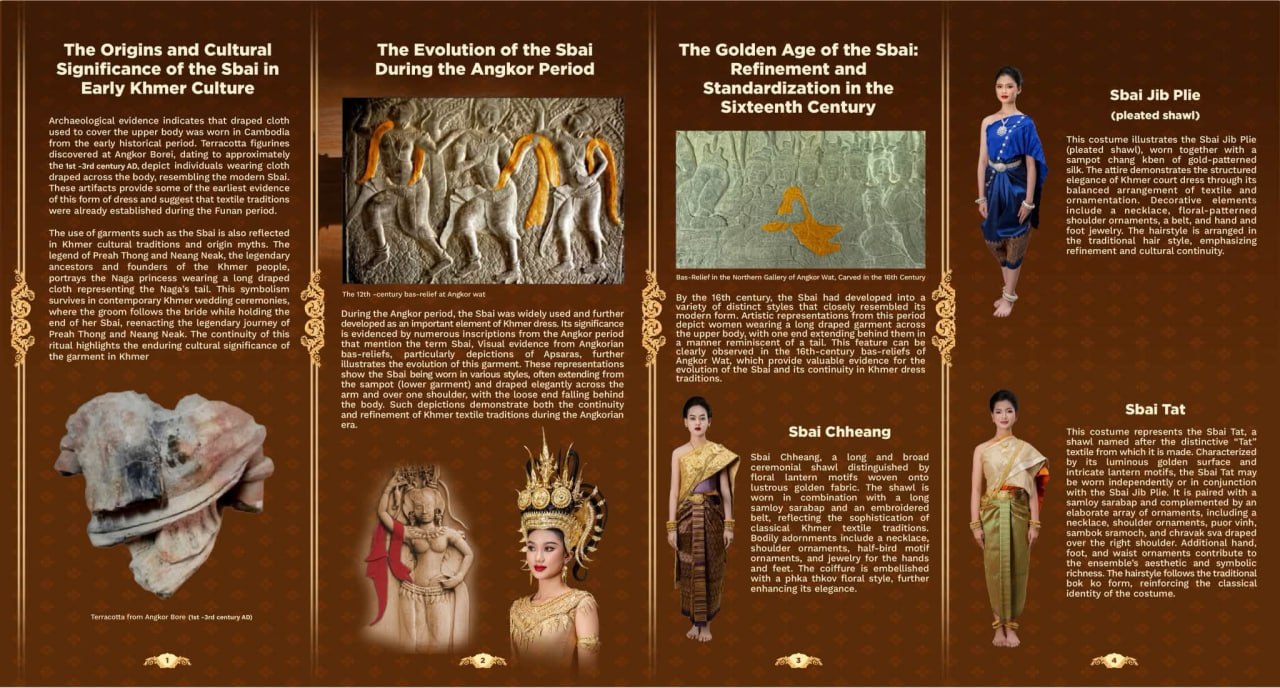
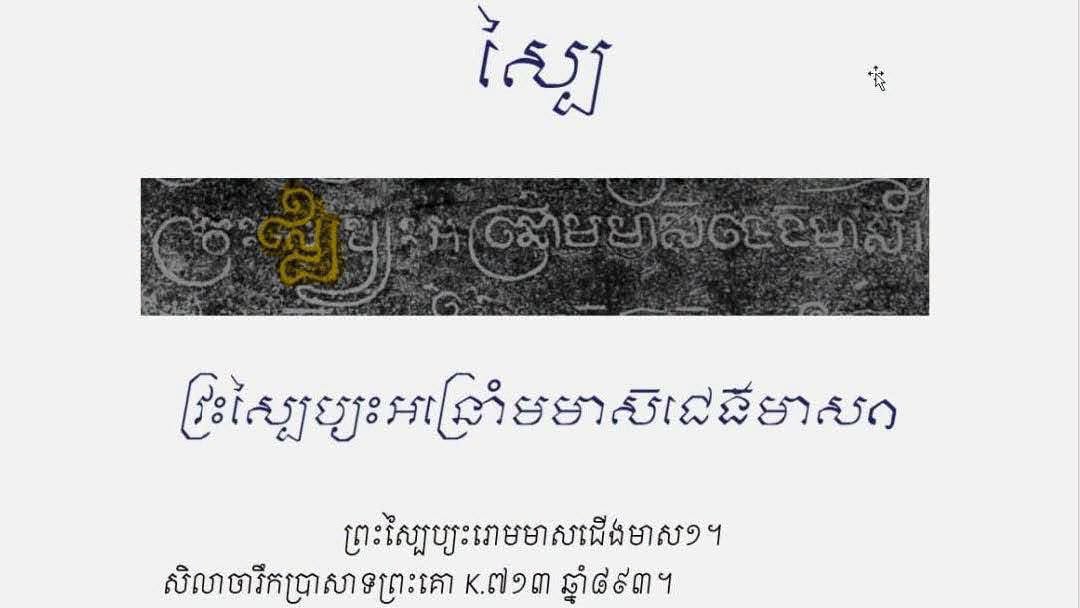
A key piece of evidence for studying Khmer dress and social life from the pre-Angkorian period is a fired-clay figurine discovered at the Angkor Borei archaeological site in Takeo province (dated between the 1st and 3rd centuries CE), along with inscription K.713 of Prasat Preah Ko in the Roluos area, Siem Reap province, constructed during the reign of King Indravarman I in the late 9th century, dedicated to his ancestors. This inscription, dated 815 of the Mahasakarat era, equivalent to 893 CE, records offerings including gold, silver, jewelry, clothing, ritual objects, temple servants, dancers, and musicians, and notably the dedication of sbai to the temple's guardian deities. These records reflect the richness of Khmer life, art, and culture in the early Angkorian era.
Khmer Sbai: From Ancient Dress to a Symbol of National Identity
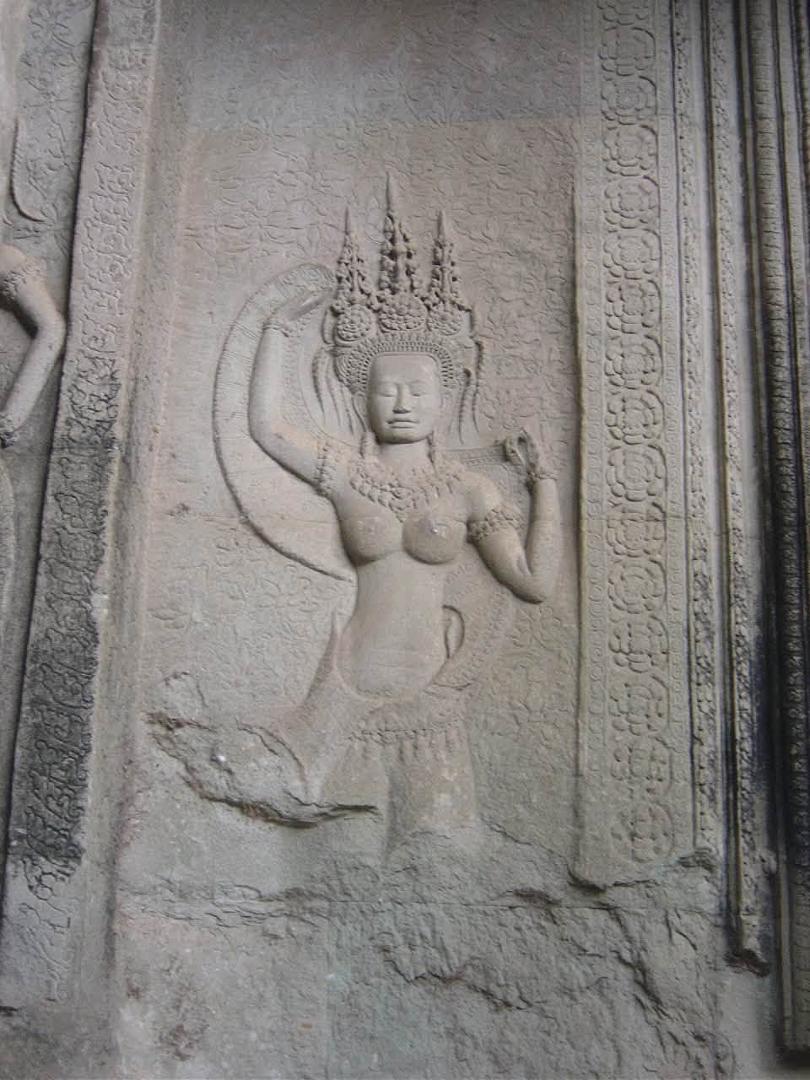
The sbai plays a role beyond that of clothing meant to adorn the body. In Khmer society, the sbai is associated with beauty, elegance, and the tradition of dressing. Bas-reliefs of women and deities at ancient Khmer temples also reveal the diversity of body adornment, jewelry, and dress in the Angkorian era, serving as a valuable source for studying the history of Khmer clothing.
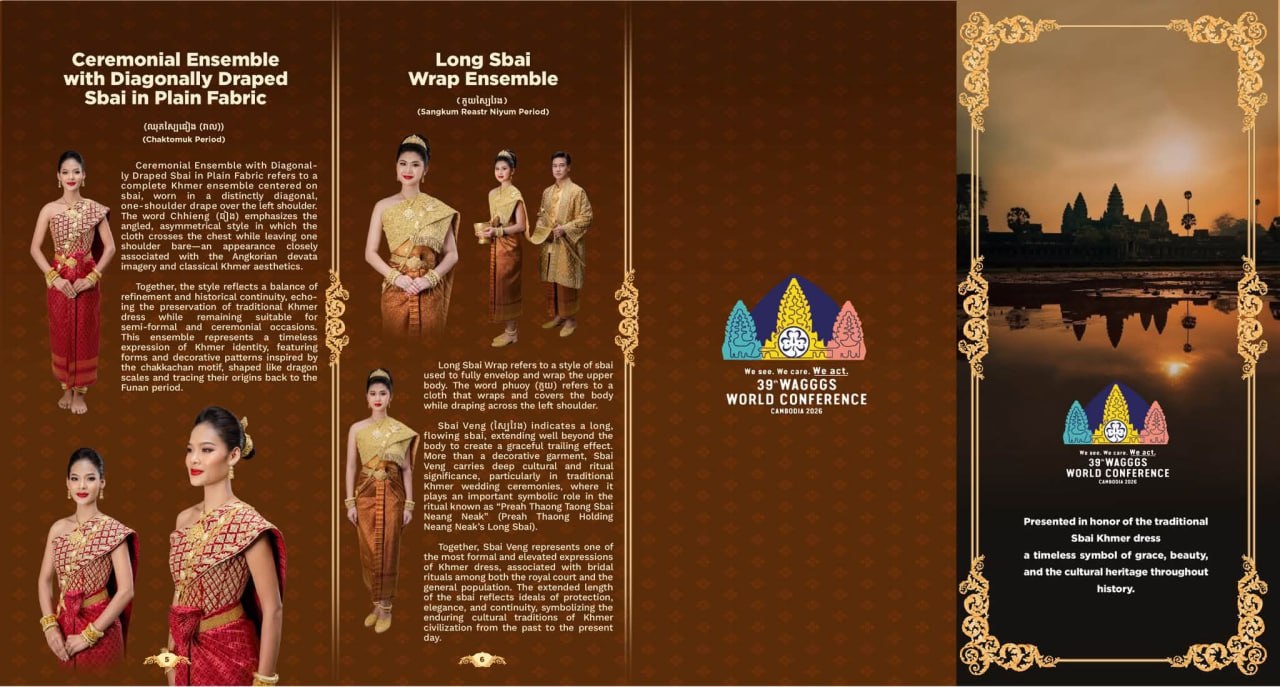
This heritage continues to live on in wedding ceremonies, royal dances, traditional festivals, and ceremonial attire. In particular, the "Preah Thong holding Neang Neak’s sbai" tradition is an important symbol of Khmer wedding customs, linked to the legend of the origin of the Khmer people.
A single piece of sbai can tell of the weaver's craftsmanship, knowledge of silk, decorative patterns, and the aesthetic sensibility left by Khmer ancestors. Continuing the use of sbai in traditional ceremonies is a way of maintaining the connection between present generations and the heritage of their forebears.
Khmer sbai is a heritage left by ancestors, a living artistic masterpiece, and part of Khmer cultural identity that must be preserved, studied, and passed on to future generations. By: សុភ័ក្រ្ត