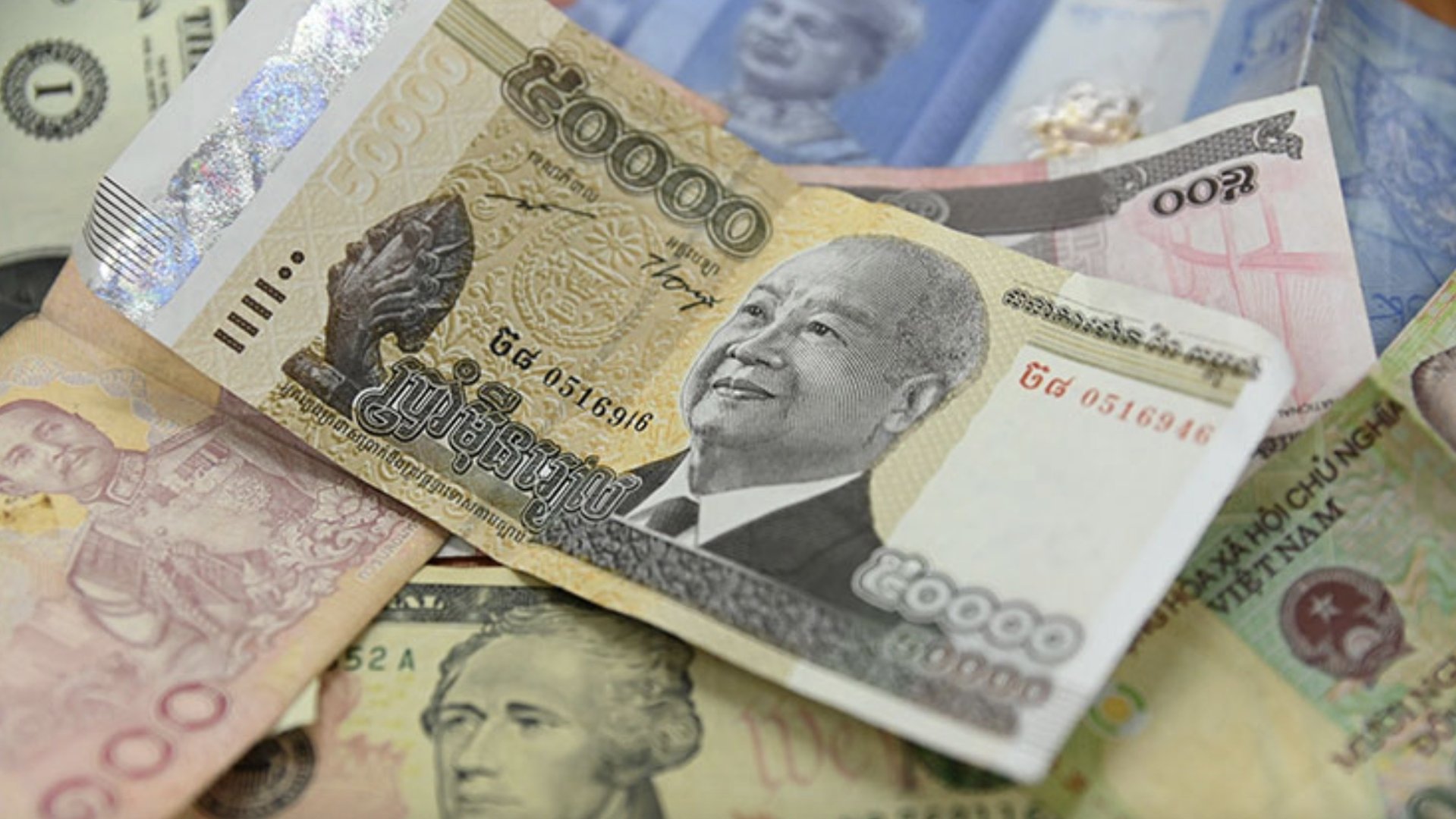
Cambodia’s KB PRASAC Bank announced on October 27 that, starting in October 2026, employee salaries will be paid entirely in Cambodian riel (KHR), with no further payments in US dollars. The bank’s management said the move is an internal measure supporting the National Bank of Cambodia’s efforts to promote the use of the local currency, and that it hopes to encourage more enterprises to adopt the riel in their operations and payrolls through the bank’s own example.
Cambodia’s economy has long been highly dollarized, with the US dollar widely used for bank deposits, corporate transactions and wage payments. The National Bank of Cambodia’s 2025 Financial Stability Report showed that, as of the end of 2025, foreign-currency deposits accounted for 90.7% of total deposits in the banking system, implying that riel deposits represented about 9.3%. Foreign-currency deposits accounted for 84.4% of broad money supply, a slight decline from 2024.
The central bank has encouraged companies in recent years to price goods and services and pay wages in riel. National Bank of Cambodia Governor Chea Serey previously said that promoting the use of the local currency did not mean mandating the abolition of the US dollar, but rather seeking a gradual increase in the riel’s share of economic activity through voluntary market choice.
Analysts said reducing dollarization could help lessen the financial system’s dependence on dollar liquidity. In a blog post published by AMRO in September, Wenzhe Li noted that, because the National Bank of Cambodia cannot issue US dollars, its capacity to provide support is limited when dollar liquidity is tight. Whether KB PRASAC’s move will prompt more companies to adopt the riel remains to be seen.