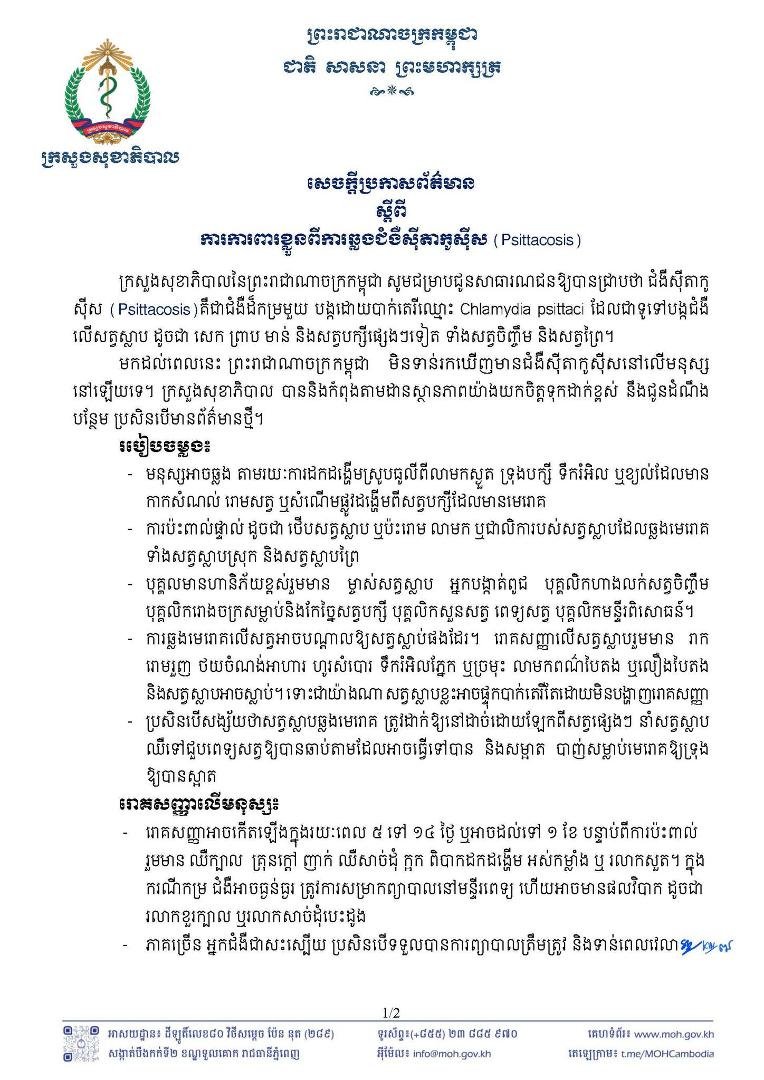
Cambodia's Ministry of Health said no human cases of psittacosis had been detected in the country as of its notice and that surveillance was continuing. The uncommon disease is caused by Chlamydia psittaci and can affect parrots, pigeons, chickens and other domestic and wild birds.
In its February 6 notice, the ministry explained that people can become infected by inhaling contaminated dust from dried bird droppings, cage material or mucus, and air containing waste, feathers or respiratory secretions. Infection can also follow direct contact, including kissing birds or touching the feathers, droppings or tissues of infected domestic or wild birds.
People at higher risk include bird owners and breeders, pet shop employees, poultry slaughter and processing workers, zoo workers, veterinarians and laboratory staff. Infected birds may die or show diarrhoea, ruffled feathers, reduced appetite, discharge from the eyes or nose, and green or yellow-green droppings. Some birds carry the bacteria without showing symptoms.
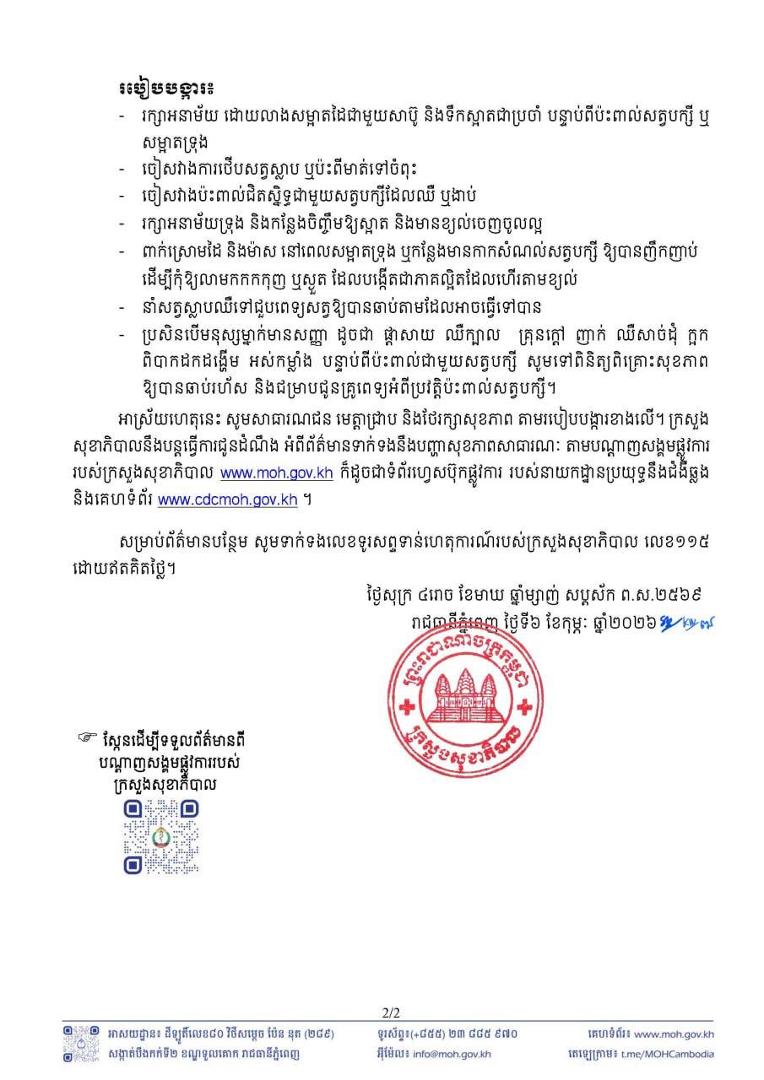
Birds suspected of infection should be separated from other animals, sick birds should receive veterinary attention promptly, and cages should be cleaned and disinfected.
Human symptoms usually appear five to 14 days after exposure, but may take up to a month. They include headache, fever, chills, muscle pain, cough, difficulty breathing, fatigue and pneumonia. In rare cases, the illness can become severe and require hospital treatment, and complications such as encephalitis or myocarditis may occur. Most patients recover with prompt and appropriate treatment.
The ministry advised washing hands with soap and clean water after contact with birds or cages; avoiding mouth-to-beak kissing and close contact with sick or dead birds; keeping cages clean and well ventilated; and wearing gloves and a mask during frequent cleaning to prevent droppings from accumulating and drying into airborne particles. Sick birds should be taken to a veterinarian promptly.
Anyone developing flu-like symptoms, including headache, fever, chills, muscle pain, cough, difficulty breathing or fatigue after bird contact should seek medical advice promptly and tell the healthcare provider about that exposure.
By: Nget Pisant