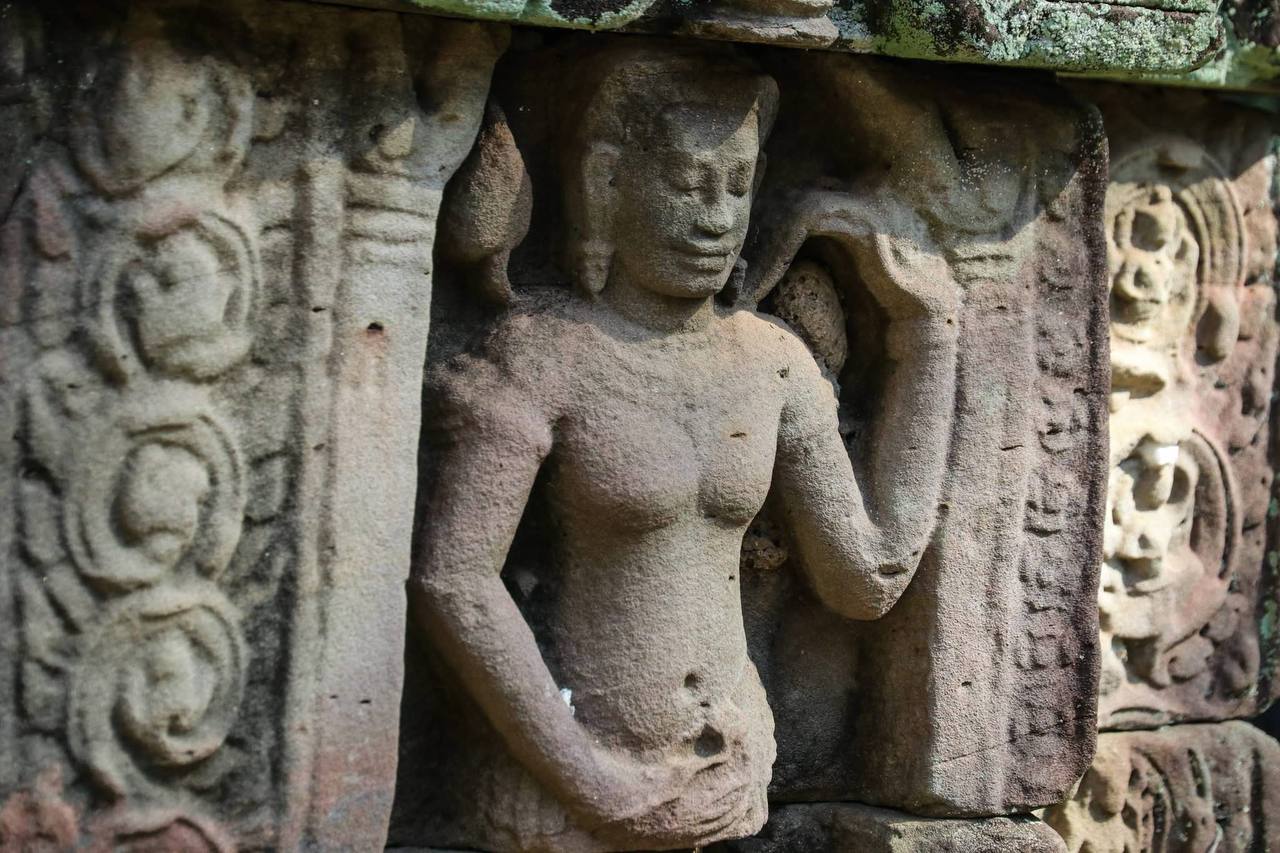
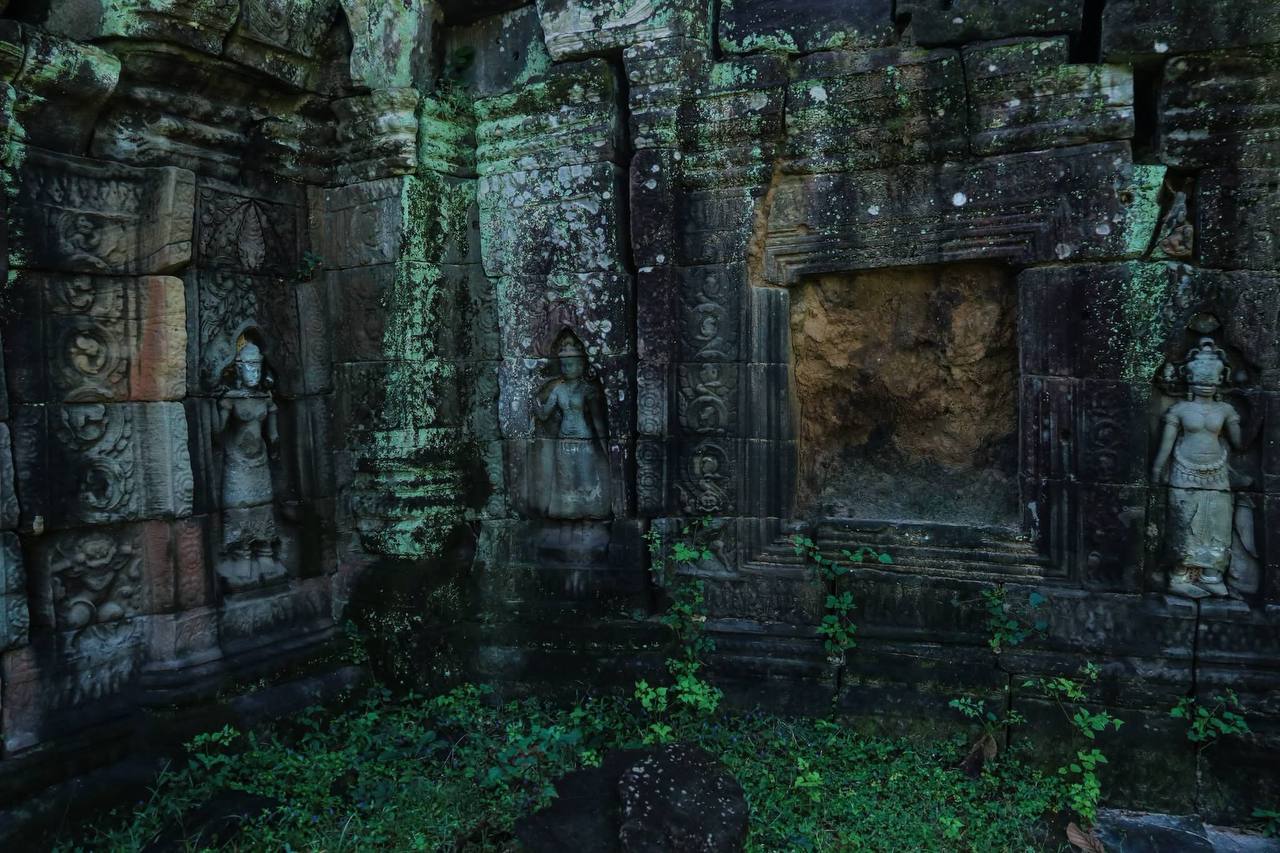
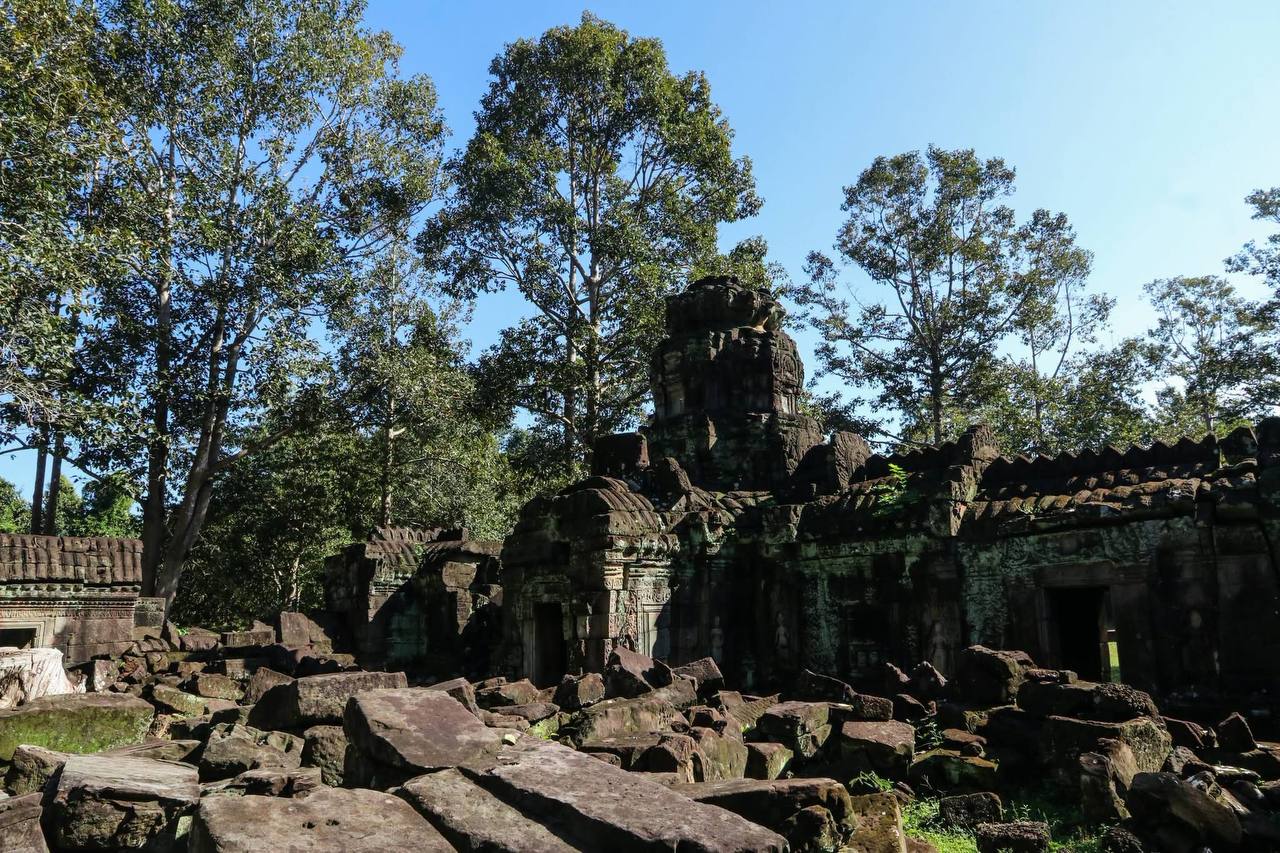
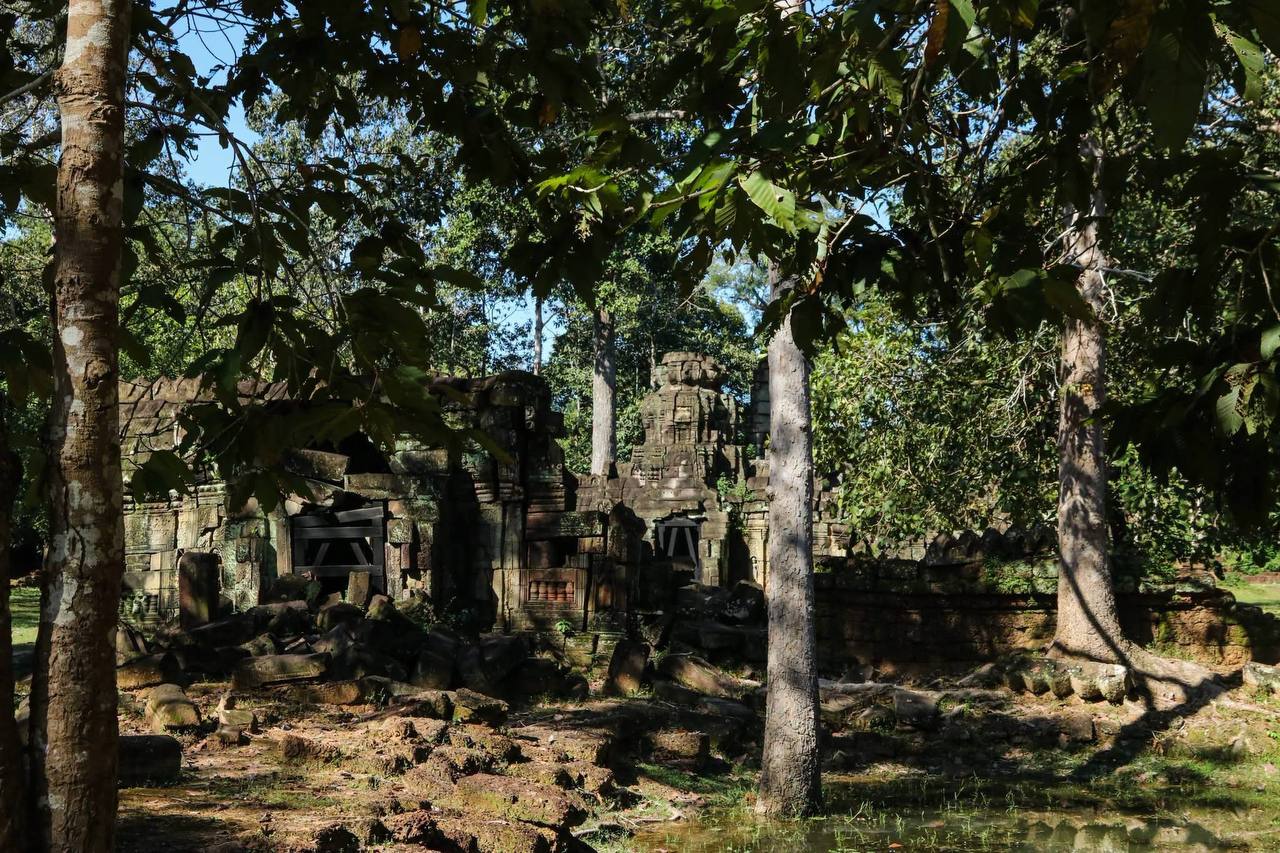
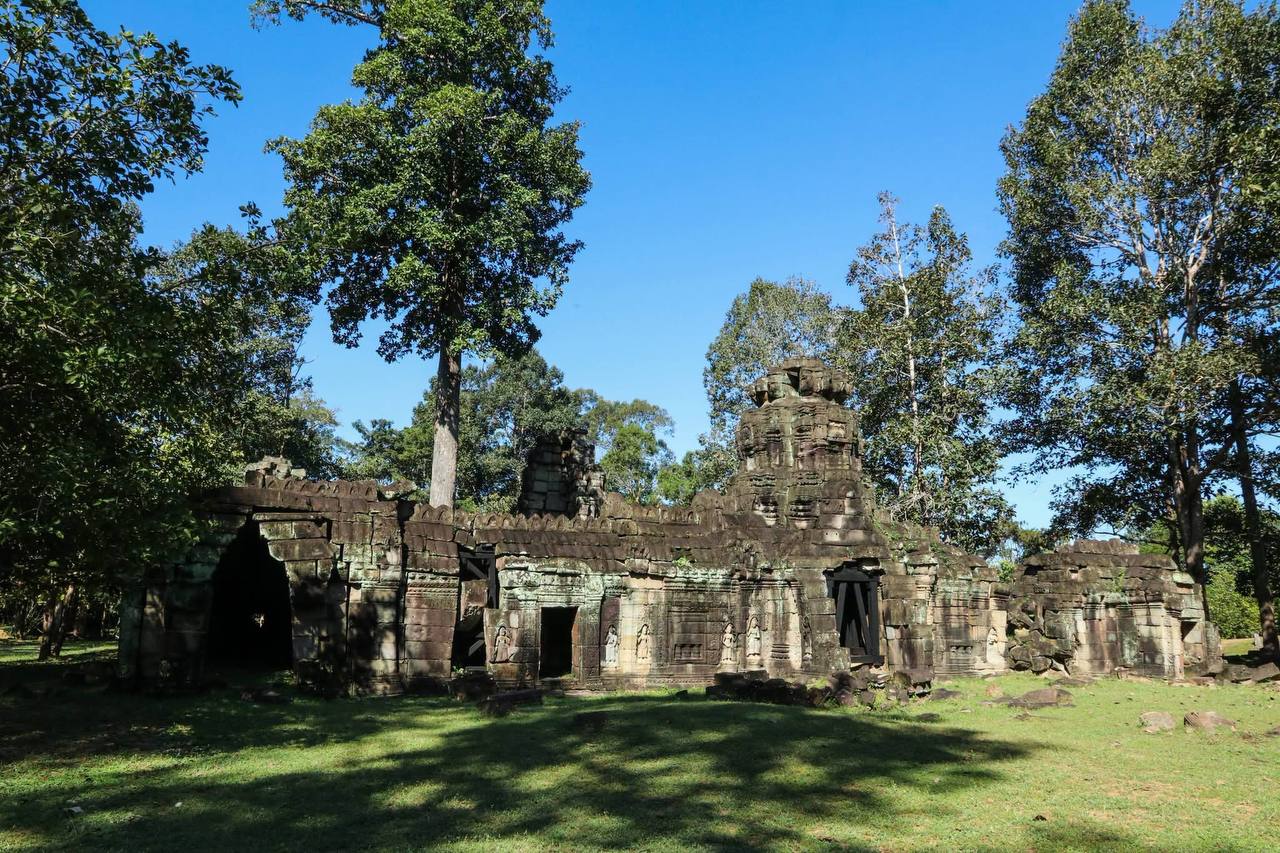
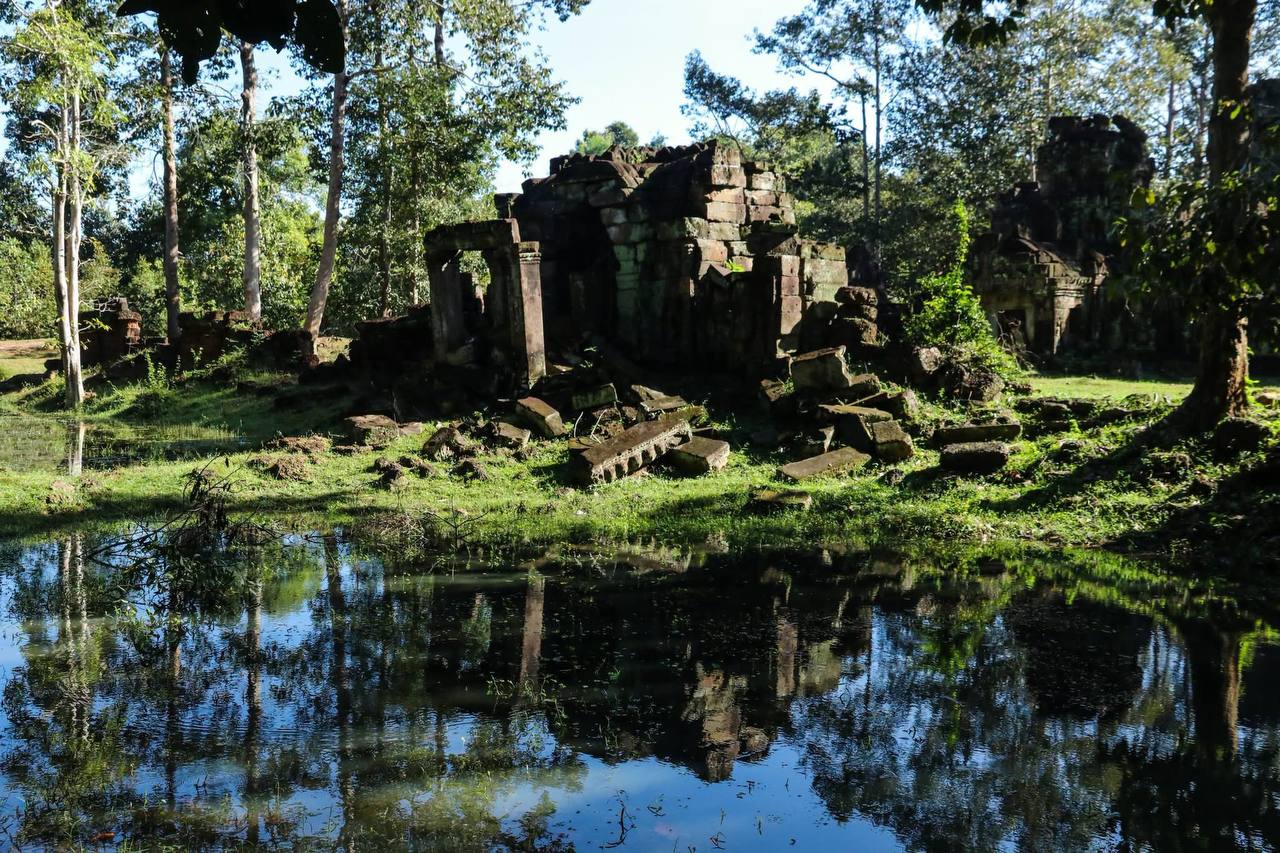
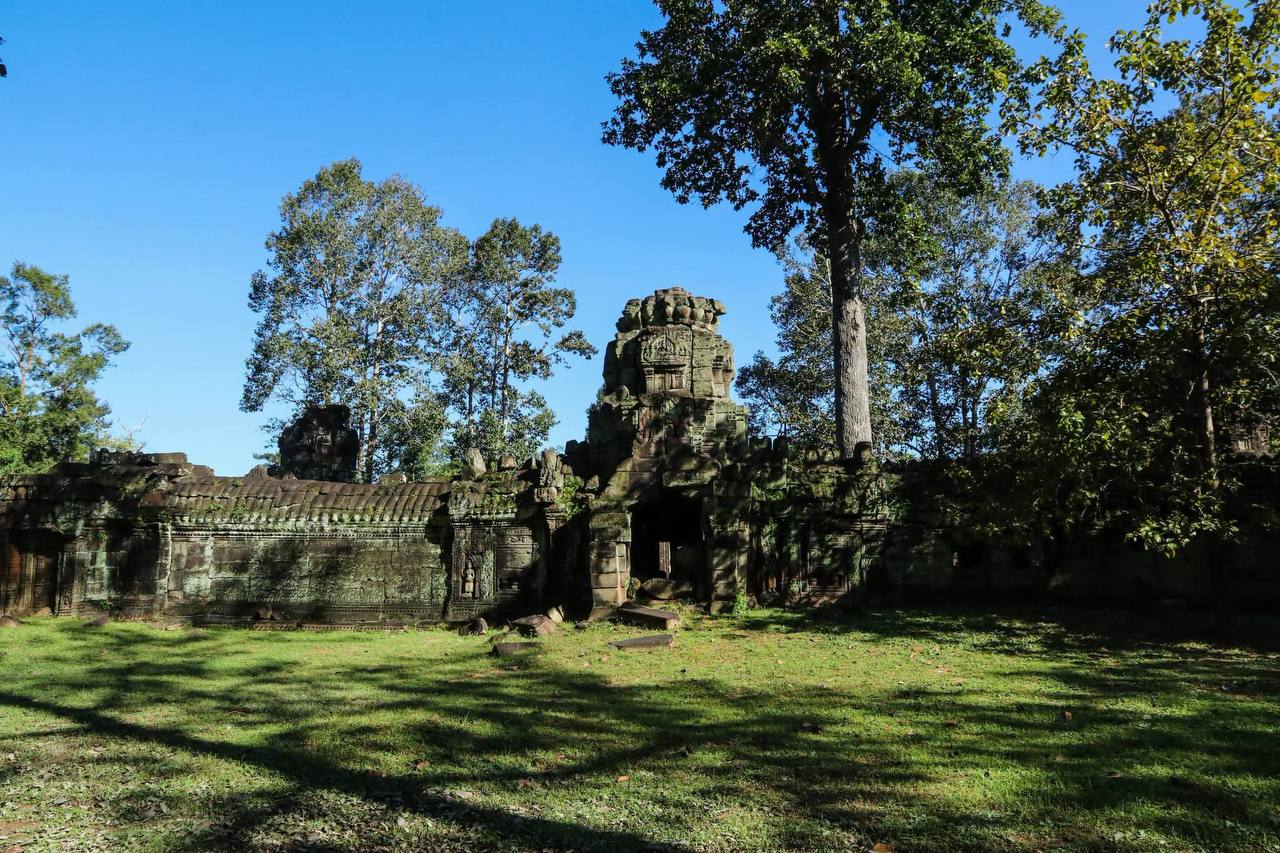
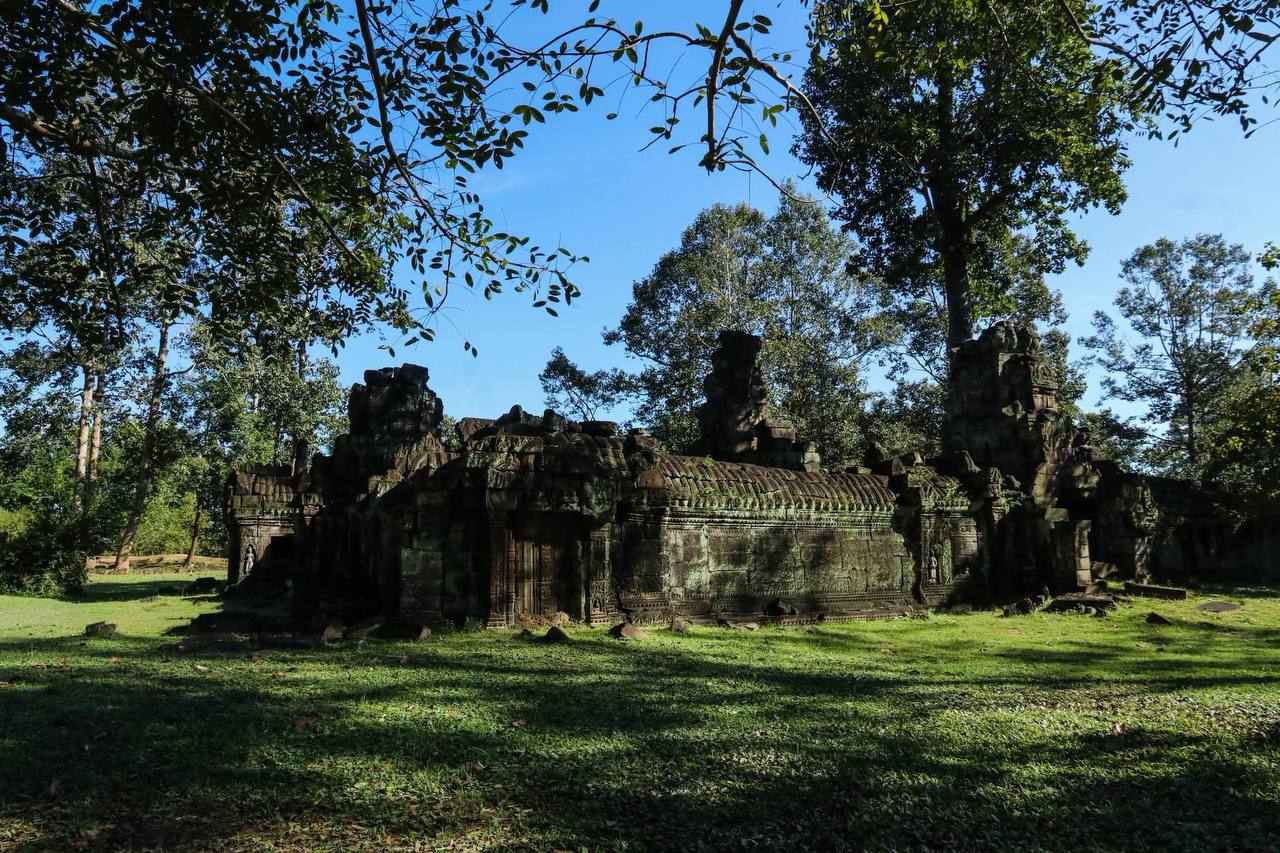
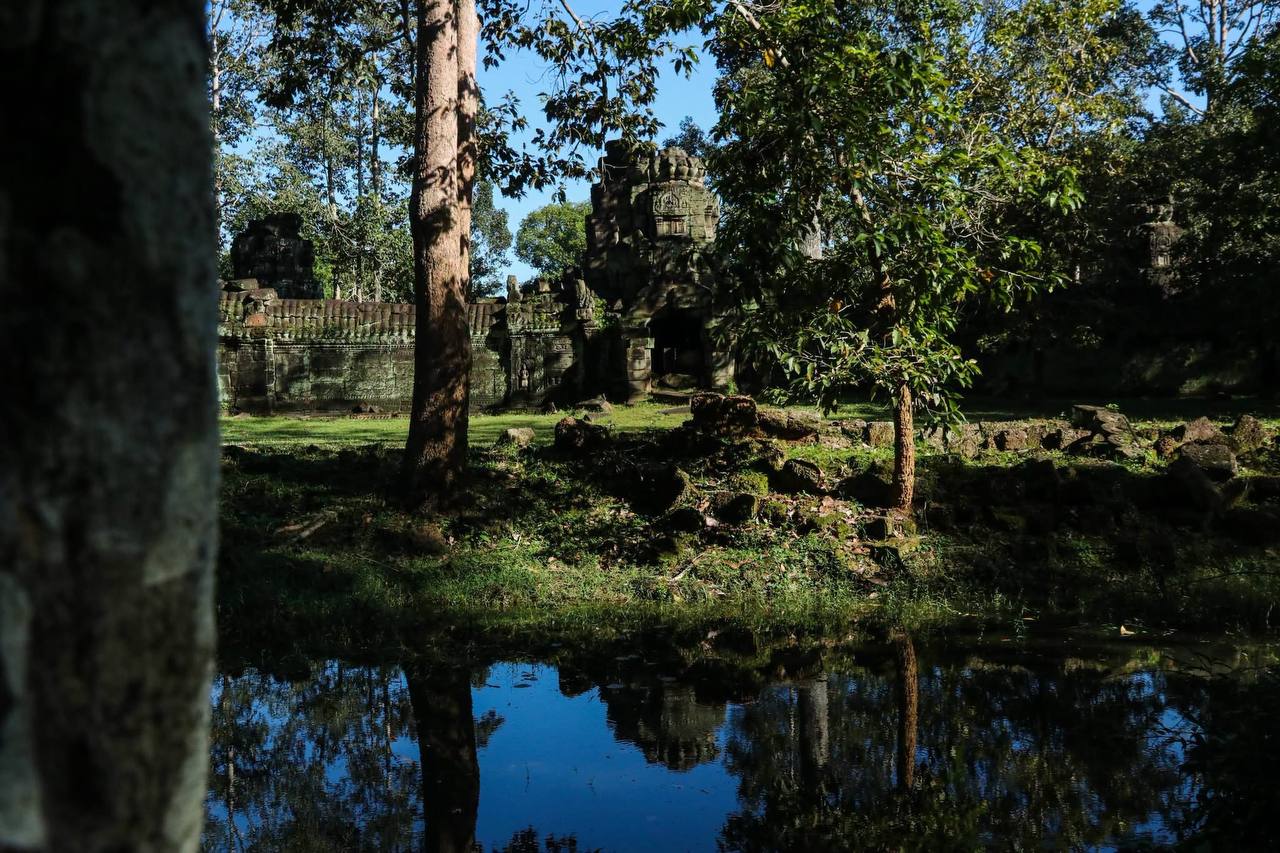
SIEM REAP — Banteay Prei Temple is a secluded religious structure within the Angkor World Heritage Site. The peaceful temple is not only a symbol of refined architecture, but also a place showing a remarkable dialogue between ancient buildings and the surrounding cultural landscape, attracting tourists and researchers alike.
Geographically, Banteay Prei Temple stands in លាងដៃ village, លាងដៃ commune, អង្គរធំ district, Siem Reap province. This sacred site was built in the late 12th and early 13th centuries during the reign of Jayavarman VII, dedicated to Mahayana Buddhism and designed in the expressive Bayon style.
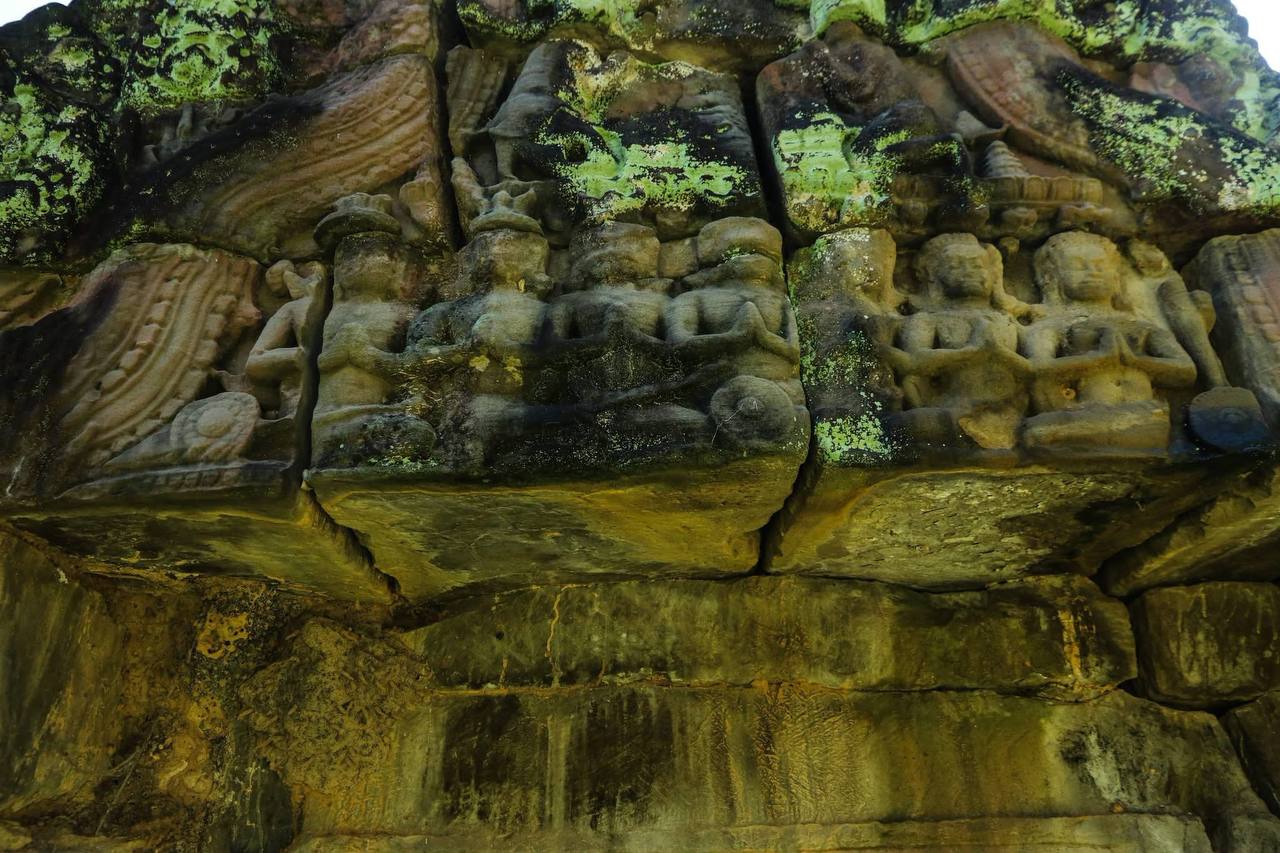
Although the temple is relatively small and lacks the long inscriptions found at larger temples, the historical information on its doorframes is significant. These short inscriptions provide valuable clues to the spiritual world and social structure of the period. Research into the four-line inscription K.526 has revealed the following important information:
- The upper three lines introduce and dedicate names to several deities, including កម្រតេង ជគត ឝ្រីរាជឝិល្បីន្ទ្រេឝ្វរ, កម្រតេង ជគត ឝ្រីចន្ទ្រេឝ្វរ and កម្រតេង ជគត ឝ្រីឝាន្តីឝ្វរី.
- The bottom line records the identity of the devout high-ranking person responsible for establishing the religious structure: ‘តិវ្រះអំតេងរាជឝិល្បិស្ថាបនា’ (Prince រាជសិល្បិ as the builder).
Banteay Prei’s sandstone architecture has endured centuries of ageing and weathering. Today, with the attention and efforts of the APSARA National Authority, specialists are carrying out conservation, research, architectural surveys and excavations to locate stone fragments and reassemble them through anastylosis. This valuable work helps revive Khmer architecture and preserve the balance of the surrounding cultural landscape, while leaving a legacy of knowledge and heritage for researchers and future generations.
Source: APSARA National Authority
By: ធី លីថូ