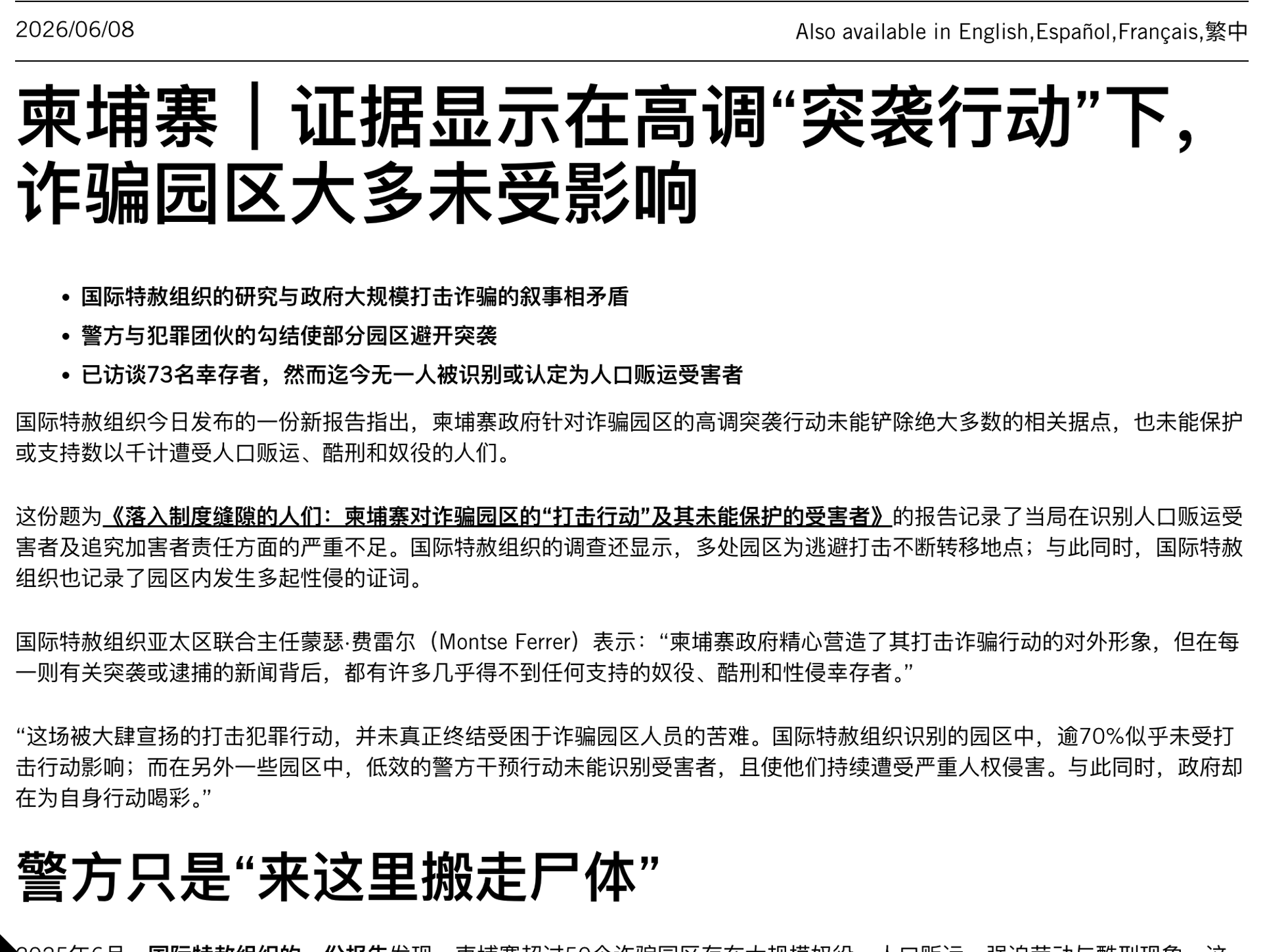
On June 8, two days before this report, Amnesty International published an investigation criticising Cambodia’s highly publicised crackdown on online-scam compounds as superficial.
The investigation alleged that although Cambodian officials said more than 200 scam centres had been closed and several leaders arrested, over 70% of the 86 compounds Amnesty identified had escaped the crackdown. It also alleged that managers at many compounds received advance warnings of enforcement, allowing them to move victims and flee.
An unnamed senior Cambodian government official responded by criticising the report as one-sided and lacking objectivity, saying it did not fully reflect the country’s current anti-scam work.
The official said the government firmly rejected Amnesty’s account, describing it as selective and unilateral and lacking a comprehensive understanding of local conditions.
The official stressed that Cambodia did not accept the claim that it was failing to actively combat telecommunications and online fraud.
“Describing Cambodia as failing to combat telecommunications and online fraud completely ignores the government’s sustained, large-scale law-enforcement operations,” the official said.