Phnom Penh: The Ministry of Culture and Fine Arts announced that two more Khmer antiquities would return to Cambodia from the Metropolitan Museum of Art in New York, United States, after their seizure by the Manhattan District Attorney’s Office.
An official handover ceremony for the two antiquities took place in New York on June 10, 2026, marking an important step in joint efforts by the Cambodian government and international partners to locate and bring home national cultural property that had been stolen and illegally exported.
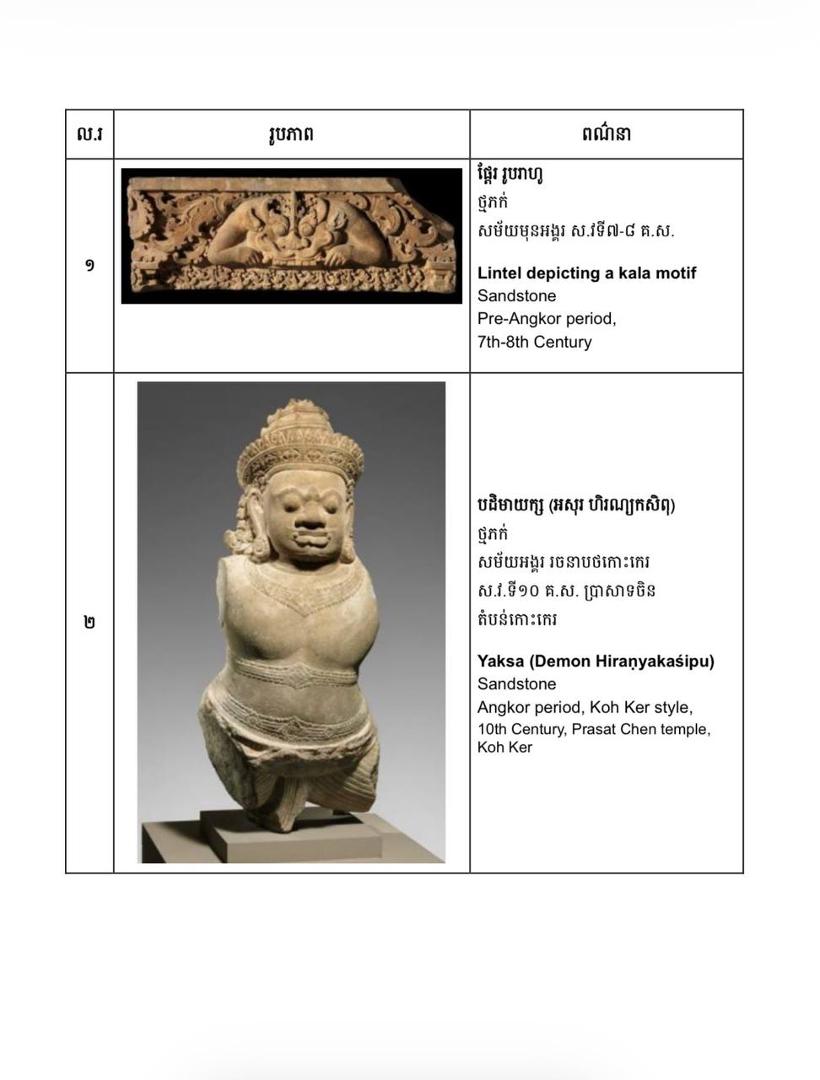
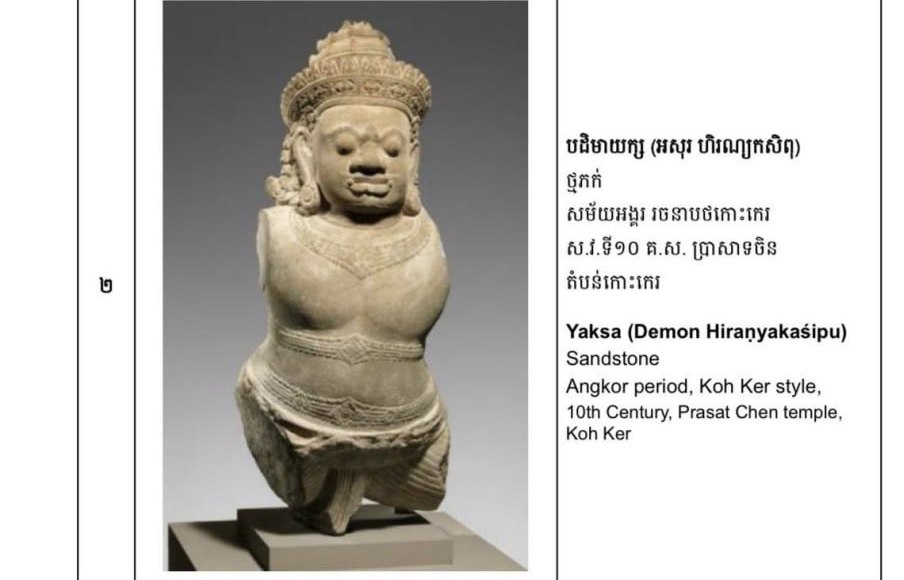
The two objects comprise a sandstone lintel carved with រាហូ (ព្រះកាល), dating to the pre-Angkor period in the seventh to eighth centuries CE, and a sandstone statue of Demon Hiranyakaśipu from ប្រាសាទចិន in the Koh Ker area, dating to the Angkor period in the tenth century.
The return reflects the effectiveness of cooperation between Cambodia and the Manhattan District Attorney’s Office, an important partner in investigating, locating and recovering Khmer cultural property stolen and taken abroad.
Over more than a decade, investigations into antiquities-trafficking networks involving Nancy Wiener, Douglas Latchford and Spink & Son have helped locate numerous Khmer antiquities and secure their return to Cambodia.
The Ministry of Culture and Fine Arts expressed deep gratitude to Manhattan District Attorney Alvin Bragg, Matthew Bogdanos and the investigative team for their continued support and cooperation in enforcing laws against the illegal trade in cultural property.
The ministry also commended the Metropolitan Museum of Art for accepting the evidence and deciding to return the two antiquities to Cambodia, while continuing to cooperate in reviewing other Khmer objects in its collection that might have originated in Cambodia.
The return of these two antiquities is a new achievement in protecting and recovering national cultural heritage lost in the past. It also reflects Cambodia's and the international community's commitment to preserving nations' historical legacies and returning them to their countries of origin. By: ទាវ វិឆាត