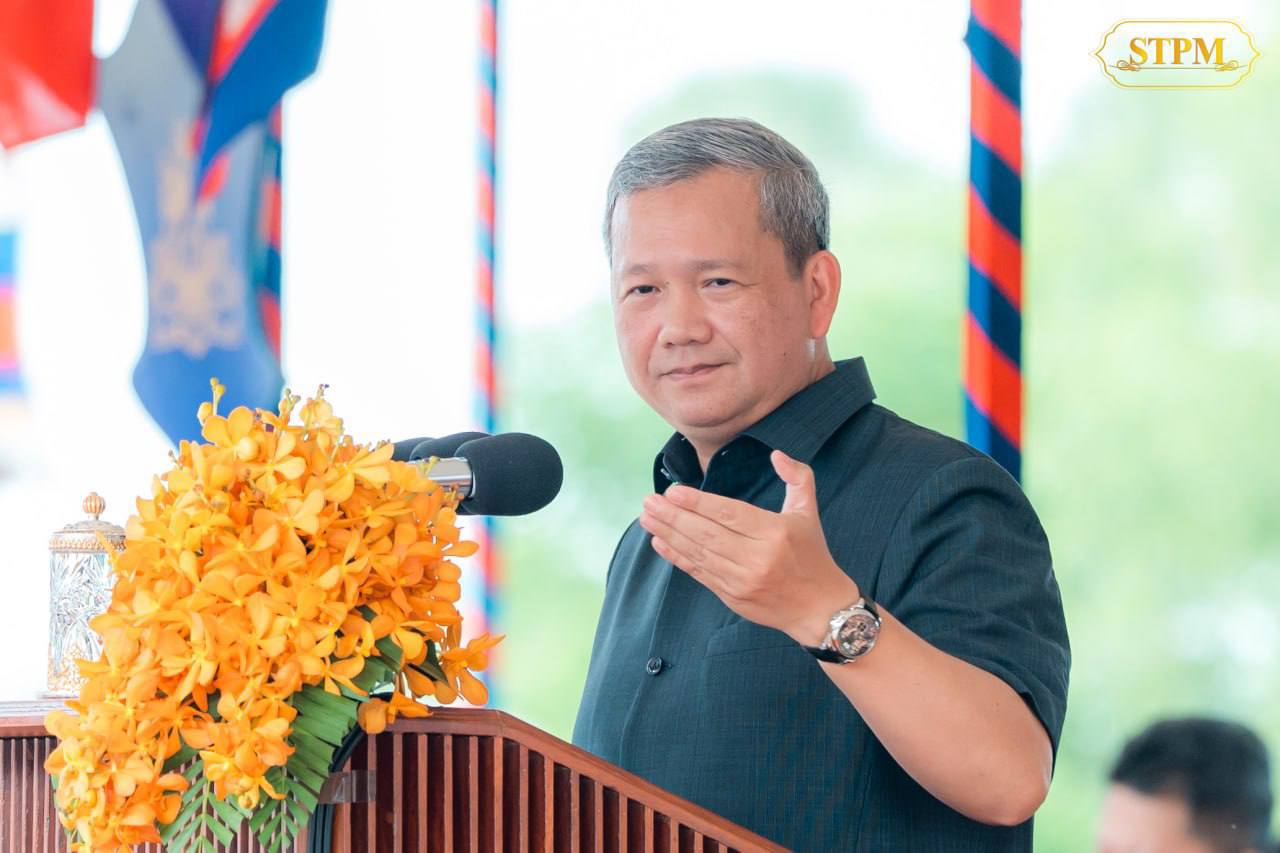
Phnom Penh: Cambodian Prime Minister Hun Manet said the country’s population would rise to approximately 24 million by 2050. The share aged under 15 would fall to 21.8%, and the share aged 15–34 would decline to 28.2%, while those aged 35–64 would increase to 37.2% and those aged 65 and over to 12.7%.
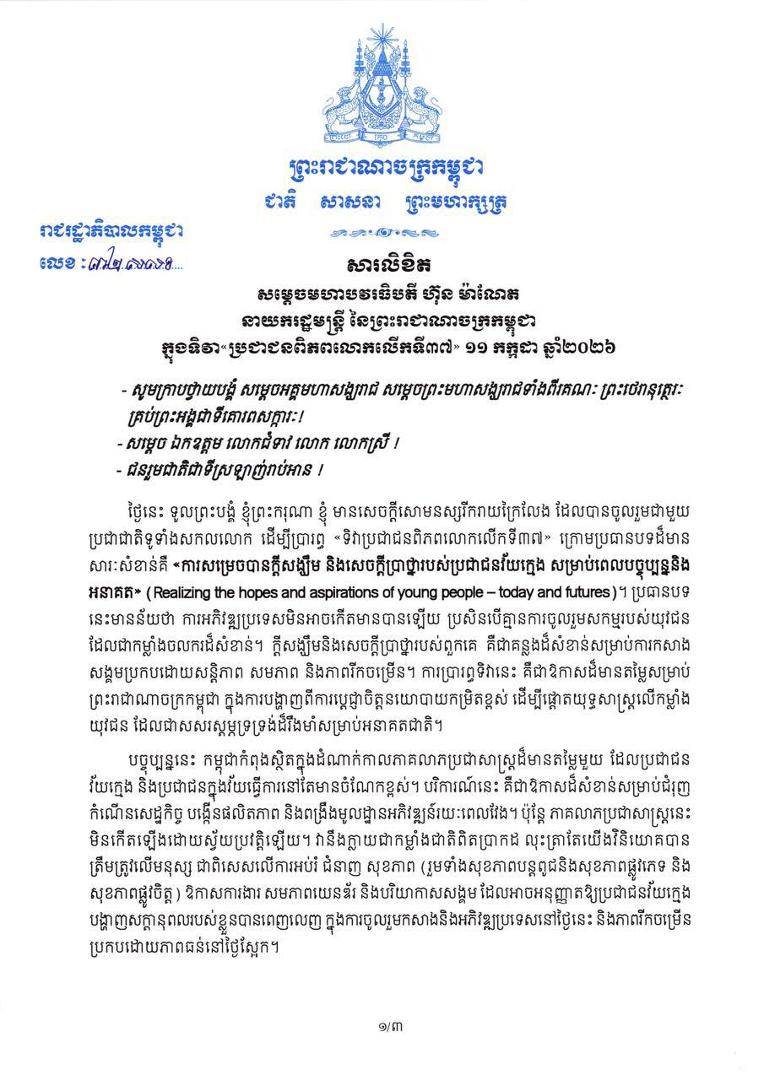
These remarks appeared in the prime minister’s message for the 37th World Population Day, July 11, 2026, under the theme “Realising the hopes and aspirations of young people for the present and the future.”
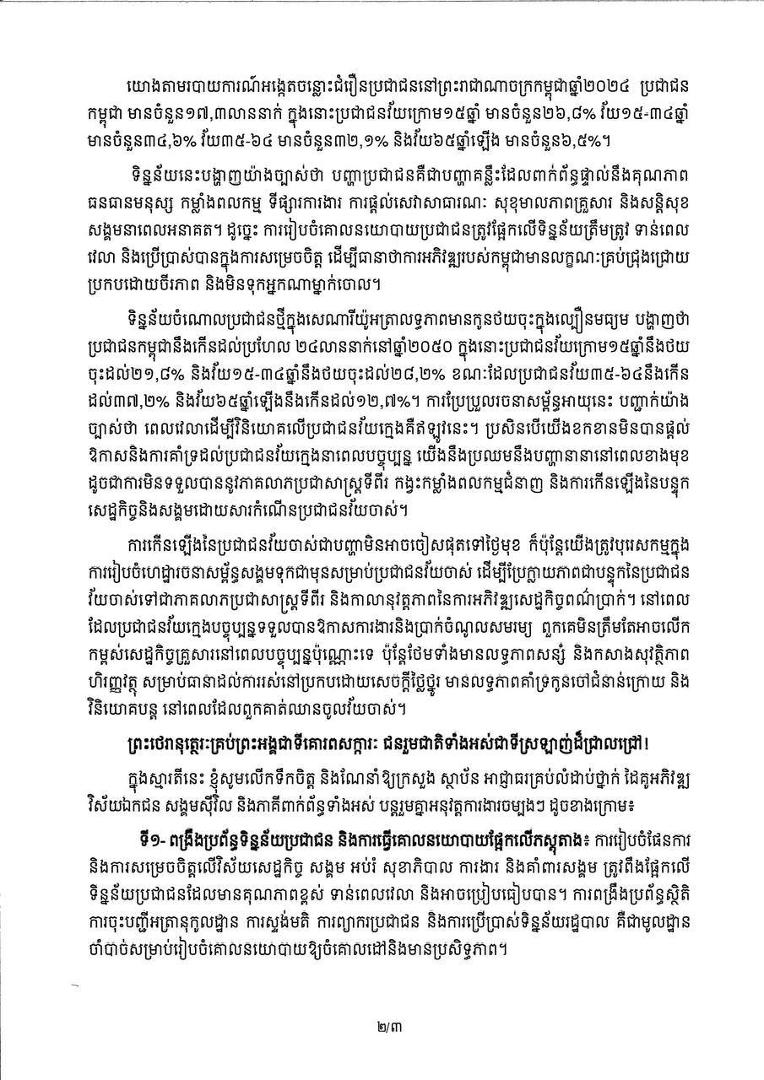
The prime minister noted that, according to the Cambodia Inter-censal Population Survey 2024 report, the country had 17.3 million people. Of these, 26.8% were under 15, 34.6% were aged 15–34, 32.1% were aged 35–64, and 6.5% were aged 65 and over.
These data clearly show that population issues are central to the quality of human resources, the workforce, labour markets, public service provision, family well-being and future social security.
Population policy must therefore be based on accurate, timely data that can inform decisions, to ensure Cambodia’s development is comprehensive and sustainable and leaves no one behind.
He added: “New population projections under a scenario in which fertility declines at a medium pace show that Cambodia’s population will rise to about 24 million by 2050. The share under 15 will fall to 21.8%, and the share aged 15–34 to 28.2%, while the share aged 35–64 will rise to 37.2% and the share aged 65 and over to 12.7%.”
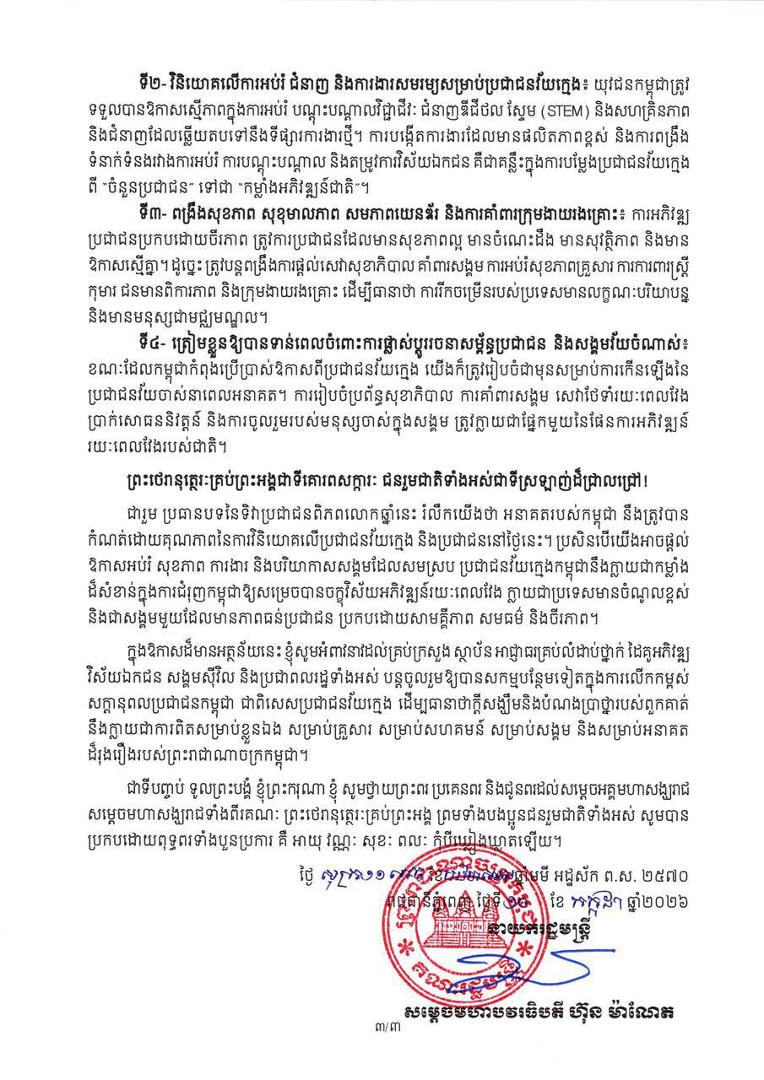
The prime minister stressed that this change in age structure clearly shows that the time to invest in young people is now. If opportunities and support are not provided to today’s young population, Cambodia will face challenges ahead, including missing out on a second demographic dividend, shortages of skilled labour, and growing economic and social burdens as the older population increases.
He also emphasised that an increase in the older population is inevitable, but that social infrastructure for older people must be prepared proactively, turning the burden of population ageing into a second demographic dividend and opportunities to develop the silver economy.
He further said that when today’s young people have jobs and adequate incomes, they can not only improve their families’ current economic situation but also save and build financial security. This will help them live with dignity, support later generations and continue investing when they reach old age.
By: ធី លីថូ