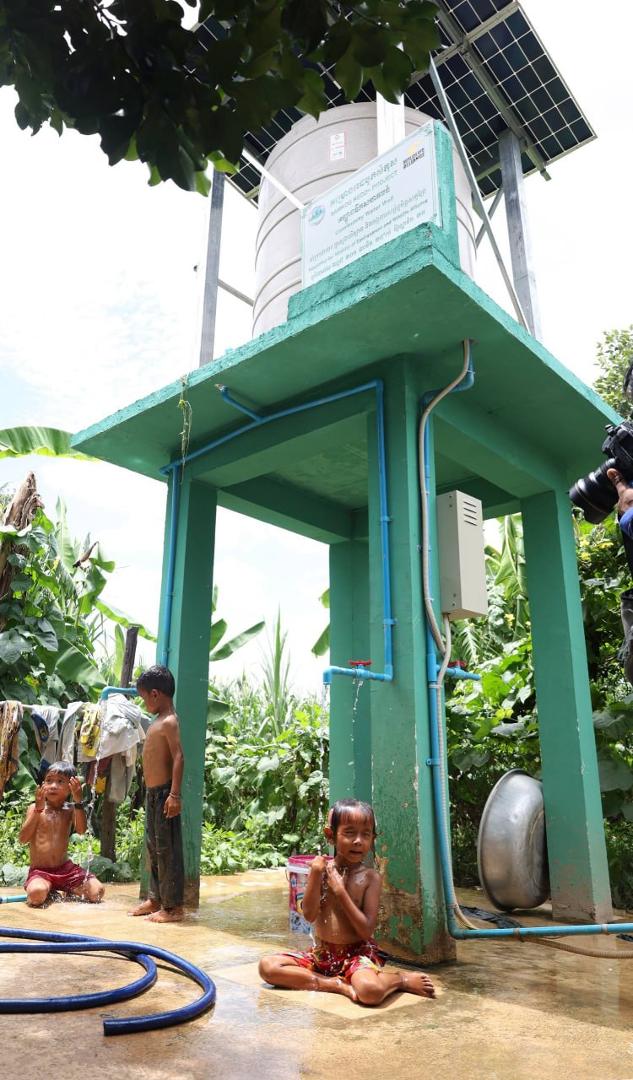
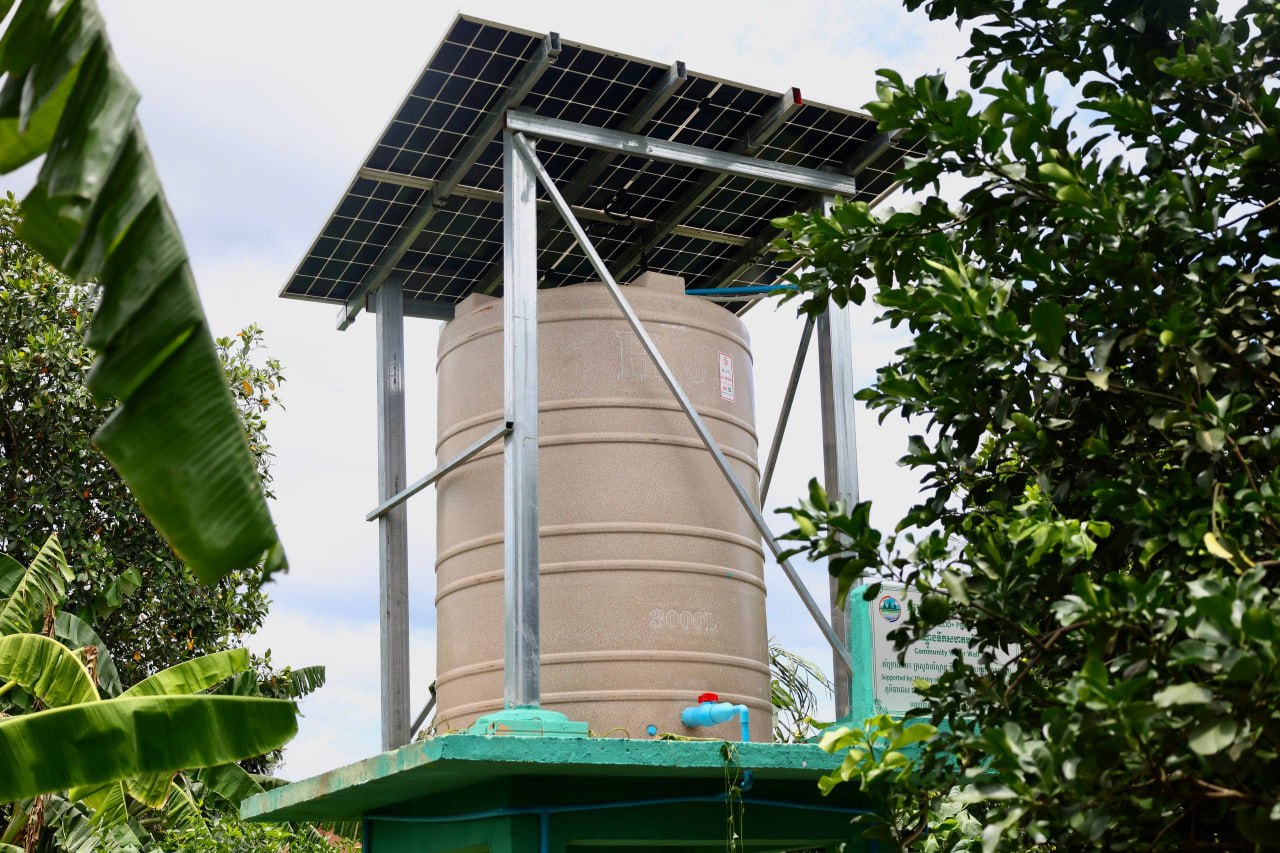
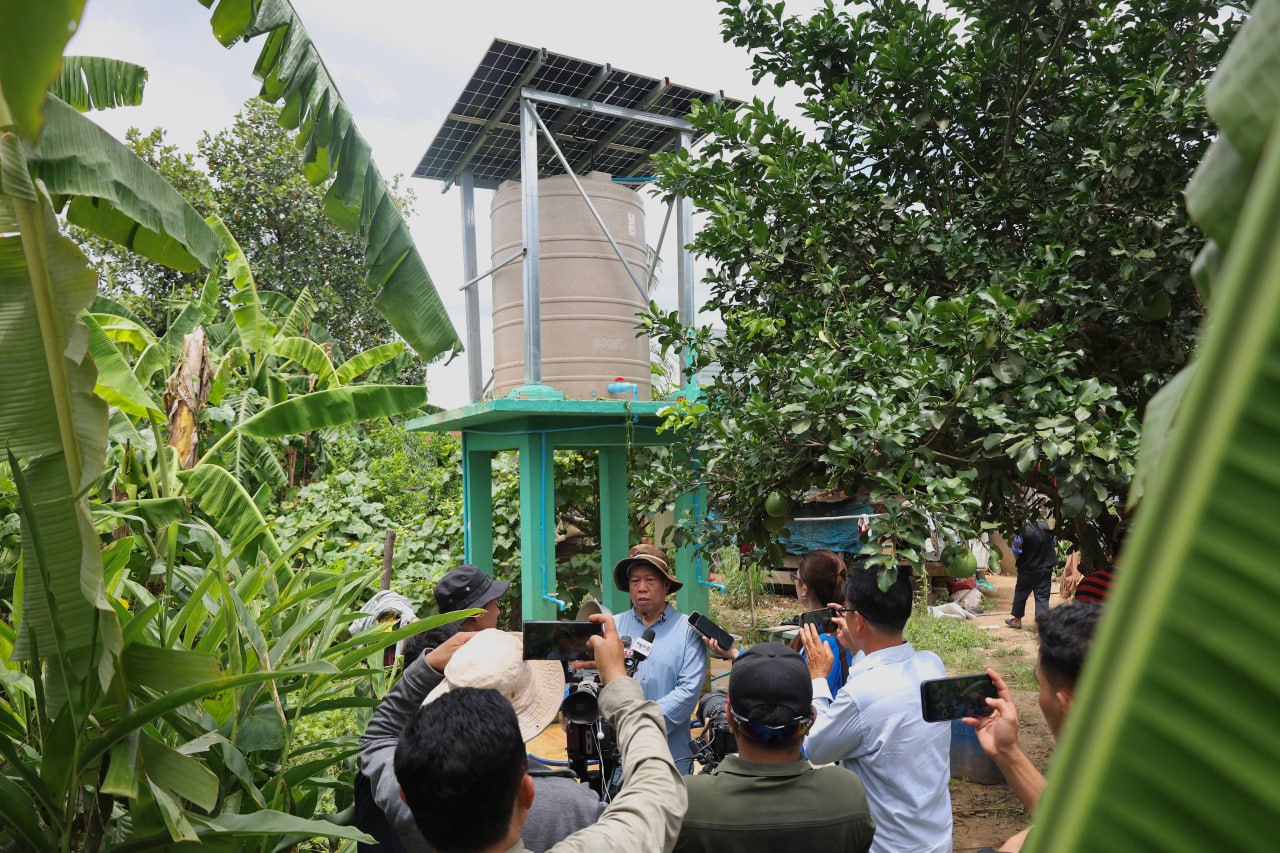
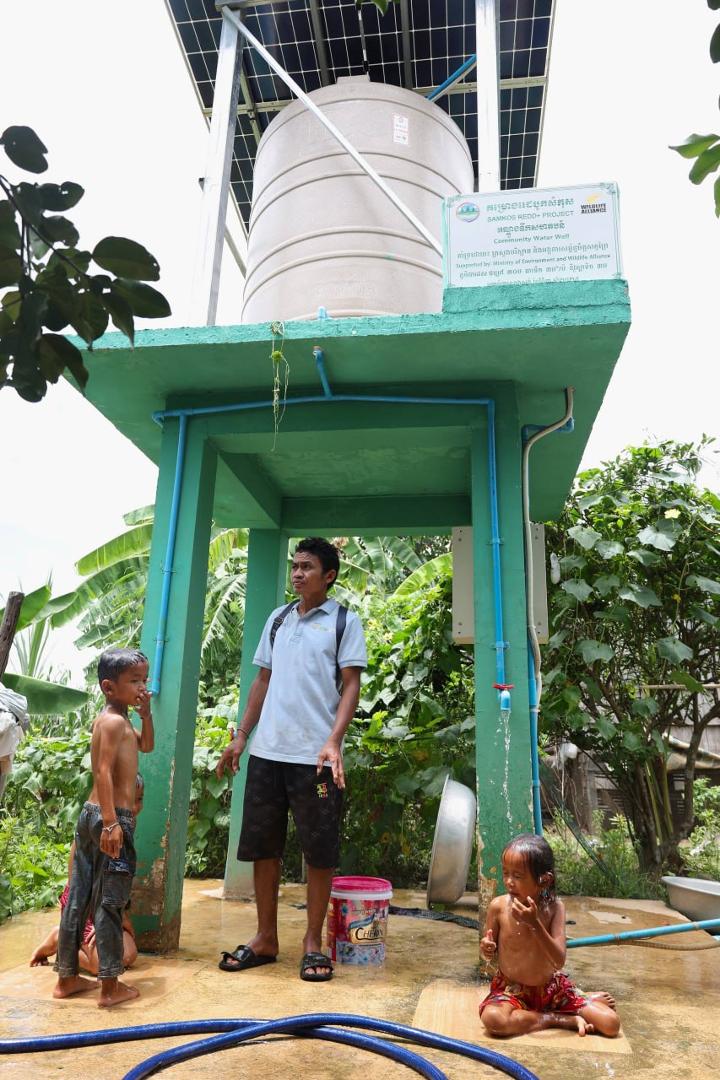
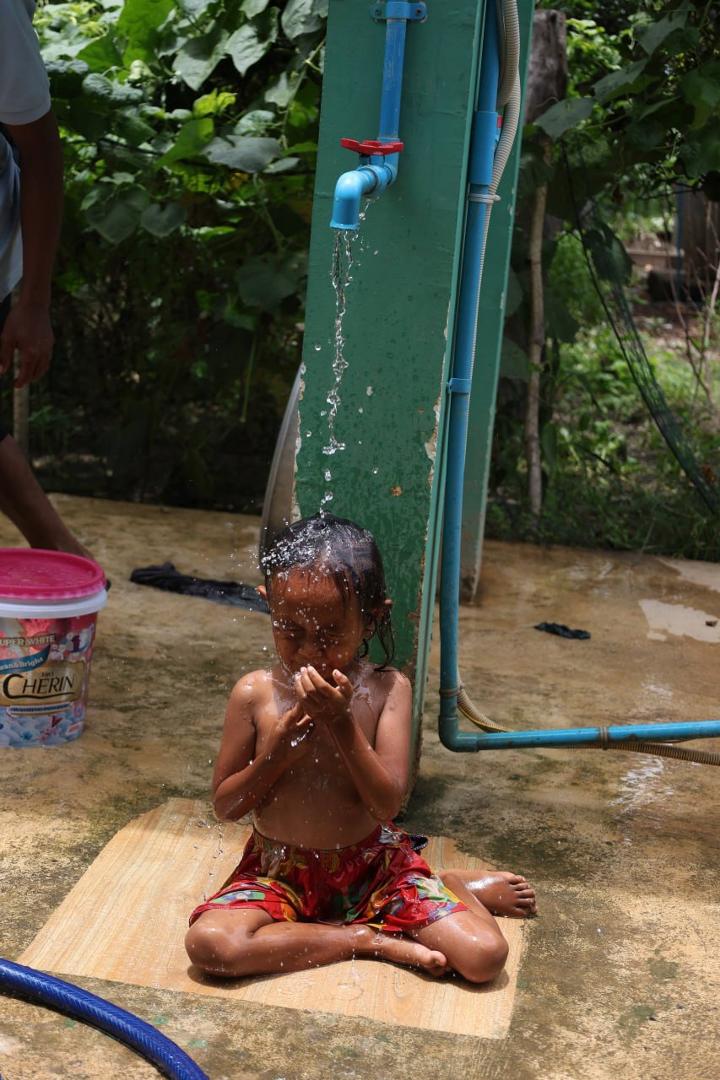
With support from Cambodia’s Ministry of Environment and Wildlife Alliance, a REDD+ emissions-reduction project completed two automated, solar-powered clean-water wells with a stated storage capacity of 10,000 litres in 巴德 village, 松隆 commune, Veal Veng district, Pursat province. The wells provide residents with free, clean and safe water for daily use, improving water access in a remote area and supporting sustainable community development.
According to the report, the two clean-water wells in 巴德 village were completed and put into use in 2023 and 2025 respectively. The REDD+ project has so far built 94 solar-powered clean-water wells across the Cardamom Mountains, including 68 in the Phnom Samkos Wildlife Sanctuary, providing reliable clean-water sources for several remote communities.
Local residents said they previously faced frequent water shortages during the dry season. They had to travel long distances to collect water and pay for household water supplies. With the solar-powered wells now available in the community, residents can obtain sufficient clean water free of charge, making daily life easier and reducing household expenses.
Reliable water supplies have also supported agriculture. Residents said well water can be used not only for daily needs but also to irrigate crops and raise livestock. This creates opportunities to expand cultivation and livestock farming, increase household income and improve living standards across the community.
Wildlife Alliance said the solar-powered clean-water wells in 巴德 village can meet the water needs of more than 60 Indigenous households. The wells run on solar power, with no fuel or electricity expenditure, reducing operating costs and energy consumption while providing a greener, sustainable water supply.
奎阿迪亚, an undersecretary of state at Cambodia’s Ministry of Environment, said solar-powered clean-water wells improve access to drinking water and reduce living costs while supporting agriculture and livestock farming and strengthening communities’ resilience to climate change. As living standards improve, dependence on forest resources will diminish, helping to protect forest ecosystems and biodiversity and support greener community development.
According to the report, REDD+ is an international mechanism for reducing deforestation, forest degradation and greenhouse-gas emissions. Cambodia earns project revenue by selling carbon credits and uses the funds for forest protection, ecological restoration and community livelihoods, linking environmental protection with economic and social development.