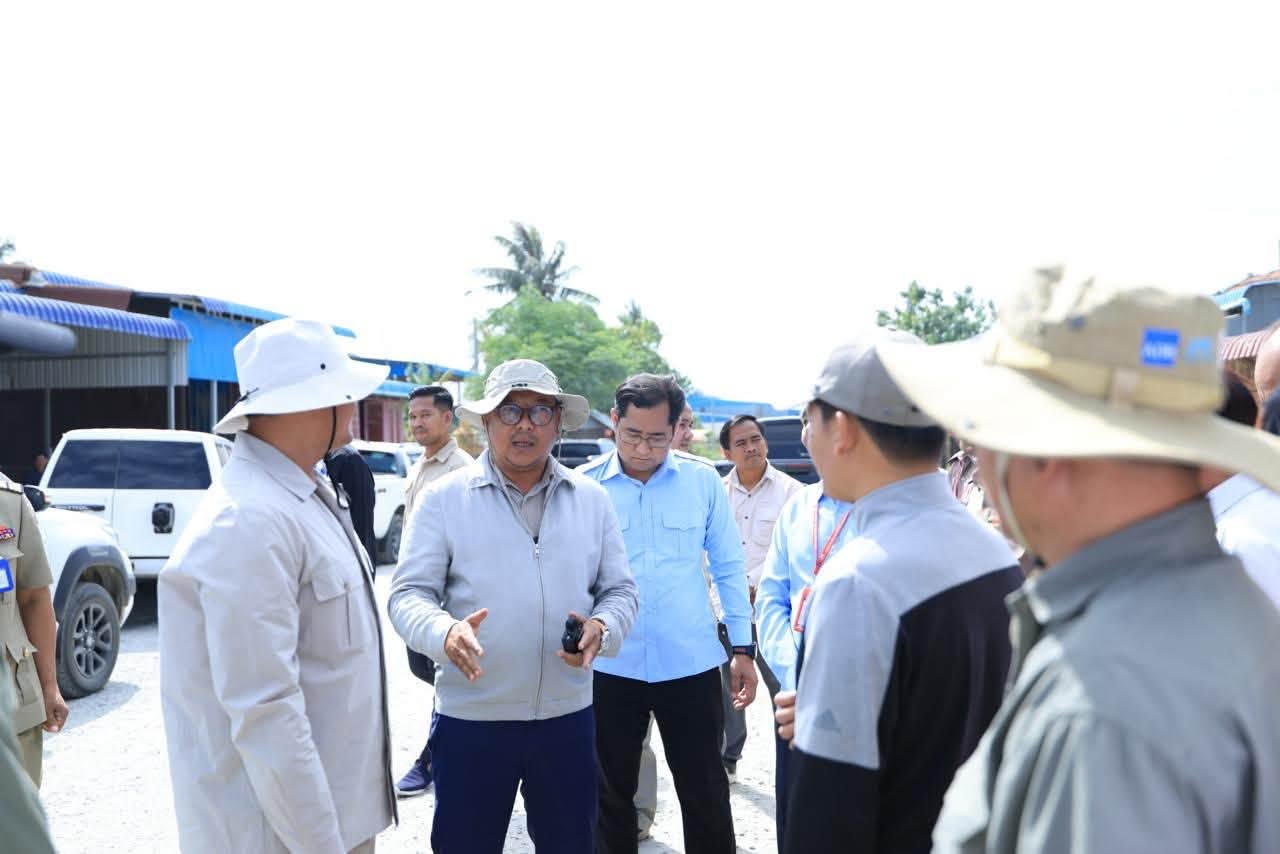
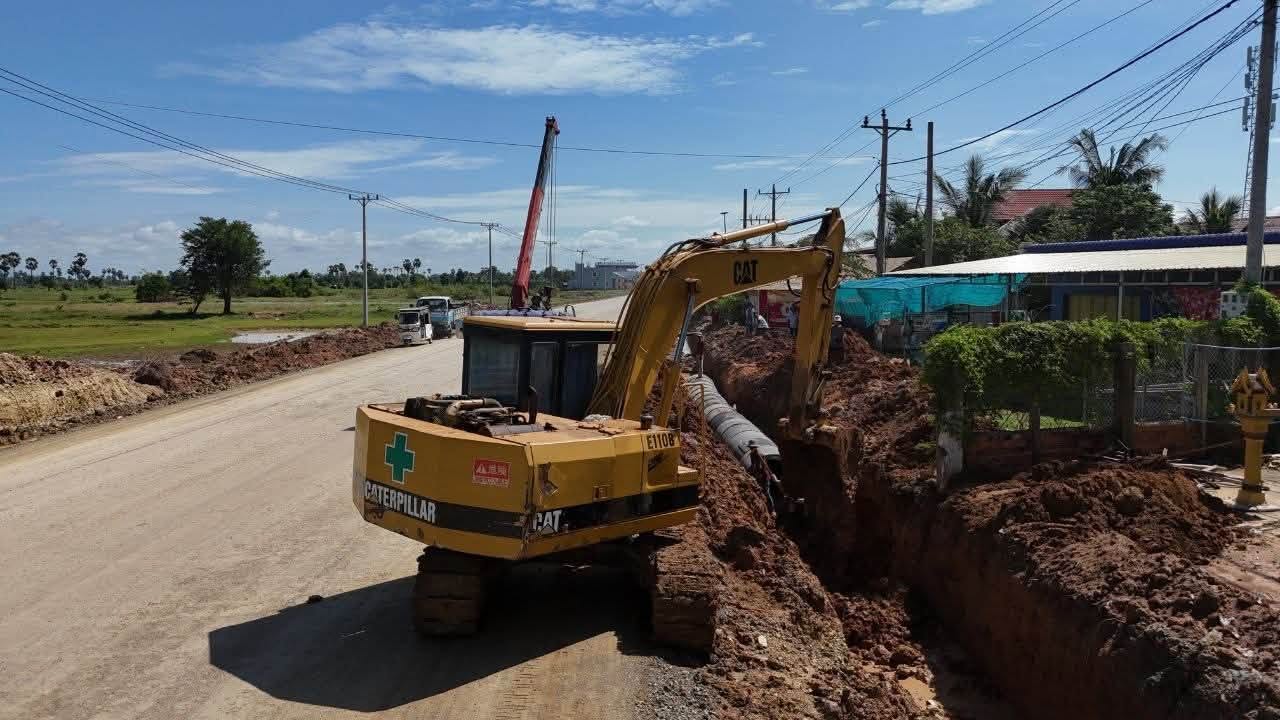
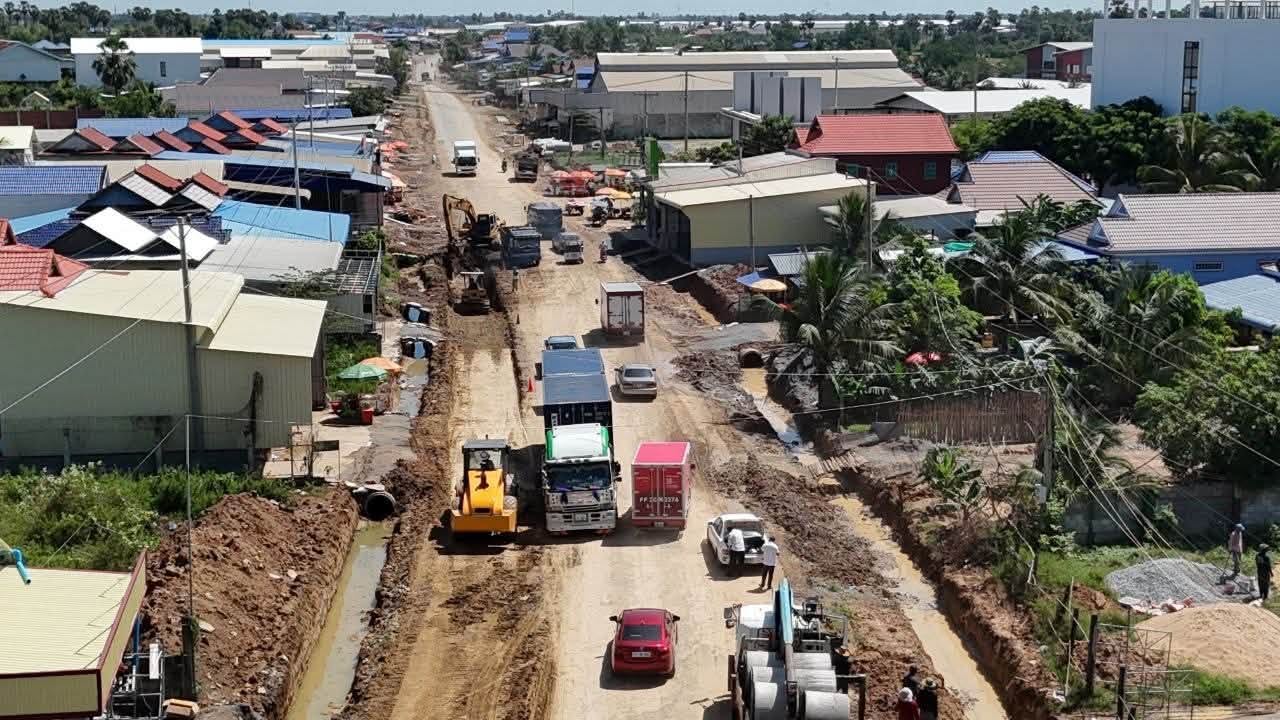
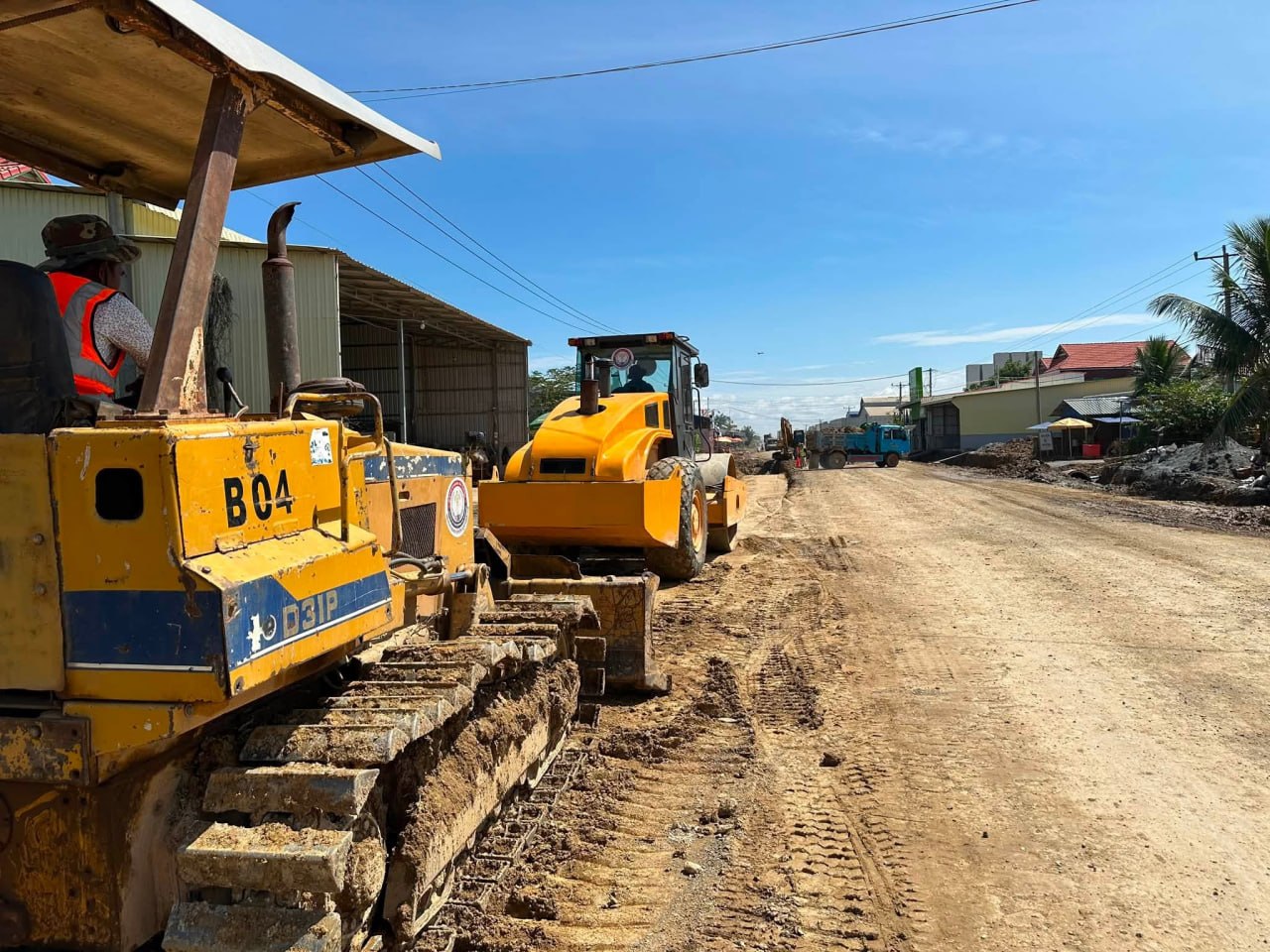
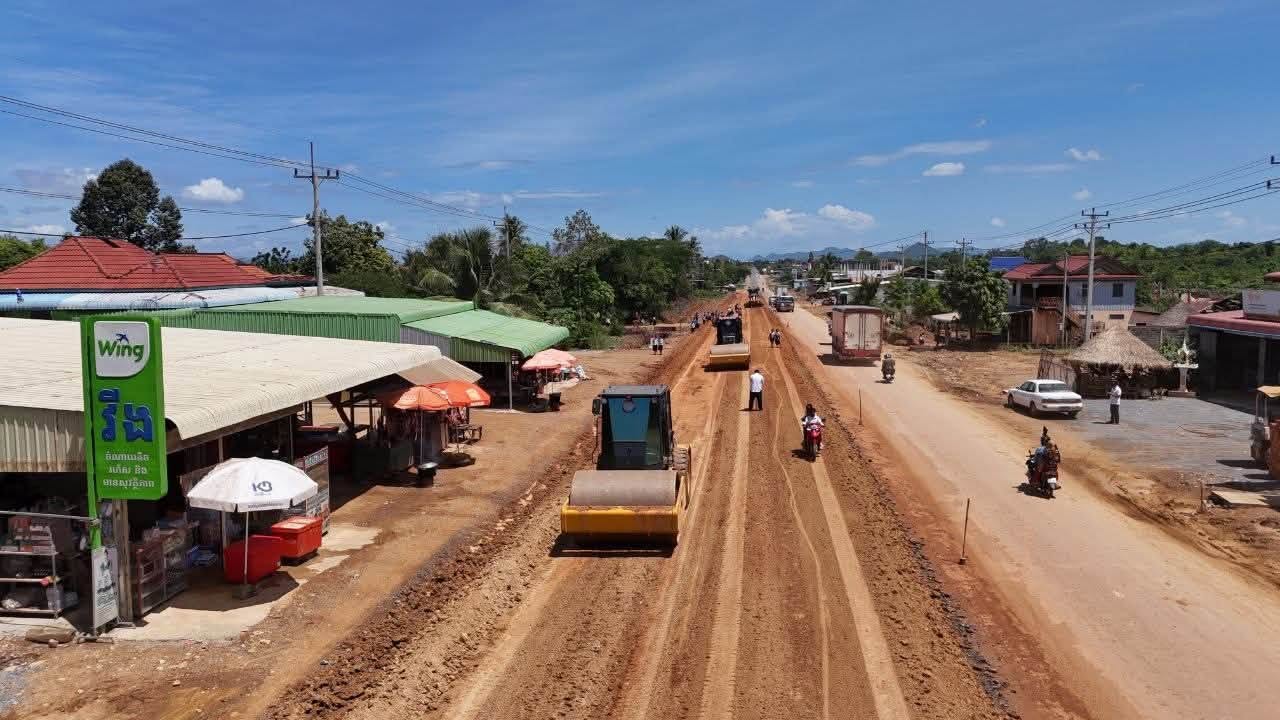
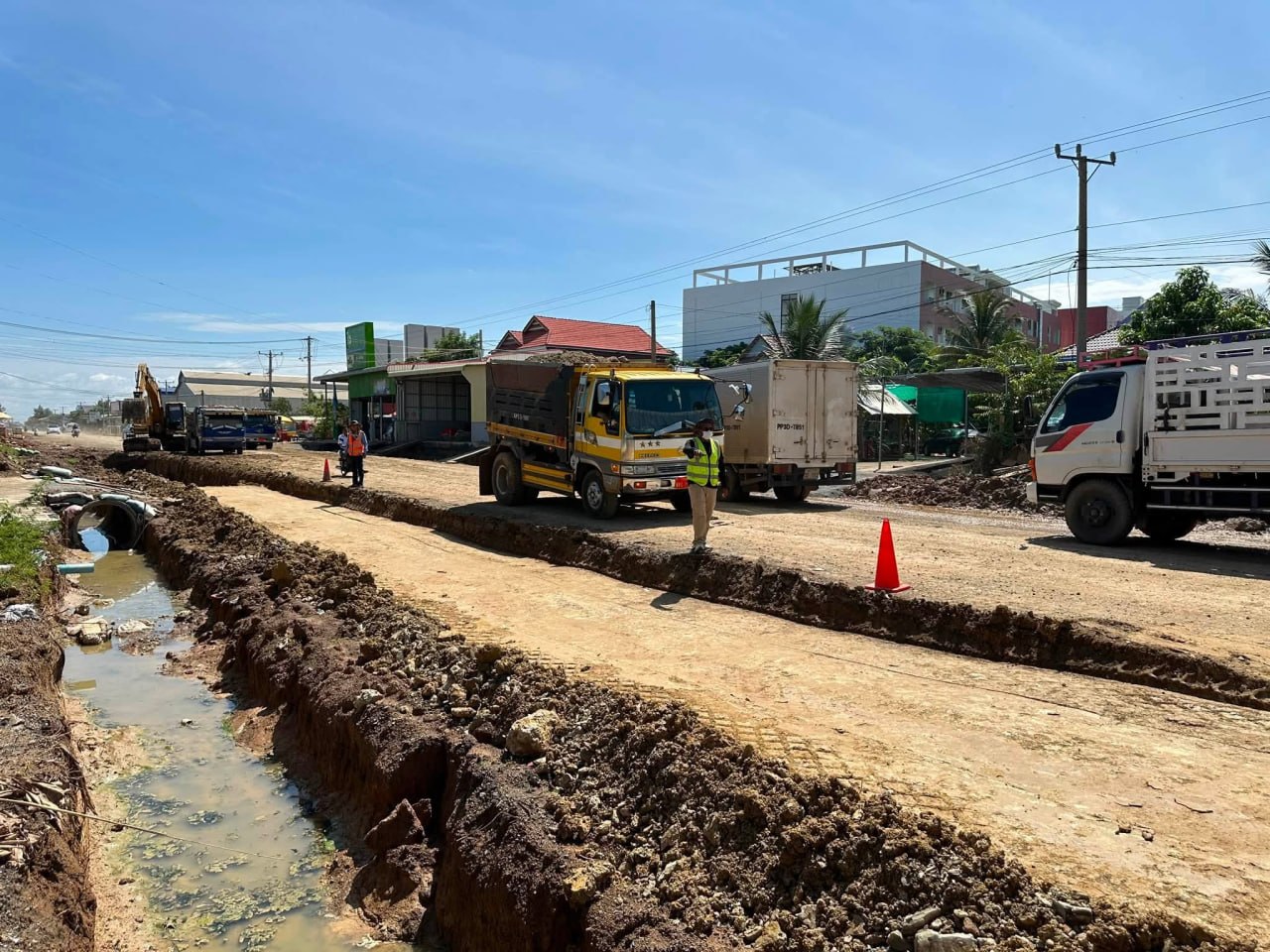
Kampong Speu Governor ជាម ច័ន្ទសោភ័ណ has urged the construction, repair and maintenance of damaged road sections to improve conditions for residents’ travel and transport. The provincial Department of Public Works and Transport has continued repair, improvement and maintenance work on roads across the province.
Department director ហុង ចាន់សុខា said on the morning of July 26, 2026, that the department was accelerating construction, repairs, improvements and maintenance on damaged road sections to support economic growth and make travel easier for the public.
The work includes a 2,870-metre section of Provincial Road 1440 with DBST surfacing seven metres wide and one-metre shoulders of soil mixed with stone on each side. Road markings, 12 traffic signs and 20 delineator posts have been installed between kilometre markers 20+490 and 23+360 in ជើងរាស់ and ចាន់សែន communes, សាមគ្គីមុនីជ័យ district, Kampong Speu province.
Periodic maintenance has also been carried out on Provincial Road 1440 (R3), with DBST surfacing 2,300 metres long and seven metres wide, one-metre soil-and-stone shoulders on each side, road markings, 12 traffic signs and 12 delineator posts between markers 02+700 and 05+000. Three single-pipe culverts, one metre in diameter and 14 metres long, and six inspection chambers on the sides of the culverts have also been built in ព្នាយ commune, សំរោងទង district. In addition, periodic maintenance on National Road 44 (R3) includes DBST surfacing 1,390 metres long and 10 metres wide, one-metre soil-and-stone shoulders on each side, road markings and six traffic signs between markers 09+800 and 11+190 in តាំងក្រូច commune, សំរោងទង district, Kampong Speu province.
The construction, repair and maintenance work uses the Ministry of Public Works and Transport’s relevant 2026 budget allocation, is being implemented by the specialist department and is scheduled for completion before the end of 2026.
The governor has instructed technical officials and all relevant parties to give priority to quality. All construction and repairs must meet technical standards, be structurally sound and have proper drainage so roads remain usable for the long term rather than deteriorating soon after work is completed. Specialists must also work with local authorities to monitor and regularly inspect roadside culverts and drainage canals, keeping them free of rubbish, soil and sand, as rainwater flooding is a major threat to roads. Checks on heavy transport vehicles passing through must be tightened, with strict enforcement and fines for vehicles exceeding prescribed weight limits.
By: ង៉ែត ពិសាន្ត