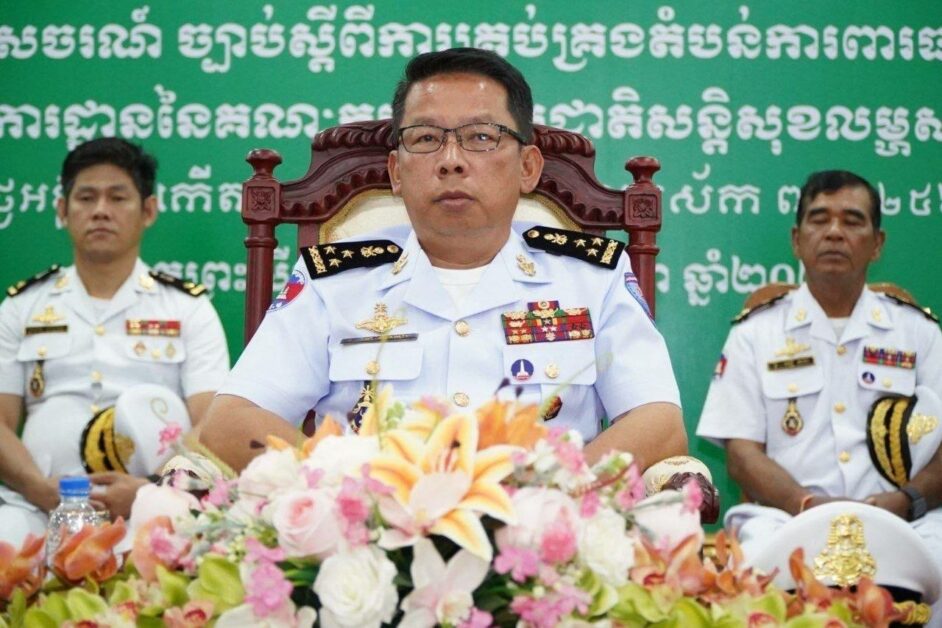
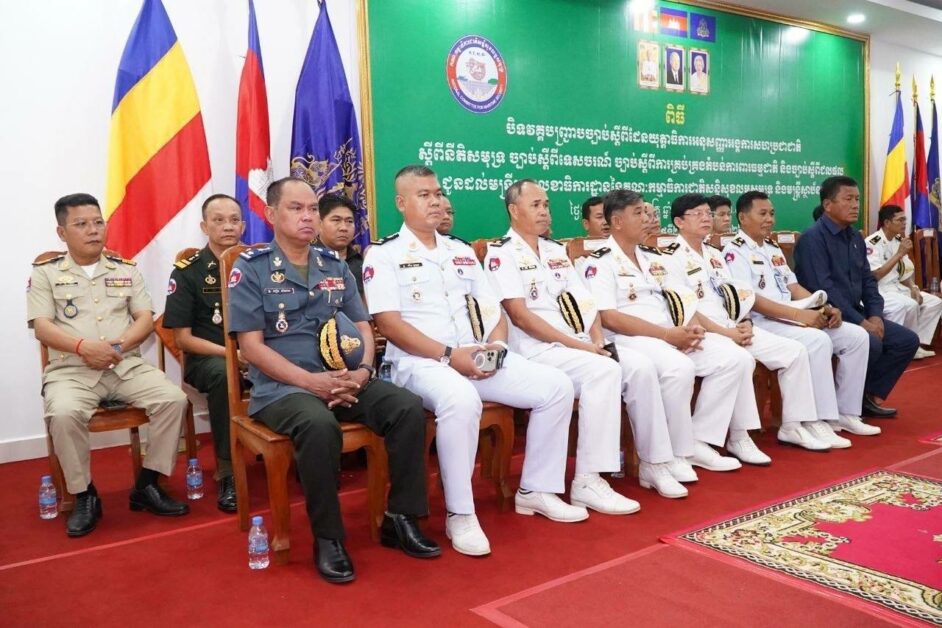
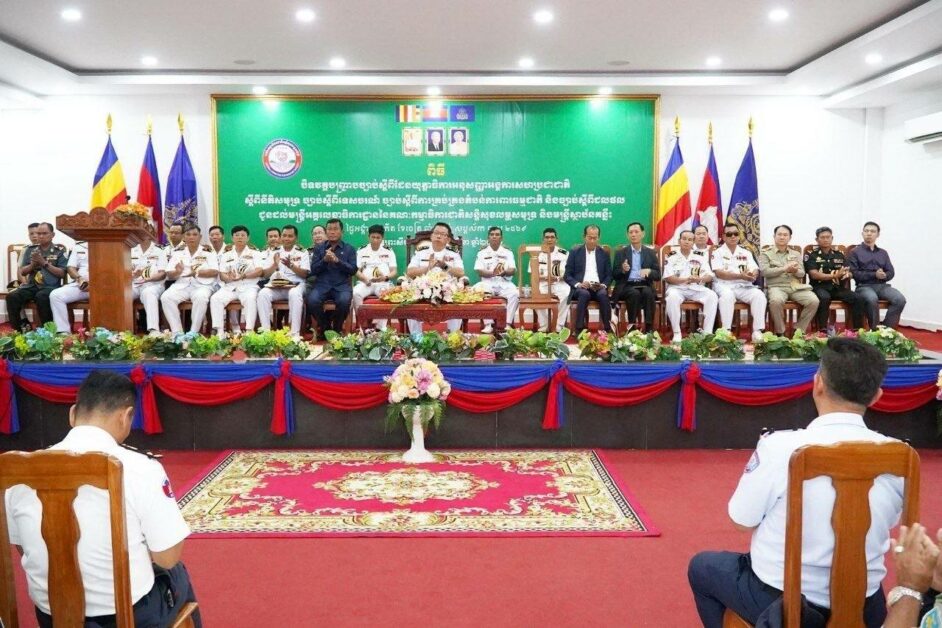
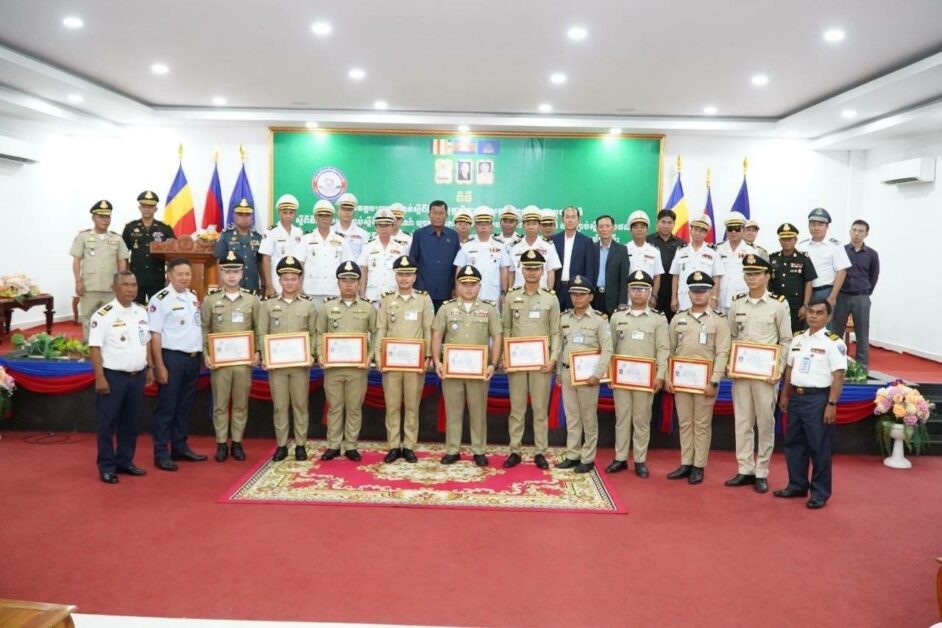
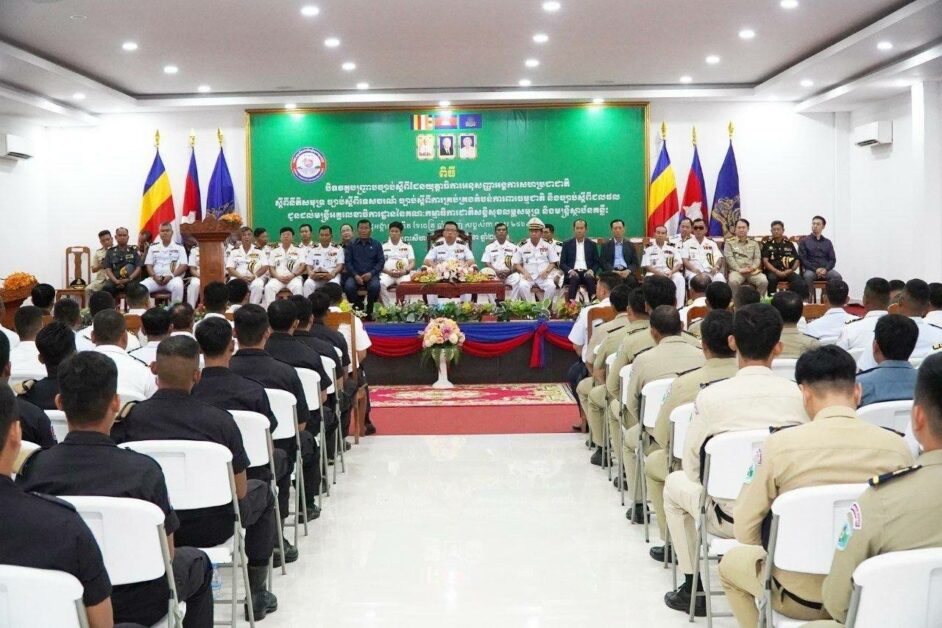
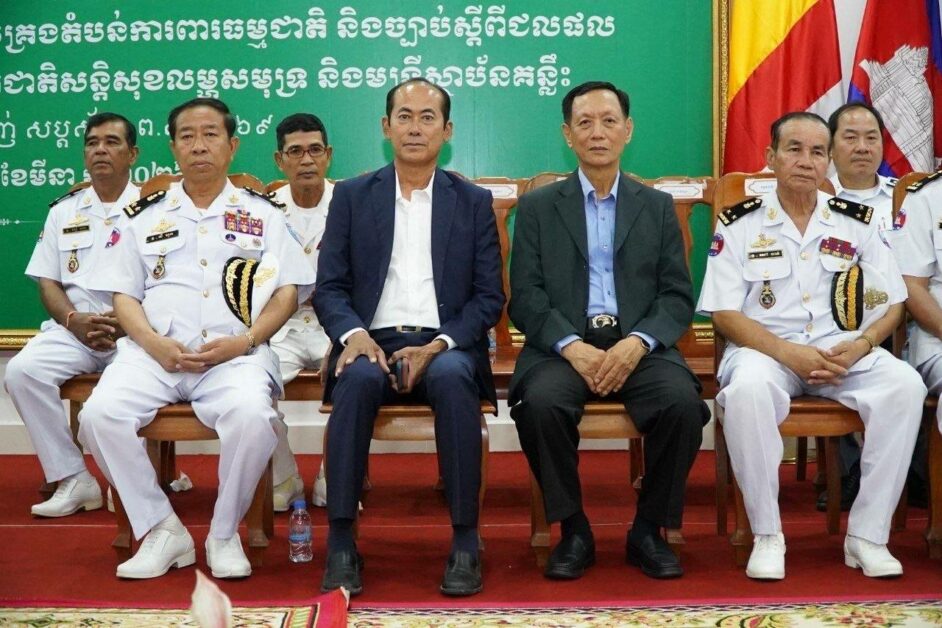
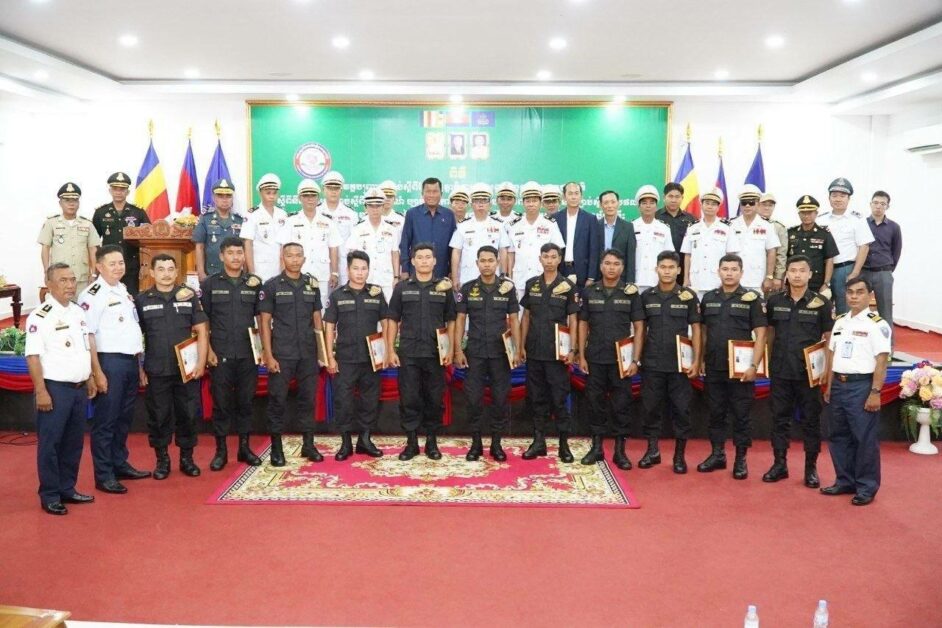
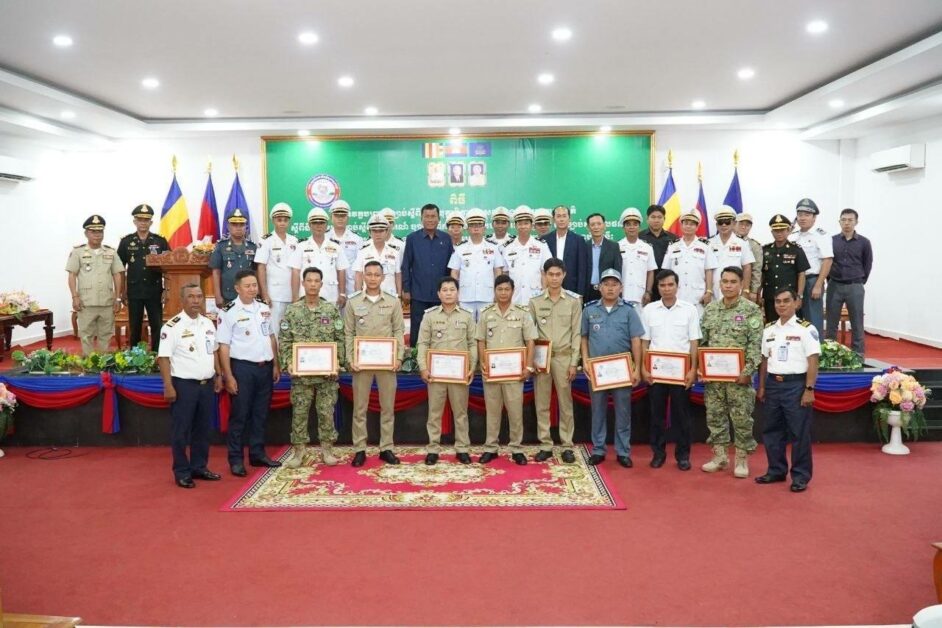
In Preah Sihanouk, the National Committee for Maritime Security closed a training course covering four key legal areas on March 24, 2026. Vice Admiral Tea Bunliem, the committee’s deputy secretary-general, presided, with the aim of improving officers’ ability to respond to changes in regional and global security.
Focal officers from several institutions studied four legal instruments relevant to maritime governance: the 1982 UN Convention on the Law of the Sea, including jurisdiction, exclusive economic zones and baselines to protect national interests under international law; tourism law, to improve visitor-flow management and safety on islands and beaches; protected-natural-area management law, to conserve ecosystems, coral and mangroves; and fisheries law, to combat illegal, unreported and unregulated fishing, or IUU, and protect fish resources for sustainable food supplies.
Tea Bunliem conveyed greetings from General Tea Seiha, deputy prime minister, defence minister and committee chairman.
He said Cambodia was modernising its defence sector under Prime Minister Hun Manet. Clear understanding of procedural rules, he said, was not only about enforcement but also about building a protective barrier for sovereignty against terrorism and all forms of cross-border crime, reassuring residents and investors.
The report described the course as another step towards transparent, professional and peaceful missions by Cambodia’s focal officers, and as a message to the region of Cambodia’s control over its maritime security. By: Pai Sokhim